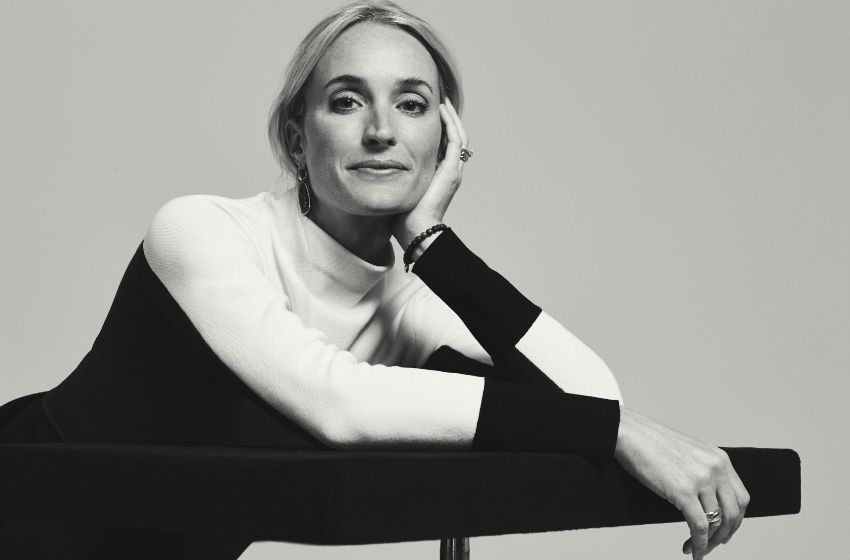
Kerstin Weng from VOGUE: “A magazine must not be timeless.”
Between glossy print and digital 360-degree branding: Kerstin Weng, Head of Editorial Content at VOGUE Germany, talks in an interview about the relevance of attitude in fashion journalism, the influence of AI on editorial work, and why authenticity is becoming the new luxury commodity in a sleek, polished digital world.
Ms. Weng, when did you first hold a copy of VOGUE in your hands?
Kerstin Weng: I can still remember clearly that as a teenager I always bought the Italian edition of Vogue when I was on vacation. My Italian wasn’t good enough to really read the magazine, but I was fascinated by the imagery and was already very impressed by the brand back then. For me, VOGUE has always been a window into the fashion world at large.
Vogue has been an institution in Germany for almost 100 years. What do you think is the recipe for its success?
Weng: VOGUE offers a very special mix: it showcases fashion, but it also embeds it in the context of the current times. That fascinates people and makes the magazine and the brand as a whole relevant. Of course, the power of internationality also has a major influence.
Attitude and relevance: What makes a magazine successful
You are Head of Editorial Content. What values are important to you in your work?
Weng: Relevance is most important to me. We pay attention to the topics that people are currently interested in – the editorial meeting is a good indicator of this. Is there a specific topic that the whole team is already discussing before the meeting? Then we should take a closer look at it. We want to take a stand and give relevant topics a platform. Fashion is a big part of our content because it never exists in a vacuum; it’s a reflection of our society. It shows what’s happening and what’s important.
How exactly does VOGUE manage to stay current without losing its DNA?
Weng: There’s nothing worse than a magazine that’s timeless. If you look at a magazine and don’t know whether it’s from 2026, 2016, or 2006, something’s wrong. For me, it’s extremely important that we produce content that has its finger on the pulse. We achieve this by traveling a lot, talking to people, and gathering different perspectives. We bring this input together in the editorial office and formulate stories in which we reflect different perceptions.
VOGUE offers light topics related to fashion and beauty, but also in-depth stories such as the portrait of Holocaust survivor Margot Friedländer. What is the right mix?
Weng: The idea that women’s magazines have to be light, mustn’t be too demanding, and that women aren’t interested in anything substantive comes from a bygone era when misogyny wasn’t questioned. Fortunately, that has changed, at least to some extent. Our readers are also interested in social issues. We always try to find our own new angle on these topics. The interview with Margot Friedländer is a good example. During our first interview with her on Holocaust Remembrance Day, we noticed that she had a great passion for fashion – she wanted to become a designer herself. However, this side of her is not well known because she has always been reduced to her fate. We deliberately wanted to show her personal side in our later cover interview with her.

Cover: Mark Peckmezian
VOGUE is an international brand. How many German topics are featured in Vogue Germany today?
Weng: When I started at VOGUE a few years ago, we initially tried to adopt many international stories. But we quickly realized that every country has its own way of doing journalism and approaching topics – which often felt foreign to us. So we look for our own stories; almost all of our articles on fashion, beauty, culture, and travel, as well as our cover stories, come from us. However, our fashion spreads are often international. At a cross-border theme conference, we talk about what we have planned and often get input from other markets, or synergies arise.
Classification and background information: Print edition as a collector’s item
Nowadays, trends and news are found on social media. What does VOGUE magazine offer that influencers cannot?
Weng: For us, the print magazine is a collector’s item that explores topics in greater depth and puts them into context. We also aim to introduce our readers to things they don’t yet know about, perhaps because their social media algorithms wouldn’t suggest them.
Many influencers today act like their own media companies. Do you see them as competition for advertising budgets or as an essential part of the VOGUE network?
Weng: I’ve never seen content creators as competition, but rather as inspiration. They differ from us as a media brand because they don’t do journalism. They have an opinion, promote products, and are sponsored. Even if we report on similar topics, the perspective is different. And we’ve noticed that for some time now, users have been increasingly annoyed by the many collaborations, because they’ve learned that creators are paid for their posts. The need for more neutral and journalistic reporting is on the rise again.
Nevertheless, VOGUE is also involved in the social media jungle. In the past, the print magazine was the flagship, but today VOGUE is a multi-platform brand. How has your personal work routine changed?
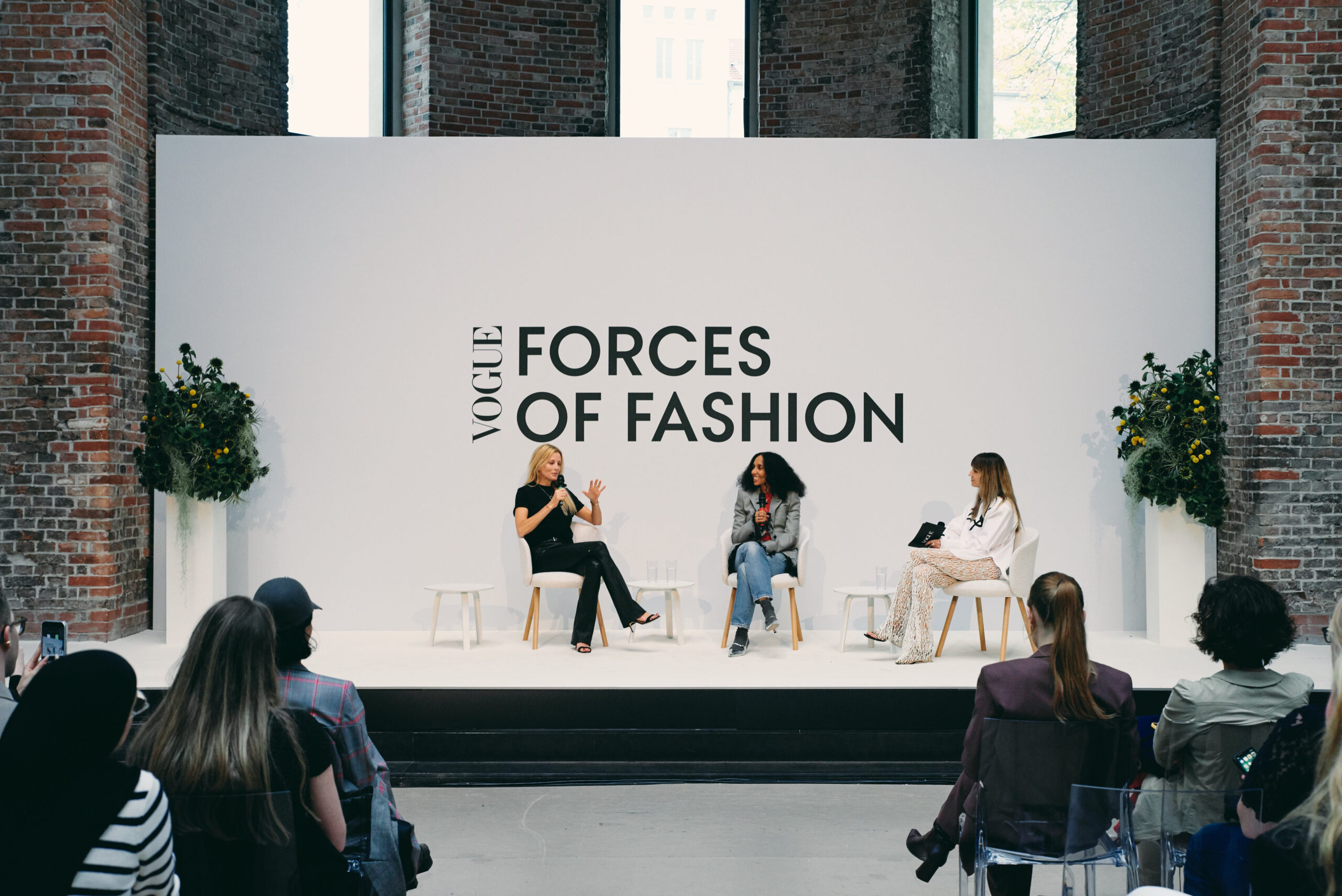
Weng: We broke down the barrier between print and social media editorial teams very early on. Everyone works together on the content – we decide together which topics will be posted on our channels, published on our website, or printed in the magazine, and in what form. This has created new jobs, such as image editors for social media, who have to pay attention to other things. Video also plays a much bigger role. Overall, journalists today need to have a completely different skill set than they did a few years ago. Whereas they used to mainly research and write, they now also host events and shoot social media videos. You can never do without a healthy curiosity – that’s the basic tool of the trade for anyone who wants to work in journalism. What is new, however, is the flexibility required for this job.
What role does AI play? What challenges does it pose, and what advantages does it offer?
Weng: We work with AI, but more in the backend. That means we use it to support our daily work, for example to transcribe interviews or check spelling. What we don’t use AI for is creating texts or generating images. We deliberately rely on the skills of our photographers and editors in this area.
However, I can imagine that AI will relieve us even more in the future. For example, when planning a photo shoot: a mood board that brings everyone involved up to speed could be developed using an AI tool.
Readers want authenticity and personality
The internet is already flooded with AI-generated images. If AI-generated models and worlds are more perfect than reality, how does that change the standards of a luxury brand like VOGUE? How does the magazine remain human?
Weng: I’ve noticed that people want authenticity. We just had an issue where we focused on craftsmanship, and it was very well received. The more digital, artificial, and polished everything becomes, the more people appreciate having something real, analog, and human-made in their hands. That’s also why print magazines still work so well.
Bannerbild: Katja Brömer