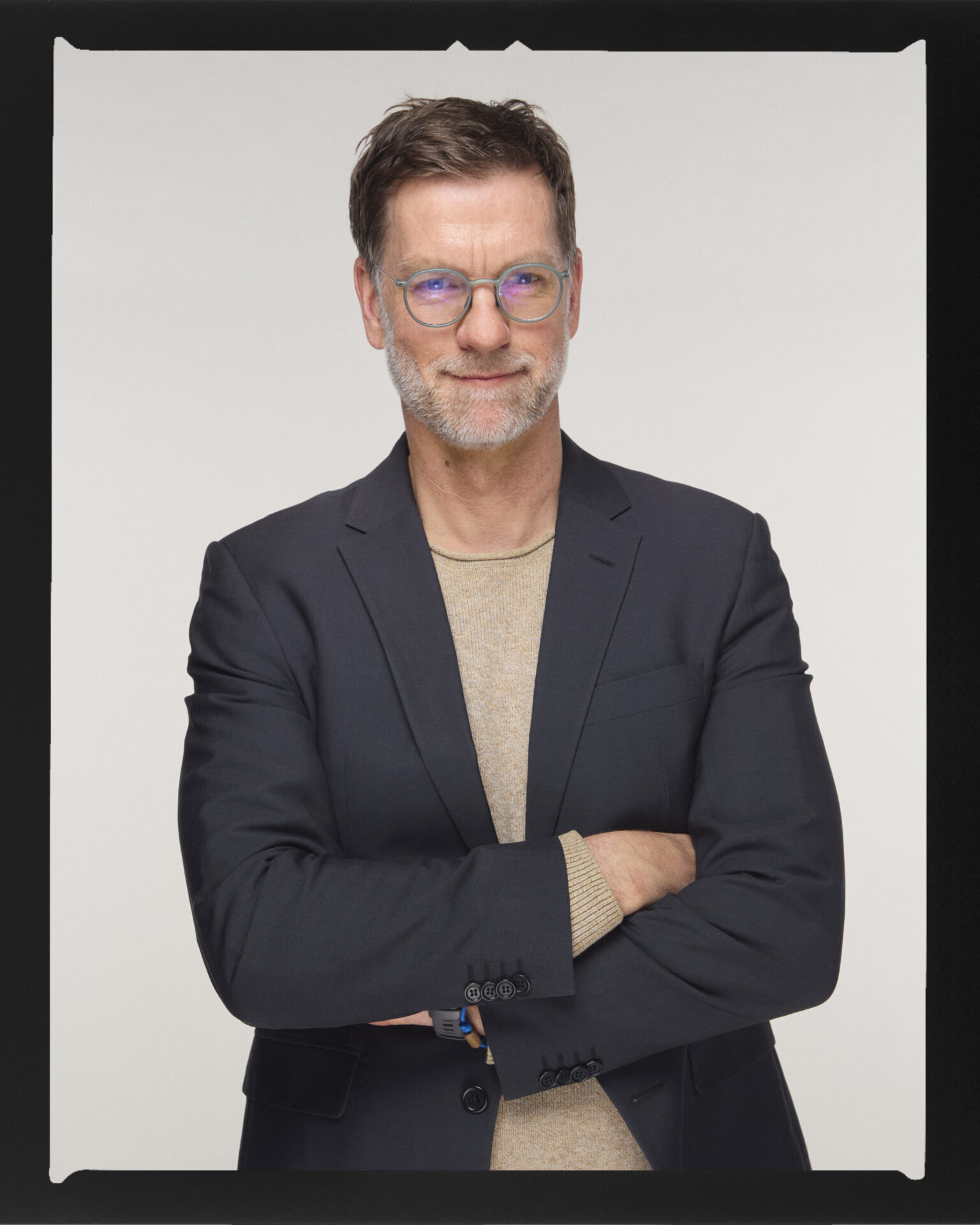
Andreas Briese From Google/YouTube: Today’s Search Behavior
Overview with AI, personalization, and multiple screens: How do young people search for information – and how can the media use this to their advantage? Andreas Briese has been with Google since 2008, which has a significant impact on the Bavarian media industry with its headquarters in Munich. Today, he is, among other things, the head of YouTube in Germany and provides answers in this interview.
How is search behavior on the internet changing?
Andreas Briese: The world has become more complex, and this also affects media usage. Young early adopters of new technologies in particular are navigating this complexity, which spans multiple screens and different devices. We have identified four behaviors: streaming, scrolling, searching, and shopping.
In response to this complexity, we are seeing search queries becoming longer and more complex. For us, this means that searchers expect more comprehensive answers with a classification of information. AI-powered overviews, for example, contribute to this.
To what extent are search queries becoming more complex?
Briese: Search is multimodal today. In the past, you simply typed text into a search engine. Today, we also see photos, speech, or sound as the starting point for a search. So I can circle something in an image and start a search query, recognize a song, or ask a question via voice input.
The same applies to the output: young searchers in particular expect multimodal results. If I’m looking for a song, I want to hear it or watch the music video. At Google, we therefore always try to determine what users want at a very early stage in order to meet this need.
Active search behavior: YouTube is the second largest search engine in the world.
What impact do interest-based suggestions have? Are users still actively searching, or are they shifting toward more passive consumption?
Briese: From YouTube’s perspective, I can’t confirm passivity. YouTube is the second-largest search engine in the world and a platform that 80 percent of users utilize for learning purposes. Our job is to always give users the best possible answer to their questions. In addition, YouTube offers opportunities for interaction, such as likes and comments, which clearly show that we are not creating a passive consumption environment, but an active participation environment.
Unlike web search, a person searching for something on YouTube has already made the decision to watch a video. The user journey is different. Sometimes users want to see a creator’s latest content or discover what’s new in their feed. But that doesn’t mean these people are just passive consumers.
Are there differences in usage between older and younger generations?
Briese: We have 56 million users who use YouTube at least once a month. We reach all age groups. Younger people in particular: 90 percent of Gen Z are regular YouTube users. We are highly relevant to them because YouTube is not only an entertainment medium, but also an information and community medium. And the older target group is also growing rapidly at the moment.
In addition, we are seeing a shift in the use of end devices. YouTube started out as a pure website, so that’s where the traffic came from back then. Then came the mobile revolution and usage on mobile devices rose sharply. Now we are seeing a significant portion of YouTube usage on televisions as well. One billion hours of TV are streamed every day.
Incidentally, this also includes podcasts: this has to do with the fact that wherever there is a TV, there is a relaxed environment. And usually the best audio quality, because smart TVs are equipped with good sound systems. Of course, seeing the hosts in the video also plays a role. It strengthens community ties.
On July 15, 2025, monetization opportunities for repetitive AI content were excluded on YouTube. Do you see a need for further measures here?
Briese: Strictly speaking, this was just the enforcement of a long-standing policy. We have clear requirements for content that can be monetized: it must be original and offer creative added value. If someone uploads the same video multiple times with minor variations, that’s not added value. This applies regardless of how generative AI is used. What we also ensure is transparency. This means that creators are required to label videos that depict real situations but are AI-generated, for example. At the same time, we automatically label videos when creators edit them with our AI tools. This applies to all Google AI tools: we use a fingerprint to “stamp” videos with SynthID when they are created or modified with Google AI, and then have the option to label them when they are published.
Media companies must offer their products where young people are
How can media companies use these insights to reach young target groups?
Briese: The simple answer is by bringing their content to where young people already are. And finding an environment that suits the usage habits of younger generations. Unsurprisingly, YouTube is the first thing that comes to mind. (laughs) Young users have grown up in a user-centered world. This means they are accustomed to great diversity, choice, availability on all devices, and multimedia. In this world, they consume media content in a personalized form and interact with the associated community. YouTube offers exactly this user experience. We therefore recommend that media creators don’t choose one or the other, but both: they should make their content available on YouTube in addition to their own streaming services.
And what about Google search?
Briese: Here, AI is changing search behavior. Users are increasingly looking for forums, videos, podcasts, and posts with authentic voices and experiences. In general, there is demand for web content that helps people learn more, such as detailed reviews, original articles, unique perspectives, or in-depth first-hand analysis. Media that can meet these changing needs will continue to find their target audience.
Bannerbild: Youtube