Elfi Kerscher: New Virtual Production Standards With Hyperbowl
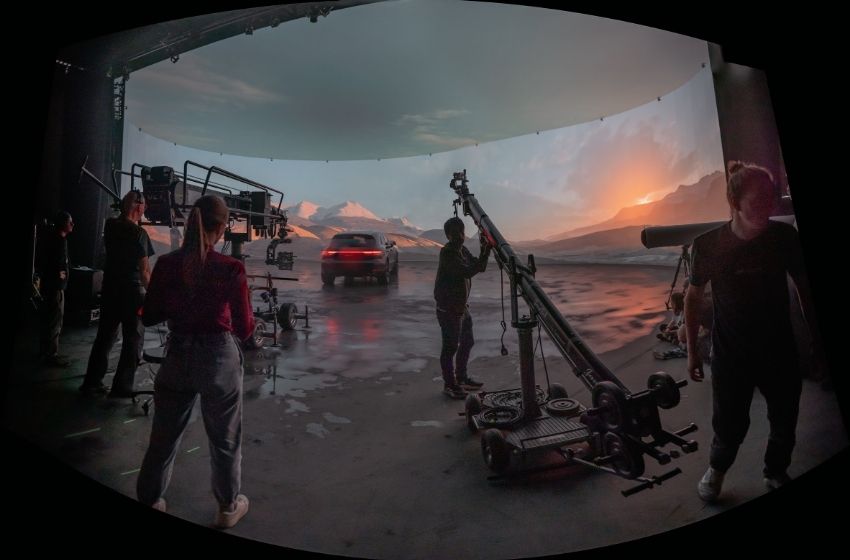
Walking on alien planets or swimming among bizarre creatures in the deep sea - virtual production opens up completely new scope for the film industry. Hyperbowl, based in Penzing, is one of Europe's leading companies in this field. Elfi Kerscher, Head of Business Development, talks about the diverse applications of the technology and explains why the new partnership with Bavaria Film Studios is a strong signal for Bavaria as a media location.
Elfi, you switched to Hyperbowl six months ago. What brought you there?
Elfi Kerscher: I originally come from the world of visual effects. I started at Discreet Logic straight after studying computer science at Darmstadt University of Applied Sciences and was involved in major productions early on as a trainer and demo artist for the Flame software. I then moved to Arri, where I worked for many years in various roles, most recently in the innovation team. There we worked intensively on new technologies in the film industry. That's when I first came across virtual production: the possibility of creating entire locations or worlds realistically in the studio, from a quiet lakeshore with a park bench to a futuristic city. I was immediately hooked. After a stint at Plaza Media, I switched to Hyperbowl at the beginning of the year.
What fascinates you most about virtual production?
Kerscher: The biggest attraction for me is the variety and controllability: with the Unreal Engine, you can create differentiated worlds exactly as you want them. Perspectives, weather, time of day – simply everything can be freely designed.
Advertising, film and interaction: the Hyperbowl has a wide range of applications
In its early years, Hyperbowl was mainly known for commercials and live product premieres. Has that changed?
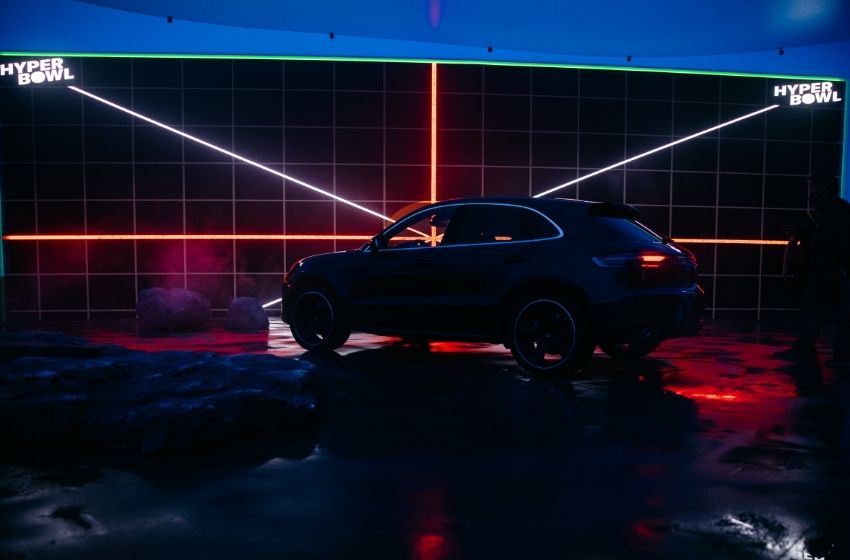
Kerscher: Advertising and events are still among the most popular projects, but film productions are increasing significantly. For the film “Chantal in Fairyland”, for example, we produced the entire temple scene. We have also supported international projects such as the horror film “The Crow 2” and the mystery series “Nine Perfect Strangers” with Nicole Kidman. There is also currently an exciting format on Amazon Prime in which we were involved: “Yes or No Games” – a game show in which candidates solve tasks in virtual worlds.
So sometimes it's not just about developing beautiful backgrounds, but also being able to interact with them.
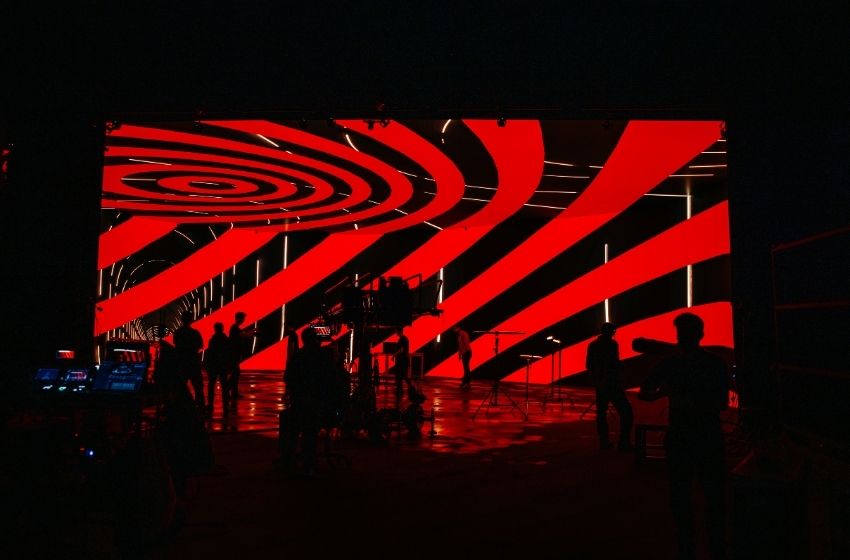
Kerscher: Exactly. In the show, for example, the candidates stand in a virtual library and have to count books. They see the environment in real time and interact with it. Virtual production is a creative tool that opens up completely new narrative spaces. The big advantage compared to green screen: The protagonists don't look into the void, but see the world around them. This makes it easier to really immerse yourself.

Virtual production has developed rapidly in recent years. What was still considered virtual three or four years ago often seems completely real today.
Photo: private
Elfi KerscherHead of Business Development, Hyperbowl
Was there anything that surprised you in the first few months of Hyperbowl? Perhaps a virtual realization that you would have thought impossible?
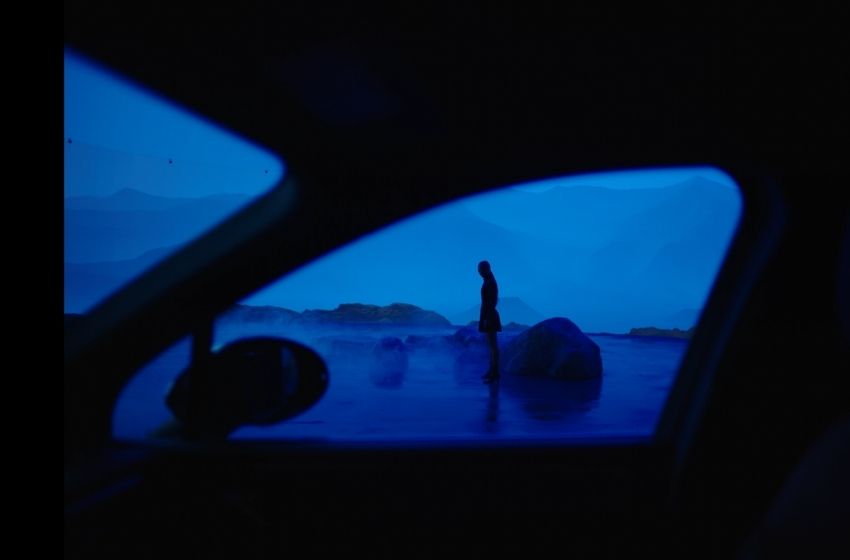
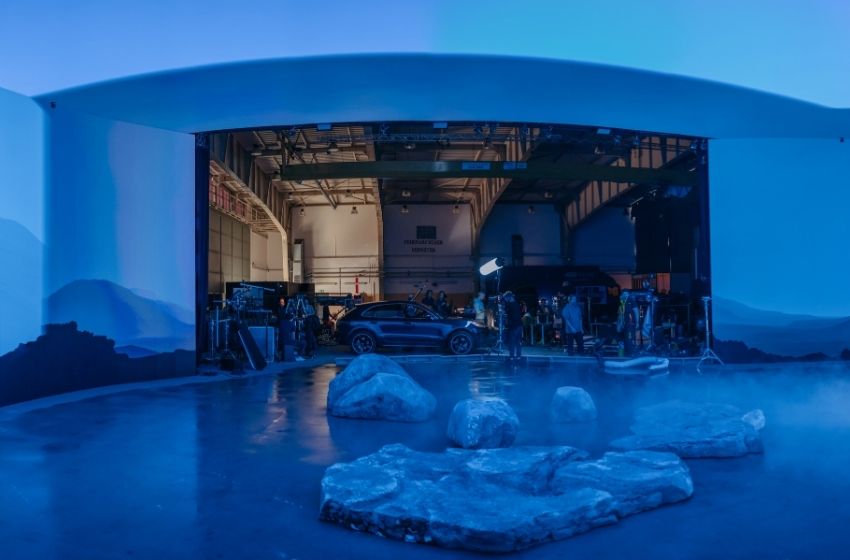
Kerscher: No surprises in the true sense of the word, but I find the way they work with water fascinating. I was particularly impressed by a commercial with a swimmer in an Alpine lake, except that the lake was in the studio. It was freezing outside and inside there was a pool of water with a counter-current system and a mountain panorama on the LED wall. It looked fantastic – a great example of creative set construction combined with virtual production.
What are the limits of this technology?
Kerscher: I can hardly see any limits, as the current processes open up impressive possibilities. In photogrammetry, for example, numerous photos of a real object or location are taken from different perspectives and then assembled into a precise 3D model using special software. Newer approaches such as Gaussian splatting take a different approach: they reconstruct real 3D scenes from so-called “splats” – pixels that are enriched with information such as color, depth and transparency – and thus create particularly fluid, realistic representations. For freely designed fantasy worlds, however, other tools are better suited, such as 3D modelling programs or AI-supported image generators like Midjourney, which help us to quickly visualize and further develop creative elements.
Do trained eyes still recognize the difference between virtual and real backgrounds?
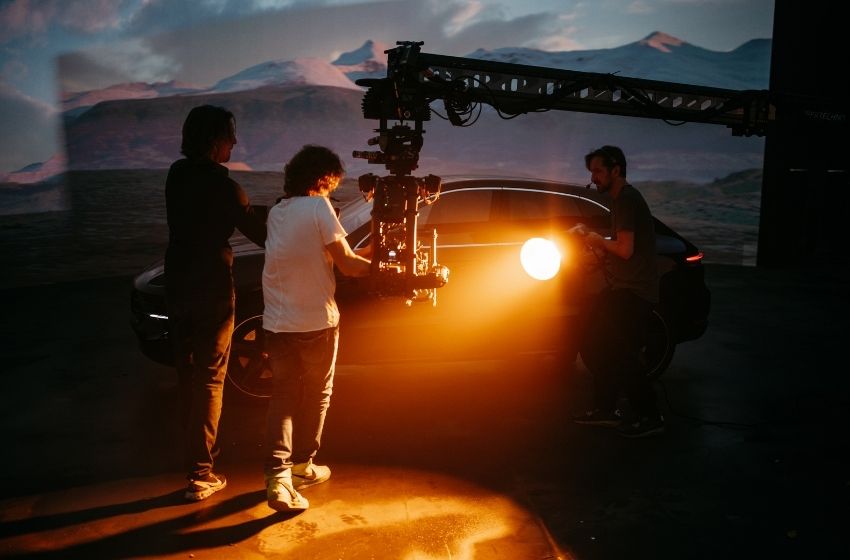
Kerscher: Virtual production has developed rapidly in recent years. What was still considered virtual three or four years ago often looks completely real today. In productions such as “Nine Perfect Strangers”, you would never guess that many scenes were shot in front of LED walls. The illusion is almost perfect.
Do customers come to you with ready-made ideas or do you inspire them?
Kerscher: It depends on the project, but more and more customers are coming to us very early on, often with the script in hand. Our virtual production team then checks scene by scene to see what makes sense to realize virtually. Scenes with little logistical effort – such as a walk in the forest – are usually shot in real life, unless special lighting or weather conditions make virtual realization necessary. In order to show what is creatively, technically and economically possible at an early stage, we create feasibility analyses and develop pre-visualizations.
You have just started a cooperation with Bavaria Studios. What's behind it?
Kerscher: Bavaria Studios has already gained initial experience with virtual production with “Bavipro”, but does not have its own virtual studio. We bring that to the table – as well as an experienced team of creatives, Unreal artists and technicians. Our mobile solutions are also a major advantage: With the pop-up hyperbowl concept, we can set up screens and materials in various sizes at filming locations. That's why we suggested pooling the resources of both companies. Bavaria was immediately open to the idea.
Cooperation with Bavaria Film Studios: Lighthouse project in planning
Are there already concrete joint projects?
Kerscher: We have already produced our first small commercial together and are currently in talks about further projects. We are particularly excited about scenes that don't sound spectacular, but pose a logistical challenge – for example in trains or airplanes. Such sets can be realized virtually in a time-saving and cost-effective way; they also make everyday production more sustainable. In addition, we have already held a number of events together with Bavaria at which we introduced interested parties to the topic of virtual production, also using specific scenes that we showed on the LED wall.
What are the medium-term goals of this partnership?
Kerscher: We are currently discussing a flagship project with which we want to fully exploit all potential and clearly show: “This is virtual production made in Bavaria.” Details are still confidential. In the medium term, we want to position ourselves as a strong community that can realize productions of any type and complexity with bundled expertise.
Bannerbild: Photo: Hyperbowl