Emergo Entertainment: “We wanted to do more than just make games”
Paul Redetzky founded the start-up Emergo Entertainment in Bayreuth straight out of university. The slogan “Interactive media for more than entertainment” has been at the heart of the business concept from the very beginning: 50 percent games studio, 50 percent service provider for contract work. Redetzky’s team shows how game development expertise can also be successfully applied in completely different areas and companies. For example, they used in-house game development tools to develop an interactive audio game for a publishing group.
Paul, that’s such a popular origin story for start-ups – “We founded the company straight out of university.” Is it really true for you and Emergo Entertainment?
Paul Redetzky: I handed in my master’s thesis and a week later I was self-employed full-time. So it’s really true in our case. My cofounder Carl-Philipp Hellmuth and I founded the company straight out of university, and we had started working on side projects while we were still students. I consciously started my master’s degree in computer game science at the University of Bayreuth because I wanted to start a company. That was my goal from the very beginning.
You also started getting a taste of the games studio world early on …
Redetzky: That’s right. I was already involved in a game start-up during my bachelor’s degree – I was 19 years old at the time. That was very fortunate for me because I was able to make a lot of contacts and get to know the industry. But I also saw how harsh the industry can be. Most indie studios close down after three or four years. That got me thinking. And because I’m also a musician, I came up with the idea: Why not use the concept of a wedding band as a model?
Emergo’s Wedding Band Model
Can you explain that in more detail?
Redetzky: That’s what you call it when bands have a secure income by playing at weddings on weekends and then producing their own albums during the week. That’s where the idea for Emergo Entertainment originally came from. I then observed the market and realized that it was actually the ideal time for a company like ours which pursues a dedicated 50/50 approach – i.e., 50 percent games studio, 50 percent service provider for contract work. Just don’t think of the contract work as a stopgap solution to keep your game production afloat.
But rather that it really is the core of the business model. That’s how we communicate it to our employees and that’s how we implement it. This means that even if we had a very successful game right now, we wouldn’t stop doing contract work. Simply because I believe this market has great potential and will continue to do well in the future – despite the current crises.
In what way?
Redetzky: I believe that games will continue to grow in importance in non-gaming areas. I come from a media studies background, where this trend is easy to observe. If you look at the history of media, the same thing happens with the development of every medium: Initially, it is very monothematic, but over time, the medium opens up to other forms of use. You can see this with books. Printing was originally invented to print the Bible. And then it gradually expanded into other areas. That’s exactly what’s happening with interactive media right now. That’s why I thought it would be smart to start a company that does that. [laughs]
Check out our new XPLR: MEDIA Games report to find many more interviews like this one, featuring experts from the Bavarian games industry and success stories that will inspire your next move: Download report for free!
Emergo Entertainment’s Hybrid Business Approach
How would you describe your work in practice? Surely it’s not always possible to implement a 50/50 split exactly?
Redetzky: That’s important to us: 50/50 was set from the beginning. But of course not slavishly. We don’t divide it up so that exactly 50 percent has to be done on a certain day, and this year is also the first time that sales have shifted a little more toward contract work, although one contract job was a game. So we do take great care to maintain this balance. And that is also reflected in the sales shares. Of course, there are always phases when a games project has higher priority – for example, shortly before Gamescom. And this is then communicated to the customer accordingly.
Otherwise, it always depends on the current orders and projects. In terms of coordination, I don’t see any real additional effort compared to pure games studios. We just work on several projects instead of just one big games project. But you always break projects down into smaller steps anyway – whether you’re working for customers or on your own games.
How do the experience and skills you gain from game development help you with your non-game projects and orders?
Redetzky: I think it’s particularly relevant to look at who we’re actually competing with. It’s not other games studios – most of them focus on games. Instead, we compete more with web agencies and IT service providers. They usually don’t have 3D graphic designers or anyone who can do animation, and their programmers aren’t familiar with the workflows. As soon as something needs to be done with 3D visualization, we are the experts. And we can work across a wide range of areas and develop all kinds of interactive media. That’s a big advantage.
And something else that shouldn’t be underestimated – and where I would also like to clearly emphasize computer game science at the University of Bayreuth – is that we can talk about interactive media. This means that I have a vocabulary that allows me to talk about this medium – especially with people who are not from the industry. It doesn’t help me much if I say to customers who have never had anything to do with games before, “I want to make a game like Mini Metro,” because no one outside the scene knows what that is. I simply have to explain things differently, and we have studied this a lot in computer game science.
Game Tools for New Industries
What synergies are there between customers and industries? Have customers or expertise from the gaming industry ever brought you specific orders in contexts unrelated to gaming, and vice versa?
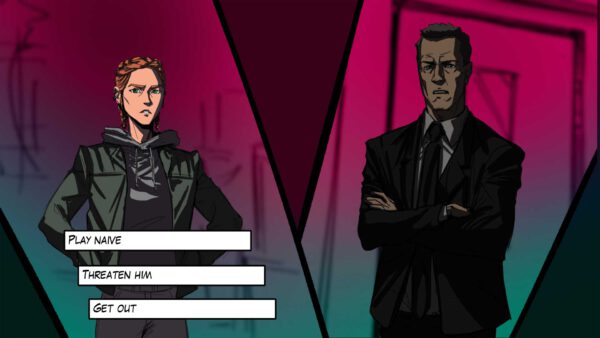
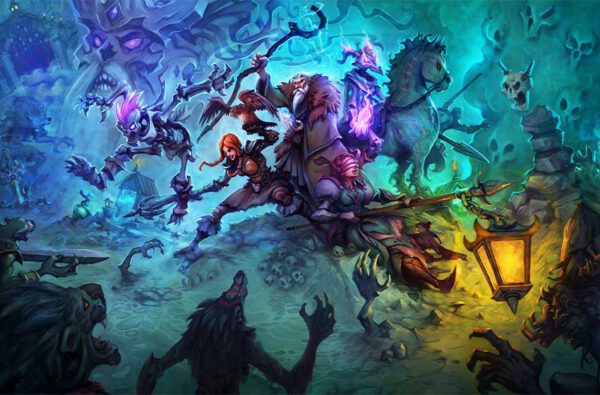
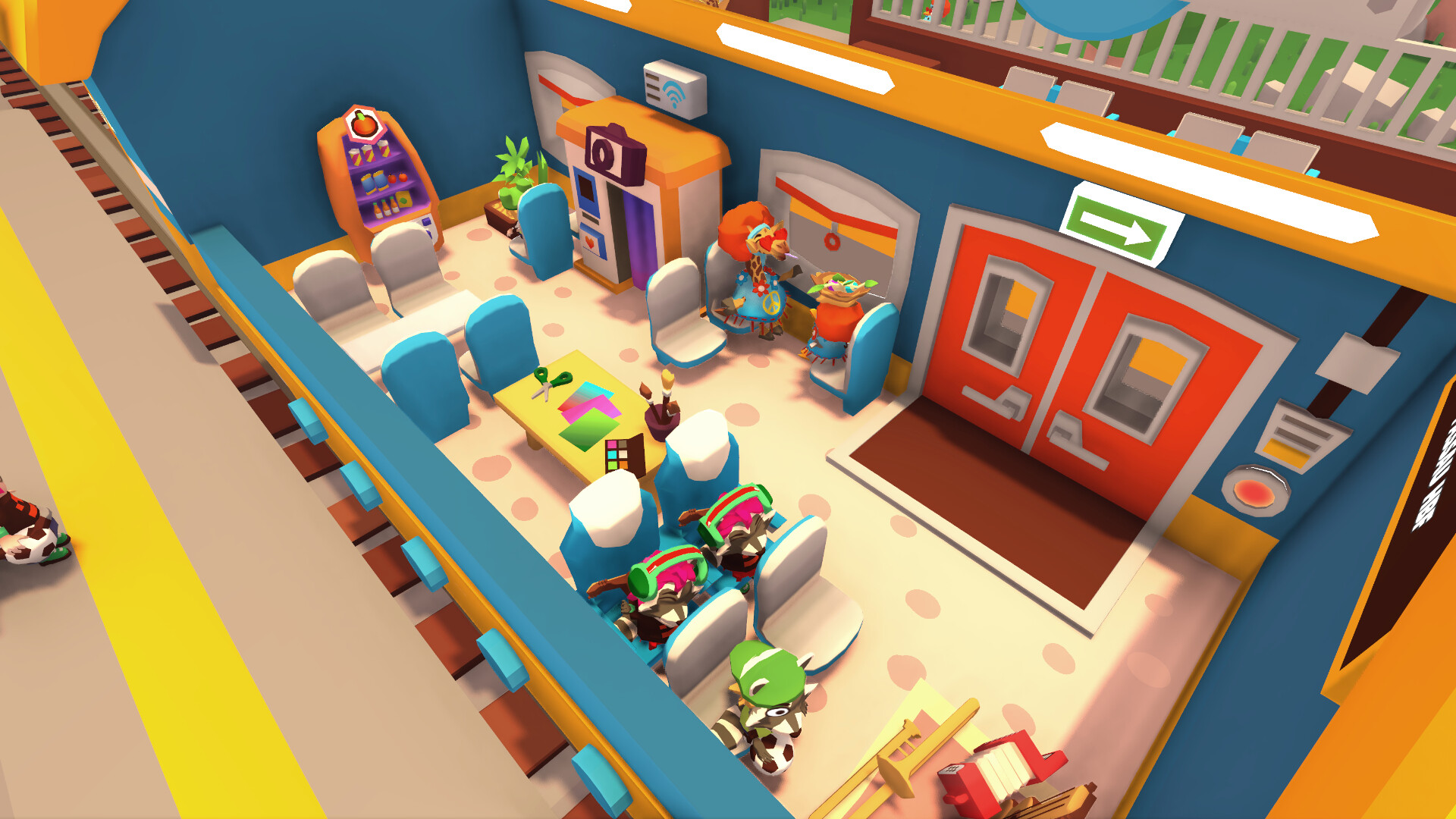
Redetzky: Absolutely. I actually underestimated that before. I didn’t realize how many synergies there are. For example, we developed the interactive audio game Murdio Island for children aged 10 and up with the Oetinger publishing group. The tooling behind it is the same as the tooling used for Fireside, our in-house game. We are also currently developing a house configurator for a prefabricated house manufacturer. The fact that we are currently working on our game Train Jumble, where you have to design train interiors, has been very helpful in acquiring new customers. This has enormous synergy potential and can also be used specifically in customer acquisition – if I take a tool that I developed in game production and then sell it in a targeted manner to companies and industries that it fits. I think this can be a good strategy, especially for smaller and indie studios, to find interesting commissions.
The games industry is currently struggling quite a bit after the pandemic-induced boom. Many studios are having to restructure or close down altogether. Would you say that your hybrid model protects you in this regard?
Redetzky: In theory, yes, but in practice, not at the moment – the economic crisis is not limited to the games industry. It must also be said that our model does have disadvantages, especially for our own game projects. We only have 50 percent of the time and resources for game development, which takes a very long time anyway – and even longer for us. That makes planning more difficult – we are much less flexible when it comes to funding, for example. And to be perfectly clear: Our games would certainly be better if we could focus entirely on them. We of course sometimes have to make compromises.
Advice for Founders
With this experience, what advice would you give to those considering starting their own business? Hybrid model yes or no?
Redetzky: I would advise pursuing a dual-track model, yes. Unless you can say with complete sincerity about yourself and your team that you’re making a game that is truly the best in its genre on Steam. Then it might make sense to focus solely on games. But that’s not usually the case. And if you say: We can make a good game that will generate revenue, but it won’t be a total breakthrough, then I would always consider choosing a hybrid model. But you have to live that way. In other words, don’t treat contract work as a stopgap solution, but as part of your corporate identity. And you have to realize that this is extremely time-consuming in terms of customer acquisition, networking, and so on. But it’s worth it!