Julius Thomas From 3Q: Streaming Made in Europe
Since 2009, Julius Thomas and his company 3Q have been building a European alternative to US streaming platforms such as Vimeo or Brightcove. What began as a hosting solution for web radios is now a powerful video and audio platform for media companies, corporations and public authorities. In this interview, the founder talks about new AI features and international growth plans - because Europe urgently needs to become independent in streaming too.
Julius, how long has 3Q been around?
Julius Thomas: I founded 3Q in 2009 with two partners. We turned 16 years old on April 8. Sweet sixteen!
Congratulations to you.
Julius: Thank you! I ran a web radio station called RadioW when I was still at school and hosted a youth program on the local radio station Inn-Salzach-Welle together with Thomas Gierling. I founded the company during my community service. Back then, the idea was that we could become a good web radio host. After three weeks, JAM FM called on a Friday afternoon and asked if we could stream. We started the following week. In the months and years that followed, however, we moved relatively quickly into video. It was technically very complex at the time, you had to generate 40 formats for each video so that it would work on all platforms and devices.
Corporate and media companies: The broad portfolio complements each other
A lot has changed since then.
Julius: Today, the whole thing is much easier and you also have a lot more capacity because the technology has developed further. Back then, having 1000 users on one server was an insane amount. Today it's a piece of cake.
How have you developed as a company?
Julius: We have focused more on video. We gradually acquired many brands as customers and were a small team for a relatively long time. From 2017, we grew from around five employees to 30.
Who are your customers?
Julius: We have a very diverse portfolio. For example, we work for industrial companies such as Siemens. We look after many banks and insurance companies in Switzerland. We also have many media companies in the DACH region and publishers from small to large in our portfolio.
They complement each other very well: the companies in the corporate sector tend to focus on security and reliability, while the media companies concentrate on volume. In terms of security, for example, we have achieved ISO 27001 cybersecurity certification. Both sides benefit from this. On the other hand, Siemens sometimes does webcasts with over 60,000 viewers and benefits from the fact that we have experience in the media business and can deliver streams to a large user base.

We have always built our platform in such a way that we can work independently. Our entire core infrastructure is located in Europe.
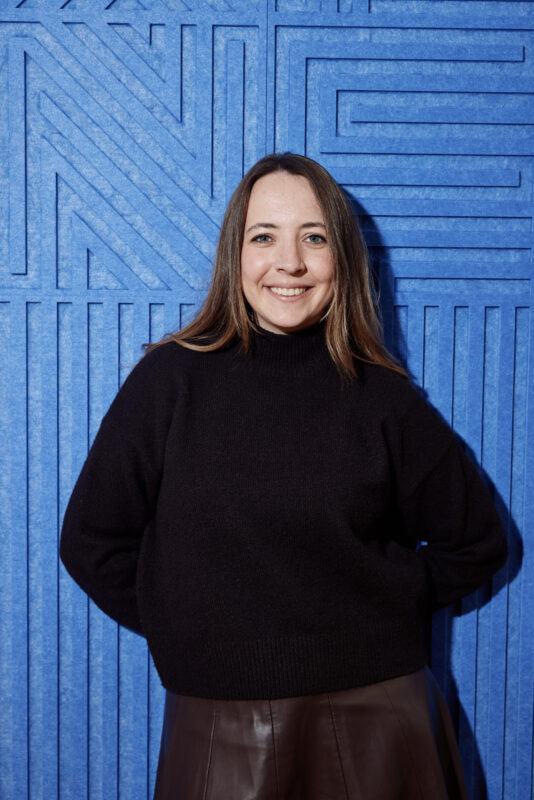
Julius ThomasCEO of 3Q
What kind of webcasts are there?
Julius: Almost everything across the board. Webcasts are used, for example, when the CEO of Siemens makes a livestream to his employees after an acquisition, when a new product is presented or when training courses take place. We also broadcast many events, such as annual general meetings. In Switzerland, we also support Asport, where we stream the Swiss ice hockey league with our partner, among other things.
What other use cases do you have for media companies?
Julius: In most cases, it's the classic case of delivering videos to the publisher's website, whether it's videos produced in-house, live streams, videos from feeds such as dpa or even soccer matches. With an interface in the CMS to our tool, the videos can be easily integrated and we appear in the front end with our video or audio player. Our customers include the NOZ publishing group, the Funke media group and Sportdigital.
A central system stores and manages the entire content
When should media companies and others approach you as a service provider?
Julius: As soon as they have media content that they want to distribute or archive via streaming. This can involve their own website or app, but also third-party platforms such as YouTube, TikTok and so on.
Wouldn't it be better to upload my podcast directly to Spotify?
Julius: We have created a central system to store and manage all content and to be able to evaluate usage. With third-party publishing, we generate a media feed that portals such as Spotify or iTunes can access. As a customer, you don't have to worry about every single channel. For content that should be in front of or behind the paywall, it is necessary to work with a service provider like us who offers this as a service.
Video is and remains the format of the hour for media companies. How are you monitoring developments?
Julius: Video has been growing for years. The media environment is slowly reaching a zenith and, with social media, there is also an oversupply in which you have to take place. Where we still see great growth potential is in the corporate sector and in public authorities, where digitalization is really taking place. For example, when you present a new policy to employees, you used to send them a 150-page PDF that only a few of them read through. In future, you could receive a three-minute video summary, possibly generated by AI.
This is a trend that is not leaving your industry unscathed.
Julius: AI is of course a very big topic. But not everything that says AI is AI.
What do you mean by that?
Julius: A lot of products and platforms say that they rely on AI or suggest that they are an AI product in order to attract investors. However, this often has nothing to do with AI at all. The best example is an AI-powered vacuum cleaner.
But that doesn't apply to your AI tool?
Julius: No! For example, we offer transcription using an AI model. Subtitles are automatically generated from this. This is an important issue for accessibility. Metadata is also generated from the transcript, for example a title or a description text, which is then used for SEO purposes on the customer's website where the video is embedded or to make the content more searchable.
What European media companies should strive for is independence
Many of your major competitors are US companies, such as Vimeo or Brightcove. Now you advertise quite aggressively that you are a European product. Especially in the current political situation, this is probably a decisive criterion for your customers, isn't it?
Julius: We already thought that back then with the GDPR. Data security was also always an important issue for some customers. But it became less relevant over the years. Perhaps for cost reasons or for convenience. For example, there was a statement from banks at the time: “We will never host in the Google Cloud!” Three years later, they were in the Google Cloud.
Due to the political situation in the USA, the whole issue is turning again. Europeans want to become more independent again. We have always built our platform in such a way that we can work independently. Our entire core infrastructure is located in Europe and we operate it ourselves in our own racks, which we have rented in data centers.
However, we don't want to close ourselves off completely, as partnerships are important when working internationally. For this reason, we also enter into partnerships with hyperscalers or other CDNs for our international customers.
Is this an appeal to others to switch to your product?
Julius: As a European company, make sure you are independent and play through worst-case scenarios. Due to the arbitrary situation in the USA, it is now quite conceivable that we could be blackmailed by temporary restrictions. A good example is Microsoft's blocking of emails from the Chief Prosecutor of the International Court of Justice.
It's fitting that you are currently focusing on international growth, as you write on LinkedIn. Do you have specific markets in mind?
Julius: First of all, Europe. Northern Europe and the Scandinavian countries, where a lot of English is spoken, are particularly exciting for us. We want to become a European player in our field.
Bannerbild: Bild: POV Studio
You may also be interested in
Mehr von XPLR: MEDIA in deinem E-Mail-Postfach
Der Newsletter von XPLR: MEDIA in Bavaria zeigt dir, wie innovativ der Medienstandort Bayern ist. Join the innovators!