Markus Knall: AI as a Guarantee of Survival For Local Journalism
As editor-in-chief at Ippen.Media, Markus Knall is guiding brands such as Münchner Merkur and Frankfurter Rundschau through the digital transformation. In this interview, he explains how his combination of journalistic training and business expertise has shaped him, what he understands by modern leadership, and why some local reporting would no longer be possible without AI.
You have been editor-in-chief at Ippen.Media for five years. Looking back on your career path, which stages have had a particular impact on you?
Markus Knall: After completing my master’s degree in political science and history, I did an internship at Münchner Merkur, where I learned journalism from the ground up. This foundation is still extremely valuable to me today. Then came a phase that, looking back, I would describe as decisive: the then still young interface between print and online. I was a newspaper editor and started working for online at the same time. This made me realize the differences between the two worlds: on the print side, high standards and deeply researched content; on the online side, the high speed of change and user behavior that often rewarded different topics. When I became editor-in-chief of Merkur.de, tz.de, and the Ippen.Media central editorial office in 2011, I was able to deal intensively with this new situation, which had a lasting impact on my understanding of digital processes, product development, and journalistic responsibility. Today, my main focus is on giving the entire Ippen.Media network, with its diversity of brands, distribution channels, and products, a common journalistic vision.
Changing user behavior: Editorial offices must become more professional
In addition to your professional activities, you have completed an MBA in General Management. What motivated you to do this?
Knall: At some point, I realized that the role of an editor-in-chief today is largely about management. You build structures, develop concepts, and lead teams through constant change. The knowledge I gained has fundamentally broadened my perspective on innovation, leadership, and change management.
Is this kind of professionalization now indispensable in editorial offices?
Knall: I am convinced it is. The media is undergoing radical structural change: business models and user behavior are changing, brands need to be actively renewed, and new products are emerging. Anyone who manages media must understand how revenue streams work, how organizations remain stable, and how to shape change. And above all, there is the question of what kind of journalistic and editorial future we are striving for.
What are your core responsibilities as editor-in-chief at Ippen.Media?
Knall: The Ippen.Media network is very heterogeneous in terms of brands and different editorial teams. This is reflected in the more than 70 domains that we cover editorially. My job is to manage this entire system: What do we want to focus on, and what do we want to focus less on? In addition, there are content strategies—for example, the question of which direction we want to take in terms of innovation—as well as the coordination of partners, communication within the network, and, of course, personnel management. Overall, it’s about the transformation of editorial and content strategies.
How would you describe your leadership style?
Knall: Transparency is key for me. In a world where every decision can be verified by data, classic top-down leadership no longer works. In this rapidly changing environment, individual decisions are less important than the ability to steer organizations through transformations. For me, leadership means formulating visions, setting goals, distributing responsibility, and getting people on board.
Protecting democracy: Local journalism is indispensable
You believe local journalism is more important today than ever before. Why is that?
Knall: Local journalism is crucial to our democratic structure. Every citizen should have the opportunity to be well informed about their own environment in order to be empowered and able to make decisions. This is at risk if daily newspapers are no longer able to publish and there is no digital offering available to citizens. Only by providing comprehensive and diverse information can people form an opinion and, for example, make an informed decision about which party to vote for. We therefore urgently need digital perspectives for local journalism in Germany.
You argue that AI can secure this future. How exactly do you see your contribution to the survival of local journalism?
Knall: Local reporting is often economically difficult in very small areas. A media company cannot permanently assign an editor to a community of 500 inhabitants. But with AI, we can provide basic information for such small communities. We do this, for example, by processing local election results efficiently and without any loss of quality – which is, at its core, a deeply democratic approach. AI also helps to counteract the mechanism whereby topics that are favored by the algorithm are given priority. When AI is used, topics that are less suitable for the masses are also given space.
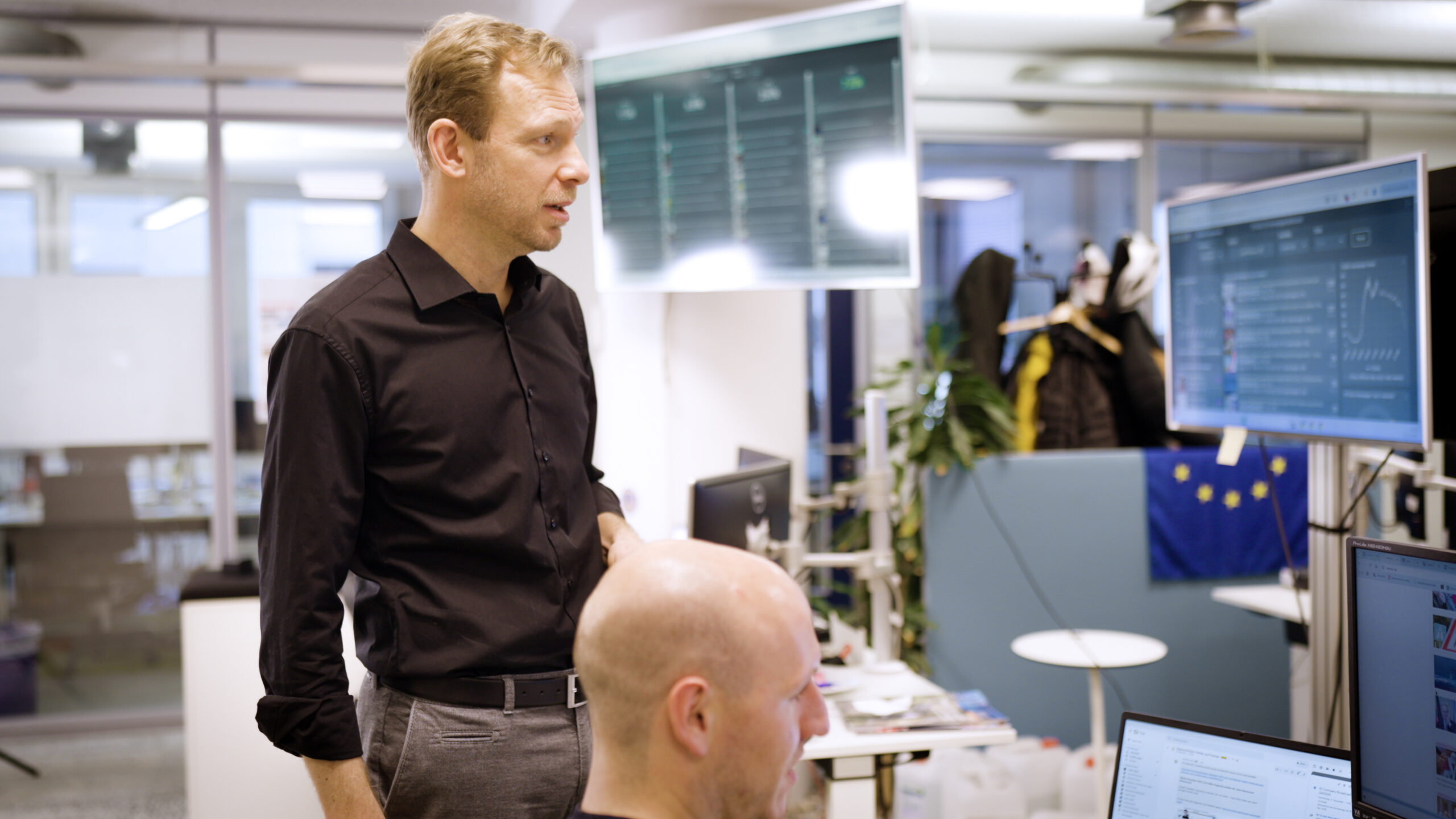
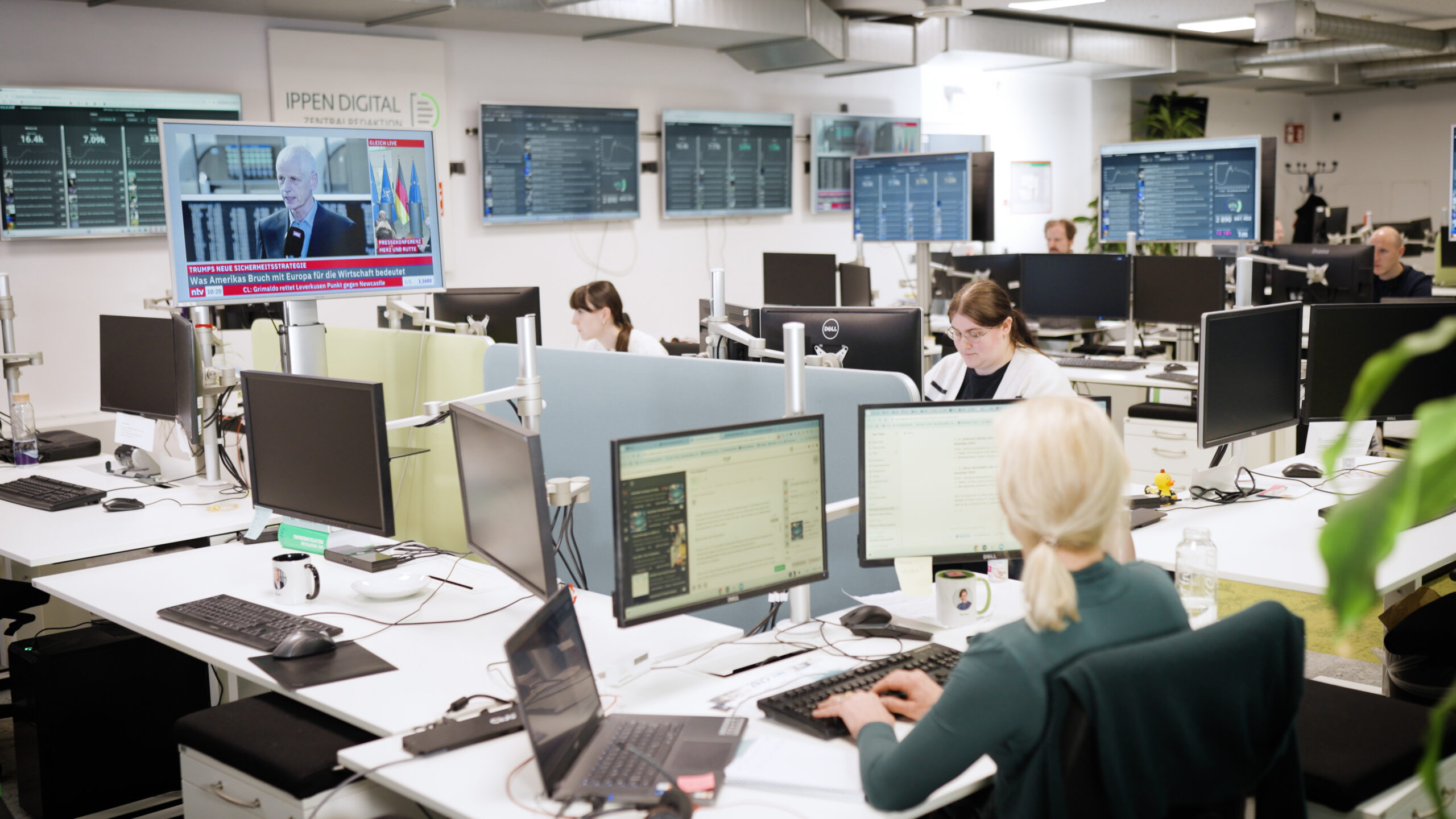
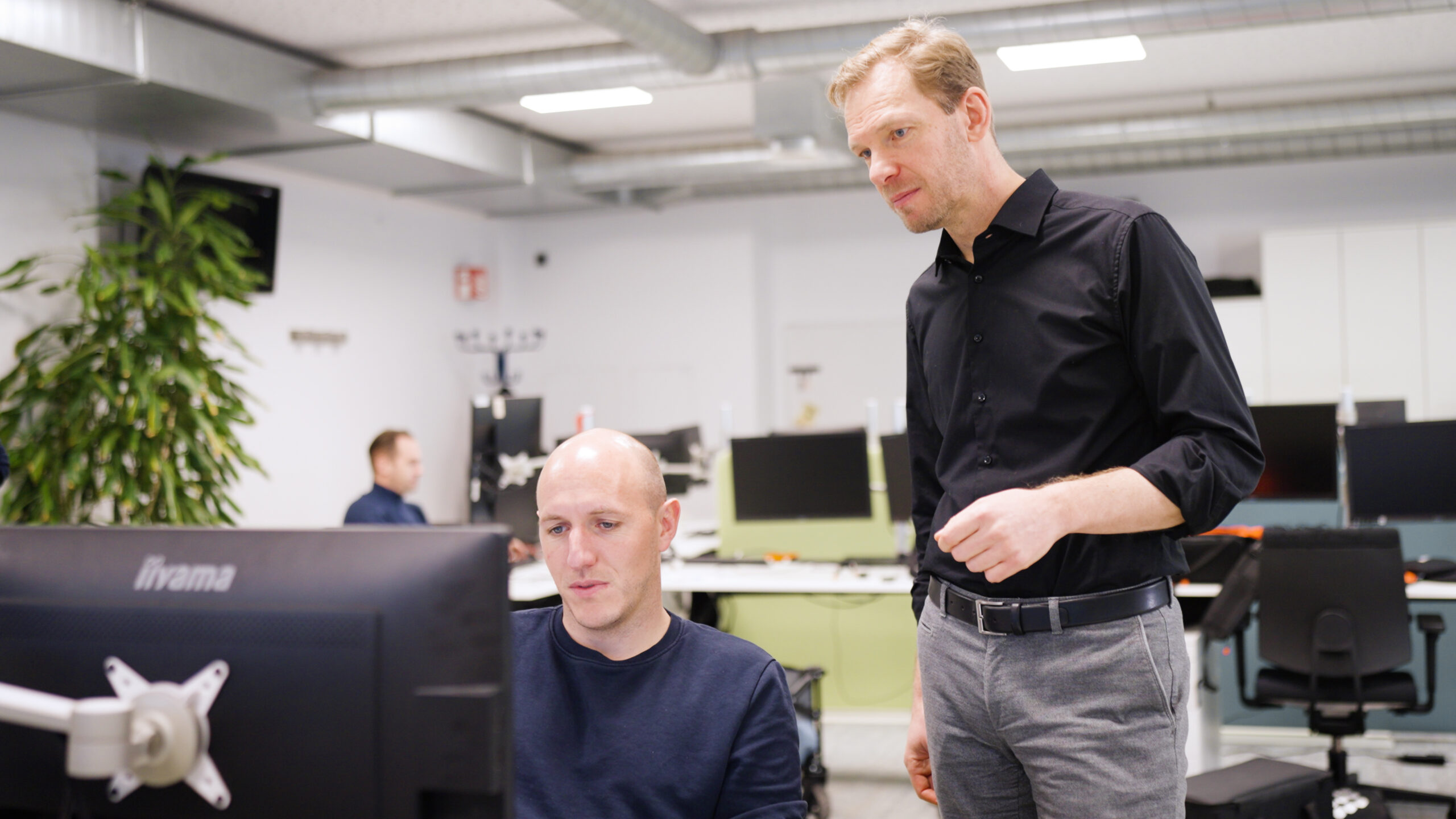
As part of the federal election, you implemented an AI project with automatically generated articles on election results at the municipal level: Over 1,000 AI-generated texts appeared on 13 news portals, with more than 440,000 page views. This was followed in May by an analysis of voter migration in the municipal area. What were your goals with these two projects?
Knall: We have been recording the election results of all 11,000 municipalities in Germany for years—no one else does this in such detail. For the federal election, we tested whether we could automatically generate reports from these figures. Our goal was to make the individual local results findable and readable at any time via Google, apps, and social media. That was the first test: Could we use AI error-free and in a journalistically responsible manner? And yes, it worked very well. The next project followed on “Local Journalism Day”: this time, analyses across three federal elections – 2017, 2021, 2025. This allowed us to show how individual municipalities have developed politically: stable or with changes in majority. In the end, over 1,000 texts were generated again, achieving more than 100,000 page impressions.
A volume that cannot be handled manually. What was important to you during implementation, especially with regard to neutrality, which is essential in political content?
Knall: It was important to us that there were no distortions or abbreviated narratives and that the AI did not generate biased patterns. We defined strict guidelines for the texts in a seven-page AI prompt. The result was deliberately very sober and factual, with little linguistic variation, because we had set the neutrality requirements particularly high – but it was reliable.
Relief in the editorial office: AI is more helpful than dangerous
How do your editors perceive the use of AI? Do concerns or relief due to the reduction in workload prevail?
Knall: Relief prevails. Some have concerns, which often stem from a lack of knowledge. Those who understand that AI primarily helps with standardized tasks—which constitute a manageable part of journalistic work—quickly become more relaxed. Many say quite pragmatically, “I have too much work anyway, so any relief is welcome.” AI does not replace journalistic expertise, but rather provides support with routine tasks, such as rewriting press releases.
What are the most pressing questions that still need to be answered in connection with AI?
Knall: First, we are moving into uncharted territory in terms of copyright law, and then there is the issue of ancillary copyright. There are still many questions to be answered here. Second, we are seeing that efficiency is increasing, but there is still a lack of truly new business models. If everyone uses the same tools, no one has a competitive advantage. So the search for big solutions has only just begun. Thirdly, users need to understand that AI needs human “freshness.” If we limit ourselves to reproducing existing content, innovation will be stifled – precisely the kind of new ideas that are crucial for certain tasks. Innovation can only come from humans.
Bannerbild: IPPEN DIGITAL MEDIA.