Nikola Kohl: “Innovation Doesn't Happen in the Comfort Zone”
For the ZDF format “Deepfake Diaries”, the Munich-based production company south[&]browse brought historical figures to life with the help of artificial intelligence. But technology alone does not tell a good story. In this interview, Managing Director Nikola Kohl talks about the role of storytelling in the age of AI - and why the media need the courage to use new tools wisely and responsibly.
At South [&]] Browse you create “relevant content that inspires”, as you write on your website. What constitutes relevant content?
Nikola Kohl: For us, relevant content is content that has social relevance at its core, that touches people emotionally and at the same time opens up new perspectives. For us, it's always about giving viewers something to take away, be it a new insight or an unprecedented approach to a topic. For us, relevance always arises when content is not only informative, but also generates resonance. It must be anchored in the present and at the same time point to the future in some way.
What comes first for you in a production: good storytelling or modern technology?
Kohl: Clearly the storytelling. The first question must always be: Is the story strong? If it isn't, any technology is just a gimmick. With a good story, on the other hand, state-of-the-art technology can massively support the storytelling. We see technology as a tool that enables emotional depth, visual power or access to new perspectives – perspectives that were perhaps previously untold.
Gen Z and Gen Alpha: Media must adapt to new needs and usage
And how does good storytelling work?
Kohl: Good storytelling thrives on authenticity, emotional resonance and a clear perspective. For us, it all starts with these questions: Why are we telling this story? Why are we telling it now? And who is the target audience? Thorough research, a good dramaturgical framework, credible protagonists and a visual language that carries the content are always essential.
Young target groups such as Gen Z and Gen Alpha have different expectations of content than older generations. To what extent is the way stories are told changing?
Kohl: Young generations are growing up with interactive, fast and visually strong content. They don't want to be lectured to, they want to be emotionally involved. For us as storytellers, this means shorter story arcs, a more direct approach, a stronger visual language and hybrid formats. TikTok, reels, streaming, documentaries, podcasts – Gen Z and Gen Alpha have little fear of contact when form and style change. On the contrary: they expect variety and a modern visual language. We have to take these viewing habits seriously if we want to reach the target group.
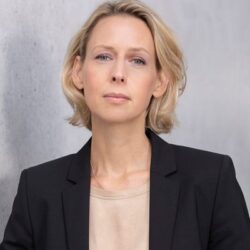
Topics in the fields of history and science are particularly suitable for the use of AI-supported sequences or animations. Our aim is to make content more impressive, more accessible and sometimes even more surprising.
Photo: south[&]browse
Nikola KohlCEO south[&]browse
How does South [&] Browse stand out from other production companies?
Kohl: We are modern, innovative and technically adept. From conception to post-production, we have incorporated various AI tools into our daily workflow, from idea development and visualization to post-production. If it supports the story, we also use innovative on-screen tools. Topics in the fields of history and science are particularly suitable for the use of AI-supported sequences or animations. Our aim is to make content more impressive, more accessible and sometimes even more surprising – for example through digitally animated figures or scenarios that make historical contexts visually tangible in a new way.
In which documentary can this be seen?
Kohl: We did this, for example, in our multi-award-winning “Terra X” production “The Shaman's Tomb” for ZDF. It tells the story of a woman who lived as a shaman in central Germany around 9,000 years ago. By analyzing her skeleton, scientists have reconstructed what she probably looked like. Instead of a classic re-enactment, we opted for a virtual production. Based on these scientific findings, we created a realistic animated avatar of the woman. Her surroundings – forests, lighting moods, landscape – were also digitally designed to make it possible to experience the world of that time as realistically as possible.
“Deepfake Diaries”: A production in which AI and humans work together
In your current ZDF production “Deepfake Diaries”, you also use digital and AI-based techniques to bring historical figures such as Rosa Luxemburg, Oskar Schindler and Otto von Bismarck to the screen and let them tell their own stories. How exactly does that work?
Kohl: We asked ourselves the question for this format: What if we could interview these historical figures? Because we didn't want to fictionalize anything, we deliberately chose people who had a lot of personal documents that they could quote from. On set, we worked with professional actors who played the historical figures first. We edited these interview recordings afterwards using a range of AI tools – including swap technologies and face tracking – so that in the end Rosa Luxemburg, Oskar Schindler and co. appear to be sitting in front of the camera themselves. The basis was original photos, illustrations or restored portraits, from which realistic facial expressions were generated using artificial intelligence. Where original sound material was available, we first restored it and then used speech-to-speech technology to match the voice color of the actors to that of the historical figures.
Couldn't the characters have been created entirely with generative AI?
Kohl: Yes, the technology would allow it. However, we deliberately opted for a hybrid production method because we wanted to preserve the emotional presence of the actors in the end result. It was also important to us to make the production method transparent. We deliberately chose the title “Deepfake Diaries” and we explain in the episodes that we use AI and how we use it. On the one hand, we want to show this: Not everything you see is real. And on the other, we want to encourage people to think about how technology can be used responsibly.
They have few reservations about AI, while other media companies and creatives are more skeptical. Creatives such as actors and voice-over artists, for example, fear for their jobs. Can you understand a certain mistrust in technology?
Kohl: Yes, I can generally understand this skepticism and, to a certain extent, the concern is justified. AI also offers new possibilities in negative areas such as fake news: It can falsify content, clone voices, manipulate faces – and all these things are now unfortunately being done.
Why is it so important that media companies still keep their finger on the pulse?
Kohl: So that they can show how AI can be used responsibly. Media are a reflection of their time and if you lose touch as a media company, you lose relevance. For us, AI does not replace creative people, but opens up new forms of expression. We consciously ask ourselves: When do we use AI and for what purpose? When do we work with synthetic image material? What does this mean for the audience's perception and trust? Especially in the field of documentary, the greater the technical possibilities, the greater the narrative responsibility. At the same time, we need the courage to break new ground. Despite all the technological innovation, it is above all people with attitude, expertise and artistic vision that make the difference.
Documentary market in the future: productions will become more immersive and hybrid
Let's take a look into the future: what will the documentary market look like in ten years' time?
Kohl: Ten years is a long time, especially in view of how rapidly these technologies are developing. I assume that documentary production will be even more hybrid, more immersive and more characterized by synthetically generated content in the future, at least where visual reconstructions are used. Technologies such as generative AI, holometric video and real-time engines will then be an integral part of the cinematic toolbox. Even today, almost anything can be visualized – regardless of whether original material exists or not – and the possibilities are increasing exponentially. This makes it all the more important to make transparent how content was created, what is real and what has been reconstructed or designed.
What strategy would you like to pursue with South [&] Browse in the future? What do you want for your production company?
Kohl: We want to continue developing stories that break new ground – in terms of content, form and technology. The central question for us is: How can we continue to tell documentaries in the future that surprise and move people? We believe that real innovation does not happen in the comfort zone. We are always looking to break away from the expected and play with formats. To do this, we want broadcasters and other partners who are just as curious, adventurous and courageous as we are. Our goal for the future is not to chase trends, but to set new impulses ourselves – and thus tell stories that will be remembered.
Bannerbild: Picture: south[&]browse

You may also be interested in
Mehr von XPLR: MEDIA in deinem E-Mail-Postfach
Der Newsletter von XPLR: MEDIA in Bavaria zeigt dir, wie innovativ der Medienstandort Bayern ist. Join the innovators!