“The game must convey the brand”: Korbinian Vielmeier-Thiede on the SZ puzzle world
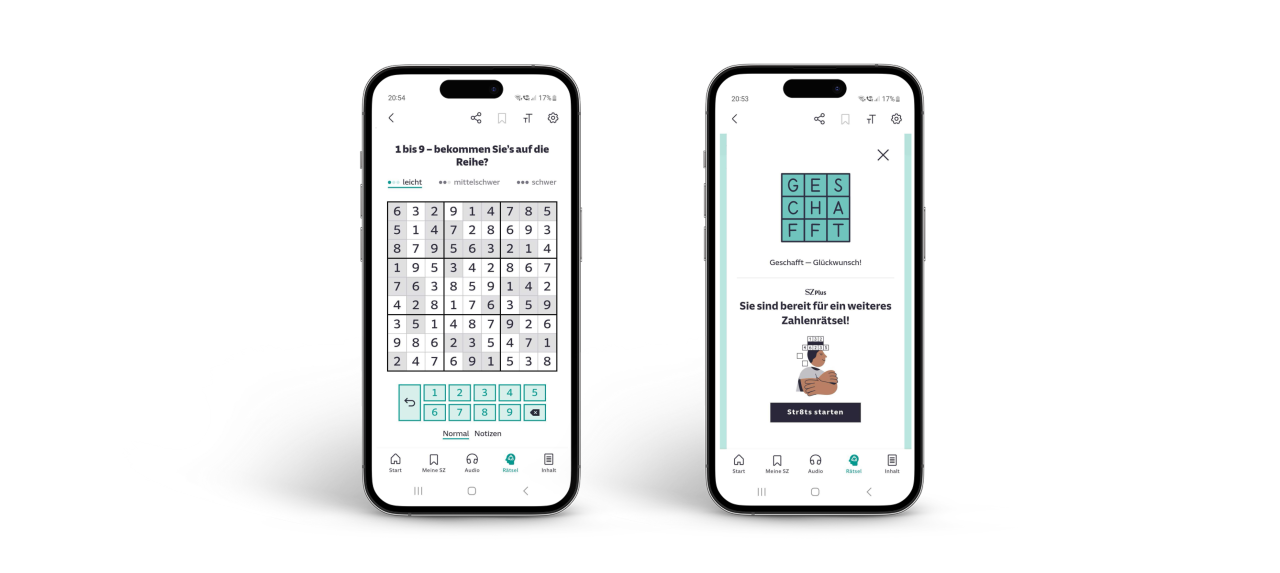
Letter ring, Str8ts, crossword puzzles, Quartett. Thanks to clever puzzles and thoughtful aesthetics, the games of German newspaper Süddeutsche Zeitung have quickly gained a large fan base. What the New York Times has demonstrated with its mega-success Wordle, the Munich-based publishing house is now doing with great impact in its own unique style. We asked Korbinian Vielmeier-Thiede, Director of Brand & Design at Süddeutsche Zeitung Digital Media, what the secret to the success of the SZ puzzle world is and how media companies in particular can benefit from digital games.
Mr. Vielmeier-Thiede, what prompted the decision to include puzzles in the SZ’s digital offering?
Korbinian Vielmeier-Thiede: The SZ now has 300,000 digital subscribers. On the one hand, it is important for us to attract new subscribers, and on the other hand, we also need offerings that provide additional value to people who already have a subscription. It quickly became clear to us that, in addition to our core journalistic offerings, we needed additional content that was close to the brand but not necessarily journalistic, and that we could make exclusively available to our subscribers on our platform.
Close to the brand – what does that mean?
Vielmeier-Thiede: That’s the decisive point for us – and that’s why the puzzles are also part of the Brand & Design section. The most important thing, in my view, is the strategic fit: If the game is to become part of the brand and contribute to brand building, it must also convey the brand. For this to work, the games must feel like the SZ and embody the brand’s identity in its various facets. For us, that special something is what sets us apart: high quality, sophistication, and a touch of humor.
You can find even more interviews with gaming industry experts and best practices from Bavaria’s media landscape in the Games Report by XPLR: MEDIA. Download it now for free!
What happened next?
Vielmeier-Thiede: We formed a small working group and started by looking at the market. In other words, what non-core journalistic content is available in other media that is close to their brands? Games and puzzles were naturally quick to come to mind as an option, because the New York Times has shown that they are not only a way to retain subscribers, but also to generate new ones. The decision was then quickly made in favor of puzzles, also because puzzles have been part of newspaper culture for a very long time and suit us very well.
Focus on exclusive SZ puzzles
But games were already part of the digital presence before, weren’t they?
Vielmeier-Thiede: Exactly, but these games focused on reach rather than quality, i.e., a completely different strategic orientation. In our experience, with classic reach games, users don’t come specifically to the respective publisher, but to the game. There is no strong connection to the platform. And because we also know that this group tends not to subscribe, it was clear to us that we needed a different kind of game. To this end, we put together a small interdisciplinary team and began sketching out this puzzle world and building it up step by step. So it was a shift away from a reach strategy toward a targeted offering that fits the brand, exclusively for our subscribers.

Our goals are for a quarter of subscribers to use the puzzles at least once a month and for the puzzles to make a significant contribution to subscription retention. The placement in the app couldn’t really be any better, so we’re looking at other areas where we might be able to do more. For example, through promotion in the SZ Welt, but also through features in the puzzle world that increase loyalty or promote the community.
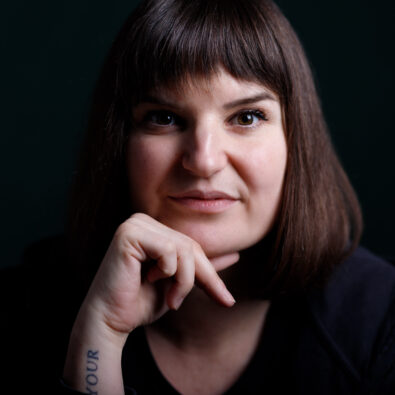
Korbinian Vielmeier-Thiede
So not all-in?
Vielmeier-Thiede: No, not at all. We started with one puzzle as a trial balloon. That was the Quartett puzzle, a picture puzzle that originated at the SZ. It was particularly important to us to convey that special “SZ feeling.” I think if you look at our puzzles, you’ll quickly notice that there’s a lot of SZ in them – starting with the high quality of the user experience. We want to offer the cleanest possible puzzle experience, which is why we largely refrain from advertising, for example.
It also has to suit us visually – the tongue-in-cheek illustrations, for example, are typical of the SZ. And the puzzles should also be challenging, precisely because we have very discerning readers. To achieve this, we also bring in outside expertise. For the chess puzzle, for example, we work with a chess grandmaster. In short, we wanted to be high quality and exclusive. But we also learned that seven highly exclusive, super-smart SZ puzzles that are not available anywhere else will not make us happy either. We need a well-rounded package with classics such as Sudoku and exclusive offerings around them.
The first SZ puzzle went live in autumn 2022. What happened next?
Vielmeier-Thiede: It was very well received very quickly. We then expanded the puzzle world step by step – developing more and different types of puzzles, but also improving their placement on the website. That was ultimately the breakthrough – the more prominently the puzzles were placed, the more they were played and the more often the puzzlers came back. The success also helped us internally – in the end, the teams themselves were interested in finding a good place for the puzzles in their respective products. The biggest step for us was positioning the puzzles in the main navigation of the app, where you can access them with a single click.
Strategic fit and brand loyalty
So for digital puzzles to be successful, you need a well-rounded offering that clearly fits the brand and has a well-thought-out strategic fit. What other lessons were learned?
Vielmeier-Thiede: It is important that access is easy and that usage can be as ritualized as possible. In the beginning, the new puzzles were always featured in a relatively prominent position on sz.de at the weekend. Accordingly, the numbers were high at the weekend. And we noticed that this caused the proportion of those who returned during the week to rise slightly – albeit slowly. Equally important was the realization that puzzle solving is extremely ritualized. This means that once you have got puzzle solvers used to something, you have to treat them with great care. Changes must be made very wisely, because puzzle solving has become an important part of the day for many readers. If we want to change functions or puzzles, we have to be able to justify it well.
And where do you want to go? What is the goal?
Vielmeier-Thiede: Our goals are for a quarter of subscribers to use the puzzles at least once a month and for the puzzles to make a significant contribution to subscription retention. The placement in the app couldn’t really be any better, so we’re looking at other areas where we might be able to do more. For example, through promotion in the SZ Welt, but also through features in the puzzle world that increase loyalty or promote the community – as is already the case with the letter ring, for example.
But we are also asking – and this is the most exciting strategic development in my view – how we can use the puzzles to attract new readers to the Süddeutsche Zeitung brand. Of course, it’s still about retaining subscribers. But we’ve noticed that the offering is so good that we can also attract new readers through the puzzles. Especially because the puzzles have a real brand connection. People consciously come to the SZ to solve the letter ring. That’s a big difference from before.
What potential do you see overall in integrating digital games at the interface with media?
Vielmeier-Thiede: The potential is huge. Just look at the New York Times, which generates a lot of subscriptions with its puzzles. I believe that the potential is far from exhausted for us as well. With clever ideas to increase visibility beyond our core target group, we can get many more people excited about the SZ brand and the SZ puzzles.