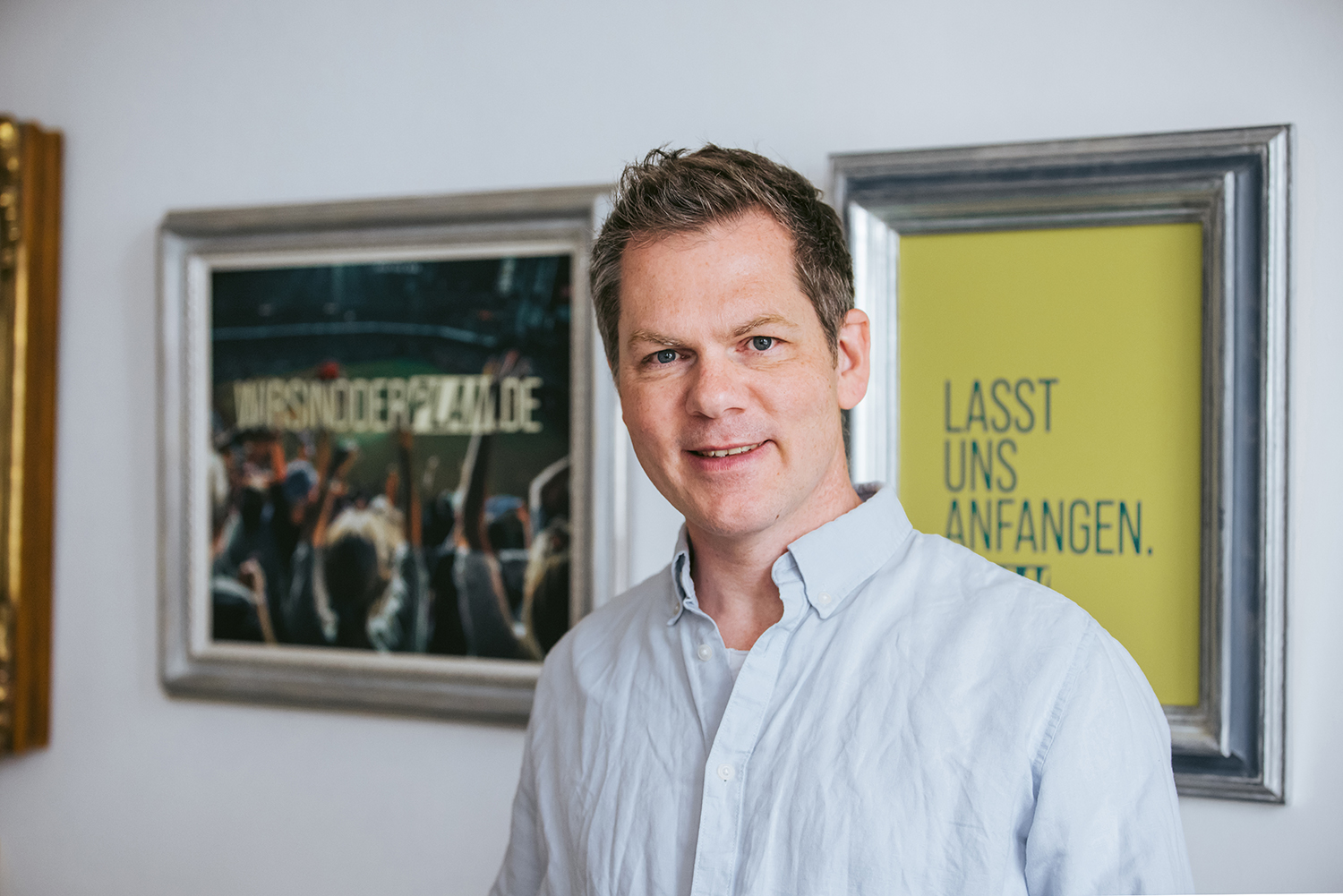
Christian Kaeßmann: Why we need sustainable media
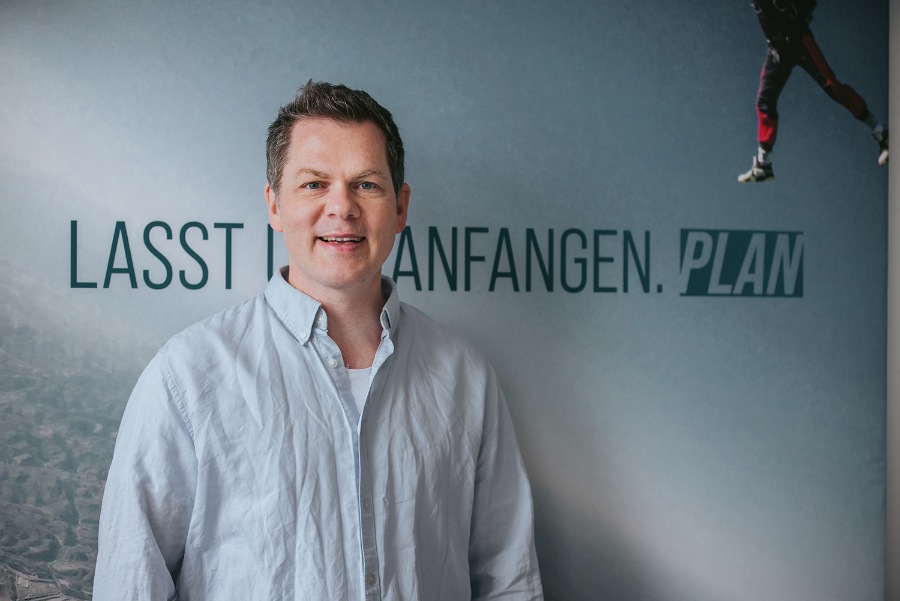
In 2016, Christian Kaeßmann founded the media agency “PLAN” in Munich out of an entrepreneurial opportunity. Today, he and his company stand for a strong focus on sustainability, a critical approach to social platforms and a rethink in the advertising market. In this interview, he talks about the dimensions of sustainable media and why it is essential for maintaining a diverse media system.
Christian, you founded the PLAN agency in 2016 – with what vision?
Christian Kaeßmann: It would have been nice if we'd already had a vision! It was rather a bit of a rush. At the time, I was working for an owner-managed agency and we had the idea of establishing a location here in Munich. A few weeks before it was due to start, we suddenly disagreed. I took the plunge and founded my own agency with just two and a half weeks' notice. We booked our first TV campaign back then with GMX mail addresses!
Today, you are characterized by your focus on sustainability. So that didn't exist at the beginning?
Christian: No. The topic of sustainability generally didn't exist in the media back then. At the time, Mediaplus was just starting to develop the Green GRP (editor's note: measured value for the CO2 footprint of campaigns). I noticed this in passing and thought it was a cool idea. We also fine-tuned our positioning. At the time, I was particularly struck by a phrase from editor Thomas Nötting in the W[&]V: He wrote that media planning should be brought back to its origins. That applies very well to our work, even today.
In what way?
Christian: When it comes to media planning, we don't want to jump on every bandwagon, see the Internet as the solution to everything and end up only placing on Facebook, Insta and TikTok. Instead, we want to talk to our customers: What is their target group? What kind of media usage behavior do they have? What is the customer's objective? We want to start with the basics, because far too little is done in the industry today. Instead, a lot of money is spent on things that are not always well thought out.
Too often, the media is only concerned with profitability considerations and thousand-contact prices, which, however, make no statement about the quality and impact of advertising.
Christian KaeßmannFounder of PLAN
Is that how the focus on sustainability came about?
Christian: A lot of things came together. During the pandemic, we learned that work is also possible when people are not in the office. We then made a U-turn, changed our employment contracts and enabled all employees to work 100% from home. I would have preferred to abolish the fixed weekly working hours, but that is not possible under labor law. It's easier to say we work what needs to be done and I don't care how much time someone spends doing it! I also had a personal crisis. As a result, I started to consistently change things in my life.
What impact did that have on the agency?
Christian: I had to relinquish sole responsibility. I brought in additional people and said to myself: we've earned money for a few years, we can afford not to earn any money for two to three years now. And suddenly the topic of sustainability for the agency's positioning came up. I thought that was a logical consequence. If the positioning had been the result of a business analysis, there would be no focus on sustainability.
Unfortunately, that's usually the case with sustainability – it rarely pays off financially.
Christian: Exactly. We are currently still drawing on what we have built up over the years and on standard business, which has little to do with sustainability. But we are now trying to work with our customers to drive forward the topic of sustainability-oriented media. Not everyone is very enthusiastic about this, although everyone says it is important. But when it comes to actual implementation, it's all about profitability at the end of the day. We are focusing on the wrong indicators when it comes to this question. Too often, it's all about profitability and cost per thousand contacts, but these don't tell us anything about the quality and impact of advertising.
Are new customers approaching you because you are focusing on sustainability?
Christian: Companies that say that sustainability is part of our corporate DNA like us and approach us. This little plant is still small, but it is growing. We have realized that we don't need to talk to the masses yet because the market is not yet far enough along. That's why we're targeting the eco-bubble and looking for customers there, because we're being received with an open mind. These companies identify with a partner like us because we also have sustainability in our DNA.
How do you live sustainability at PLAN?
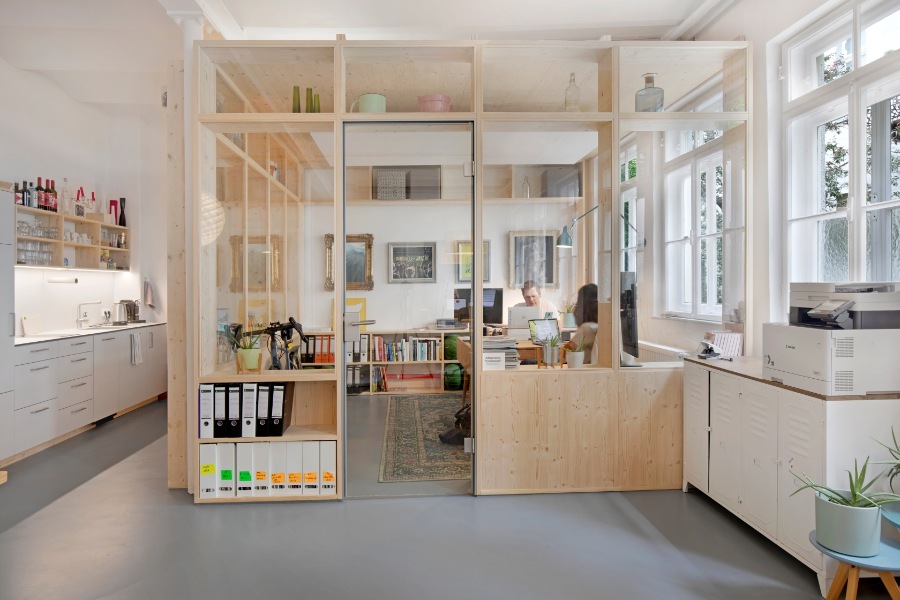
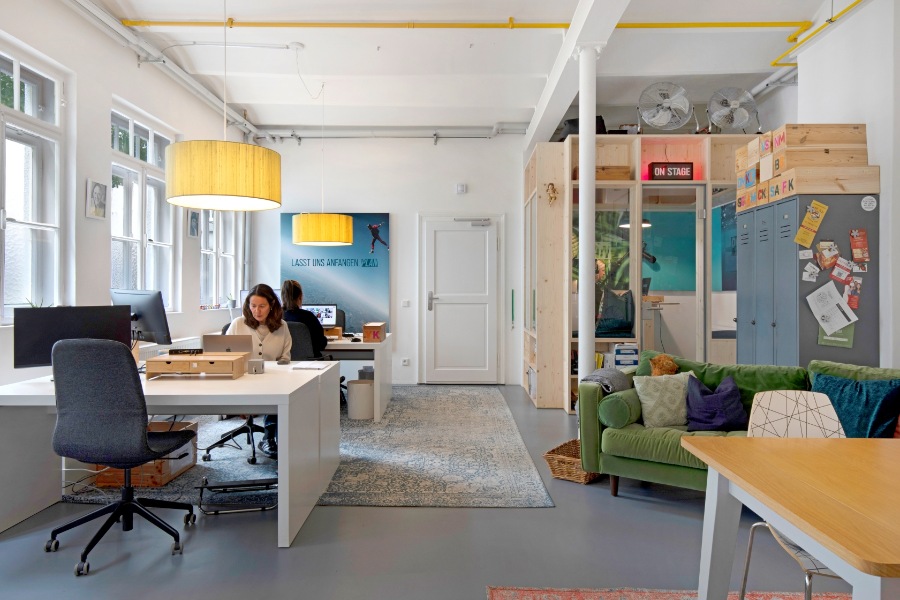
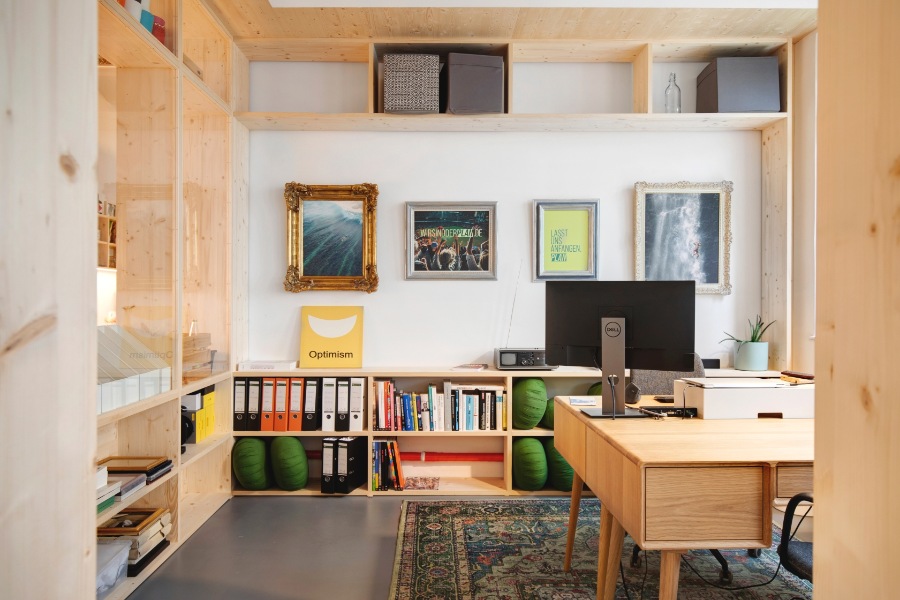
Christian: We started on a small scale. We switched electricity providers and are now with Naturstrom rather than the municipal utilities. There are no company cars at this agency, but we have introduced bike leasing. We only travel by train, our water comes from the tap and not from a plastic bottle. The flooring in our new offices is made from a sustainable material. We sold our old office furniture in classified ads and bought some new items there. Without receipts and privately – explain that to your tax consultant! To make it credible that we have sustainability in our DNA, we are currently preparing a report in accordance with the VSME standard.
And how do you implement sustainability in the media sector?
Christian: In general, there are three components to sustainability: ecology, economy and social issues. We are good at economics in Media because profitability is at the heart of our business. A few years ago, the term “green media” was established for ecology. Basically, the question is: what emissions are generated by the distribution of an advertising campaign? In very simplified terms, you could say “emissions per impression”. This is calculated by measuring instruments such as the GRP calculator from Mediaplus and two or three similar tools.
And what about the social component?
Christian: For media translation, the social dimension is a discussion about democracy: it's about preserving media diversity, enhancing quality journalism, promoting democracy through the media and combating hate speech and fake news. But the question is: how do I make this quantifiable? How do you express quality journalism as an index value? There are no answers yet.
How do you get this across to your customers?
Christian: What we do is totally banal: We talk to customers about it, we create awareness and sensitize them. We question with them whether it is right for a large part of their media budget to flow into tech giants and social platforms where you don't know in which environment the advertising is taking place. Platforms that take pseudo action against hate and fake news and do not protect their own users. They ensure that fake news that is damaging to democracy can be spread around the world. We sometimes see that marketing decision-makers have not yet thought about these issues.
How should we deal with advertising on Google, Meta and co.
Christian: Customers need to start asking the question of transparency. With a TV campaign, marketing decision-makers also ask where their ad is running. They want to see insertion plans and discuss exclusion environments: no sex, no crime, no violence, sometimes even no news. Everything is highly sensitive to ensure that the brand is not associated with supposedly harmful things. And next door sits the online marketing department, which spends €15,000 a day on Facebook or TikTok. Nobody asks about the environment and quality of contact. Why not? We need to rediscover this sensitivity.
You recently became part of Initiative 18, an alliance for free, secure and sustainable media. What exactly does Initiative 18 do?
Christian: The core goal is to preserve a diverse media system and to include this goal in the United Nations Sustainable Development Goals. So the work is conceived globally, it's not just intended to take place here in the German market.
Why does the initiative not come from journalism itself, but from the advertising industry?
Christian: The advertising market invests money in the media and money helps to keep the media alive. There are some people working in our industry who have developed an awareness of the fact that we control this money. And if we push all the money to Google, Meta and TikTok, these other media, which are important for media diversity, will be destroyed. There are now also interfaces and a close alliance, for example in “Project Confidence” with the #UseTheNews initiative.
Take a look into the future: what will the advertising market look like in five years' time – will meta and co. still rule?
Christian: There will be more awareness of the issue of sustainability. But a really big rethink – that will still take a few years. There are also other changes that will influence this. For example, AI is changing the topic of search engines and therefore also the flow of money into search engine marketing. Sooner or later, Google may no longer benefit as much. The next question is: when will ChatGPT open up to the advertising market? And what does that mean? Will there then be external influences that affect the results of the AI? So there are many more influencing factors than our efforts to raise awareness for sustainability.
What do you wish for the future?
Christian: I hope that everyone who is on the same journey doesn't lose their energy. That they remain convinced, like us.
Bannerbild: Photos: Monica Garduno-Soto
You may also be interested in
Mehr von XPLR: MEDIA in deinem E-Mail-Postfach
Der Newsletter von XPLR: MEDIA in Bavaria zeigt dir, wie innovativ der Medienstandort Bayern ist. Join the innovators!