Journalism for Children: Birgitta Kaßeckert on BR „Checkerwelt“
Knowledge transfer at eye level: Since 2011, Bayerischer Rundfunk's Checker-Welt has been a perennial favorite among children. In this interview, Birgitta Kaßeckert, head of BR's children's editorial department, explains what journalism for children is all about – and how the format is changing with Generation Alpha.
Ms. Kaßeckert, Checker-Welt has been very popular with children for over 14 years. What makes the show so successful?
Birgitta Kaßeckert: We take children seriously. Children don’t just want to be entertained, they like to think and get excited themselves. They are naturally curious and often much more open-minded than us adults. We tap into this thirst for knowledge and open-mindedness. Moving images give us a wide range of options for presenting knowledge, for example with reportage images, interviews, explanatory graphics, or game sequences. This allows us to achieve one thing: we remain exciting. The key is to treat children with respect and not bore them.
You want to consciously differentiate yourself from the typical way knowledge is imparted in schools. Why is that so important to you?
Kaßeckert: One big difference from school is that our program is not compulsory and does not follow a curriculum. It imparts knowledge and is entertaining. Children don’t like being lectured to. They also notice immediately when a format is trying to ingratiate itself with them. That’s why our hosts always address children on an equal footing.
Gen Alpha is growing up differently
What topics appeal to Gen Alpha?
Kaßeckert: I don’t think there’s that much difference between the generations. What’s important are topics that show how the world works and what holds it together. What has changed, however, is the world in which Gen Alpha lives. It is much more crisis-ridden. Sustainability, conflicts, AI, and fake news play a major role today. We address these issues, of course. But our hosts don’t just talk about these topics in the episodes, they also discuss them with children, for example in our Ukraine specials.
How do you explain these difficult topics to children?
Kaßeckert: It’s important not to explain topics such as the war in Ukraine and the conflict in Gaza to children from an adult perspective, but to offer them content that they can immediately relate to. You have to take the complexity out of particularly difficult topics – not every detail is important for children. At the same time, we mustn’t conceal anything or oversimplify things.
How do you maintain balance?
Kaßeckert: When we explain the conflict in the Gaza Strip, for example, we use lots of graphics to show how the conflict came about and when it began. It is very important not to cause fear or despair. To achieve this, we have to pay particular attention to choosing the right images: we would never show brutal war photos and leave the children alone with them. We take a neutral position on such issues. Moralizing is absolutely taboo. We don’t engage in politics, we impart knowledge.
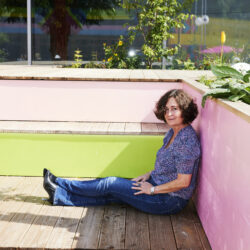
The big secret of good children’s television is that it is interesting for everyone. Because it is contemporary and explains complex things in a simple way. And because there are always moments of relief that take some of the weight out of even complex topics.
Birgitta Kaßeckert
Are children often underestimated when it comes to understanding complex issues or difficult topics?
Kaßeckert: Absolutely. But we mustn’t make the mistake of overestimating them either. We mustn’t overload them with details, but give them the chance to process the information. Our goal is to empower children, provide them with knowledge, and thereby make them strong and capable of taking action.
Parents and grandparents enjoy watching the Checker episodes too. Why is that?
Kaßeckert: The big secret of good children’s television is that it’s interesting for everyone. Because it’s contemporary and explains complex things in a simple way. And because there are always moments of relief that take some of the weight out of even complex topics. We get a lot of feedback from parents who are grateful for the support they get from our Checker format. There are now around 360 Checker episodes, including the Cancer Check, the Life and Death Check, and the Integration Check. We also explain topics that are difficult for mom and dad or grandma and grandpa to explain.
Tobias Krell, known as Checker Tobi, is one of the main faces of the show—alongside him are Checker Marina, Checker Julian, and Checker Can. How important are role models to the target audience?
Kaßeckert: Our hosts shape the format, and without them, the Checker world wouldn’t exist. They take the kids by the hand and guide them through the topics, asking questions that kids would ask. They’re role models, and they don’t pretend to be someone they’re not. Anyone who knows Tobias Krell knows that he is exactly the same in real life as he is on camera. This authenticity resonates with children: they want someone they can trust.
Smartphones, tablets, ChatGPT: Children today grow up with much more technology and smart devices. How is this changing the way they consume media?
Kaßeckert: Above all, parents’ usage behavior has changed completely. They are generally very tech-savvy and spend a lot of time online. They use linear media much less nowadays. We naturally take these developments into account. Accordingly, our content is available on all relevant platforms. These include our own platforms such as the ARD media library and audio library or the KiKA player, but also the ad-free YouTube Kids section.
Want to learn more about the world of checkers?
Click here for an interview with checker Marina!
A holistic approach strengthens the brand
In addition to the television program on KiKA, there is also a podcast, several movies, and books featuring Checker Tobi. Does Gen Alpha need to be approached holistically in order to reach and retain them?
Kaßeckert: We have to take changing viewing habits into account. We do this by offering different formats that are shorter than our 25-minute Checker reports, which are still more akin to linear television. Our spin-offs, whether it’s “CheXperiment,” “CheXpedition,” or themed specials, are shorter segments lasting four to twelve minutes. And we have a successful podcast, “CheckPod.” All of this strengthens the Checker brand.
What role does social media play in the Checker world?
Kaßeckert: Our core target group is children aged six to ten – social media doesn’t play such a big role for them yet. We are also on TikTok and YouTube Shorts, but we mainly use these to appeal to parents and draw attention to our own platforms.
How does the editorial team keep up to date with the needs, usage, and interests of the target audience?
Kaßeckert: We work very closely and trustingly with the production company Megaherz, which produces all Checker episodes for BR. We developed the Checker format together, as well as new spin-offs. Of course, we always need to know what makes our target audience tick. Various factors play a role here, such as social environment, origin, language skills, and gender. The International Central Institute for Youth and Educational Television (IZI) helps us understand the usage behavior and interests of our target audience. We evaluate our formats in qualitative studies with the IZI. We also receive a lot of feedback from teachers and viewers. We work with user labs and also visit school classes.
Topic suggestions from young audiences
What does communication with the target group look like? Does Gen Alpha have a say, for example when it comes to topics?
Kaßeckert: We have a whole catalog of topic suggestions that come from children. That’s why we’re currently producing a baby check and a children’s check, for example. Children help shape the content of these episodes and accompany Checker Tobi during the interviews and reportage segments.
Where is the Checker world headed in the future?
Kaßeckert: We have just launched a new spin-off called “CHECK IN” with Checker Marina. In January 2026, the third film featuring Checker Tobi, “Checker Tobi 3 – Die heimliche Herrscherin der Erde” (Checker Tobi 3 – The Secret Ruler of the Earth), will hit theaters.
Bannerbild: Sebastian Arlt
You may also be interested in


Mehr von XPLR: MEDIA in deinem E-Mail-Postfach
Der Newsletter von XPLR: MEDIA in Bavaria zeigt dir, wie innovativ der Medienstandort Bayern ist. Join the innovators!