Julia Eisele From Eisele Verlag: Quality Over Quantity
Julia Eisele runs one of Germany's most prominent indie publishing houses. Since 2016, the former program director at Piper has focused on clarity: only eight to ten books per year, each one personally selected and supervised. In this interview, she talks about how she works with authors, why her name is important for the publishing house, and how she feels about growth.
When did you realize that books and the literary world were your calling?
Julia Eisele: I have always read a lot and as a child I wanted to become an editor – without really knowing what the job entailed. I also grew up in Gütersloh, the home of Bertelsmann, which meant I came into contact with the publishing industry at an early age. After graduating from high school, I trained as a publishing clerk and then studied German language and literature, philosophy, and Romance languages. I also worked for various television stations on the side. After graduating, I worked briefly in television production, but quickly realized that my heart was in book publishing. I started at Penguin Random House as an editorial assistant and later moved to Piper, where I rose to the position of program manager.
What prompted you to start your own publishing company?
Eisele: I wanted more creative freedom, to put my own stamp on things and be less interchangeable. The fact that I already had a lot of industry experience under my belt in this new role helped me enormously. At Piper, I learned to think not only in terms of individual books, but to develop entire programs. Book publishing thrives on experience. I wouldn’t recommend anyone start a publishing house without having worked in the industry first. The business is demanding, follows its own rules, and requires skills that can only be acquired through daily practice and trial and error.
It is difficult to establish oneself in the book market
What challenges were particularly prevalent in the early years?
Eisele: At the beginning, we mainly asked ourselves: Can we actually do this? Establishing yourself on the market is by no means a given. We were lucky with our press office Politycki & Partner and the distribution partnership with Ullstein – we quickly became well known. In addition, our first successful books gave us a boost and ensured that we were soon in the black.
Your publishing house bears your name. How did you come to this decision?
Eisele: I thought about this for a long time. There is a tradition of naming publishing houses after their founders. At first, I didn’t necessarily want to use my Swabian surname because I didn’t find it particularly beautiful and wasn’t sure whether it would work as a brand name. However, my press officer made it clear to me that it is, after all, a very personally run publishing house, everything is under my control, and the name is therefore appropriate. Sebastian Guggolz from Guggolz Verlag, whom I asked for advice, said I would quickly get used to it. That’s exactly how it was. Now I hardly see any difference between Julia Eisele as a private person and as a publisher, which I find pleasant.

At large publishing houses, many processes are standardized, but with us, everything is more personal. As a publisher, I am visible, presenting our titles in bookstores and explaining to booksellers why we publish these particular books. This creates trust.
Julia Eisele
You deliberately focus on a manageable portfolio of titles.
Eisele: That’s right. I only publish eight to ten books a year. Each one should fit the profile of the publishing house and meet the expectations of our readers. Rapid growth or mass production are not my goals. More titles would promote interchangeability and cut-throat competition, as is common with large publishing houses. I do strive for sales growth, but quality always takes priority for me.
How would you describe the literary profile of your publishing house?
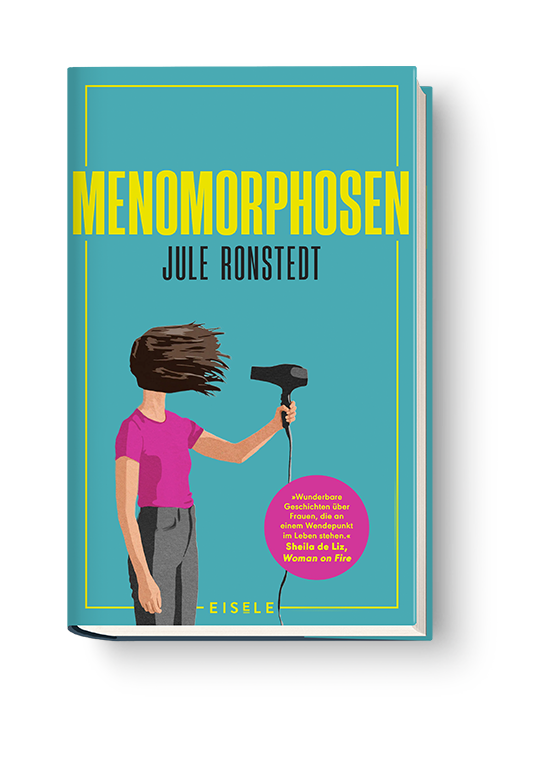
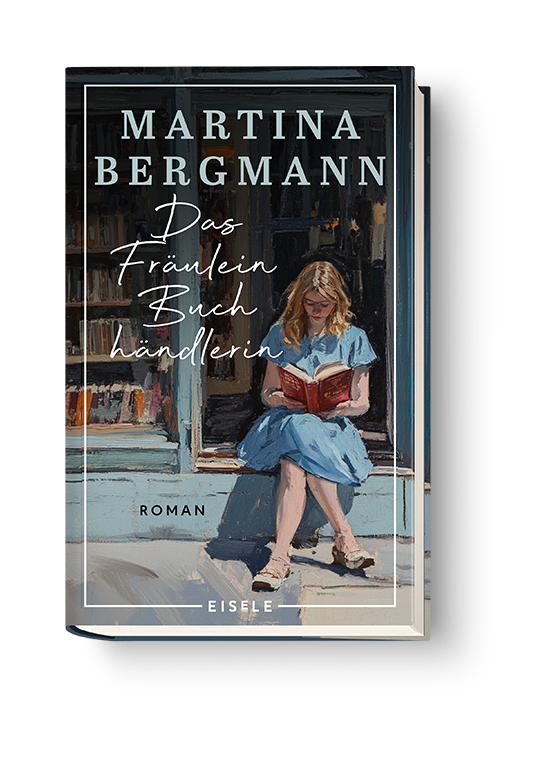
Eisele: We offer sophisticated entertainment with a distinctive narrative style, often from a female perspective. We want our readers to be challenged, inspired, and emotionally moved. Claire Chambers, for example, is an author who perfectly represents the publishing house: with refined language, subtle humor, socially critical, feminist, empowering – but always warm-hearted and entertaining.
Family atmosphere: Eisele Verlag focuses on personality and trust
What strategies do you pursue alongside your cutting-edge portfolio to hold your own against the big publishers?
Eisele: At large publishing houses, many processes are standardized, but with us, everything is more personal. I am visible as a publisher, presenting our titles in bookstores and explaining to booksellers why we make these particular books. That creates trust. We also work closely with our authors, often on a friendly basis. They should write what they really want to write, not so much what I want or what the general public demands. I accompany them until the book is finished, discussing cover designs and marketing ideas. This closeness is a central part of my work and sets us apart from large publishing houses.
How do you discover new literary voices?
Eisele: I mainly work with agents who suggest manuscripts to me. The classic unsolicited manuscript plays only a minor role in our program. I exchange acquisition lists with colleagues abroad at trade fairs and discuss current projects; this often provides valuable inspiration. Occasionally, authors who have already been published elsewhere approach me because they want a more intensive, transparent collaboration.
Artificial intelligence is currently also occupying the literary world. Can you recognize AI-generated manuscripts?
Eisele: It’s hard to say. The appeal of writing lies precisely in expressing oneself individually – not averagely. That’s why literary writers, I guess, usually don’t want to work with AI at all. It may be different for nonfiction, for example when doing research. I myself use AI in my everyday work at the publishing house, for example to come up with ideas for blurbs or to translate more complex emails. But I don’t see myself basing a literary text exclusively on it at the moment.

What role does social media play in your marketing?
Eisele: As it is becoming increasingly difficult to attract attention through traditional print media, social media is becoming more and more important for us. That’s why we maintain close contact with influencers and provide bloggers with boxes of books and giveaways to reach more readers.
You have won the German Publishing Prize three times in the past five years. How important are these awards to you?
Eisele: The German Publishing Prize is currently endowed with 18,000 euros, so it’s primarily a financial boost. For a small publisher like ours, that makes a real difference. The prize also strengthens our public image and confirms that we are doing culturally valuable work. Last year, we also won the German Youth Literature Prize. We are very happy about that, and it shows that we are making the right decisions.
The location offers advantages: Munich is the number one publishing city
How does your publishing house benefit from being based in Munich?
Eisele: Munich is culturally very exciting and the number one publishing city in Germany. It’s nice to have lots of colleagues nearby. I was on the board of the Bavarian Publishers and Booksellers Association for three years and am active in the IG Belletristik/Sachbuch (fiction/non-fiction interest group). The industry meets there once a year at the Literaturhaus München (Munich Literature House) – so it’s nice to be right there on the spot.
In 2026, you will celebrate your tenth anniversary. What are your goals for the next ten years?
Eisele: The market is stagnating, so maintaining the positive status quo is already a success for us. Much more important to me than chasing numbers is continuing to publish relevant books that I believe in and supporting the authors as personally as possible.
Bannerbild: Irène Zandel