
Veronika Gamper: “People Want to Work With AI”
Even before ChatGPT came onto the market, Veronika Gamper founded WeDaVinci, a startup that focuses on natural language processing. She and her team have now received EU Creative Europe funding for their AI project “Visionary Tales,” which allows users to create movie trailers based on book manuscripts. In this interview, she reveals exactly what lies behind the platform, which emphasizes collaboration between humans and machines.
Veronika, what was your idea behind launching WeDaVinci?
Veronika Gamper: WeDaVinci emerged from my doctoral research in the field of data processing and computer science. The original idea was to use AI-powered tools to enable people to generate new project ideas. We had access to large language models shortly before ChatGPT and then developed more and more in the direction of content generation. Today, WeDaVinci is a platform for human-AI co-creation of content in the areas of text, audio, and video. It is primarily aimed at media companies and content creators.
You place a lot of emphasis on the concept of co-creation – is the focus on the human-AI tandem important to you?
Gamper: Yes, that’s what sets us apart from many others, especially American tools, which are primarily about getting AI-generated content at the touch of a button. We, on the other hand, say that good content fundamentally requires interaction between humans and AI. Our platform provides new ideas and suggestions or develops existing ideas further – humans can get involved at any point. Users in Europe in particular appreciate this.
How did you come to focus on the media sector?
Gamper: I myself have always been very involved in and interested in the media sector. In addition to my computer science studies, I attended the one-year film program “Atelier Ludwigsburg Paris.” Even back then, I was fascinated by the topic of content development. I also spent almost two years at RTL as interim director for data products, where I was responsible for multi-format content.
The WeDaVinci tool “Visionary Tales” operates at the interface between the book and film industries – so is it a project close to your heart?
Gamper: Yes, it feels that way. With Visionary Tales, we want to focus specifically on the interface between book publishing and film, which is also currently a major focus in the world of AI. We see particularly in this area that people do not want to be replaced, but rather want to work together with AI.

More visibility for unknown books
What exactly is Visionary Tales?
Gamper: With our Visionary Tales platform, users can create AI-based movie trailers for books. They can upload a manuscript and initially receive suggestions as to the direction the trailer could take. They can then adapt this to their target audience. The program creates video snippets that make up the trailer, which can then be edited or supplemented. Users know their target audience best and can influence the result via our platform. Add some music and you’ve got a video trailer. But you don’t have to be a film expert or programmer to do this. Visionary Tales can be easily controlled using natural language.
Who is this tool aimed at – authors, publishers, production companies?
Gamper: We already see the greatest demand among publishers – here we can talk about many specific titles right away. Over time, it will definitely also be exciting for individual authors. We are seeing a trend toward self-publishing, and Visionary Tales opens up a new marketing channel for them. At the same time, the tool is for film producers who can easily test whether a story works in moving images.
At the moment, it’s mainly bestsellers that make it onto the big screen. How could Visionary Tales change the market?
Gamper: It’s true that films based on books are often more successful at the box office. However, there are currently few opportunities to sell IP rights from existing books to film producers. In addition, the few opportunities that do exist, for example at film festivals or book fairs, focus on very few titles. That’s why people tend to focus on books that are already well known. They have already found their audience. However, we believe that by simply creating AI video trailers, we can give many books the potential for greater visibility.



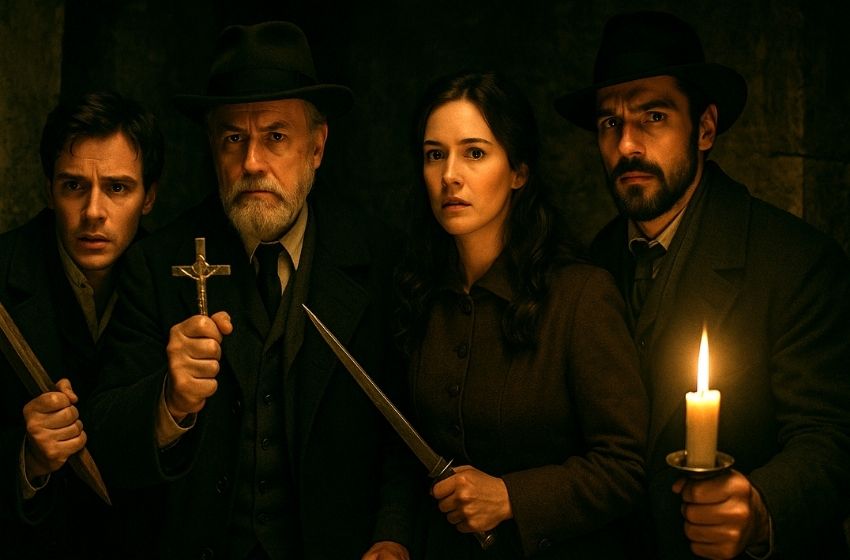

Current challenges in AI moving images: Continuity
How much is already possible with AI and your tool in the film industry?
Gamper: It’s amazing how realistic some AI videos are now. Even experts often can’t tell that shorter, successful sequences are AI-generated with the naked eye. This means that today, you can depict things very realistically and control them very well. In the book industry, for example, it is now very easy to depict fantasy worlds that would otherwise be very expensive to produce. There are no limits to the imagination, which is the beauty of it.
For a long time, the representation of realistic images in AI-generated moving images was a hurdle. How big are the challenges still?
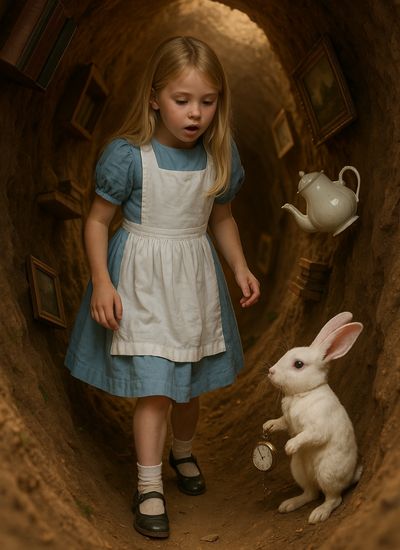
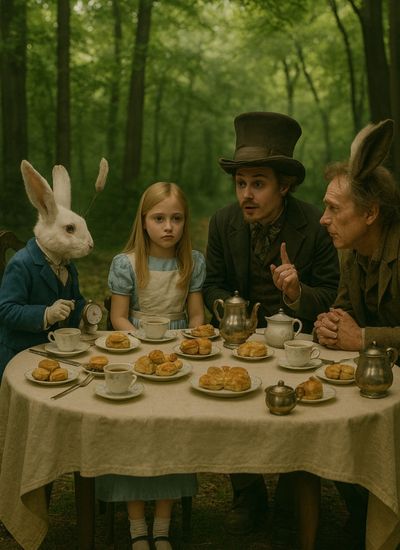
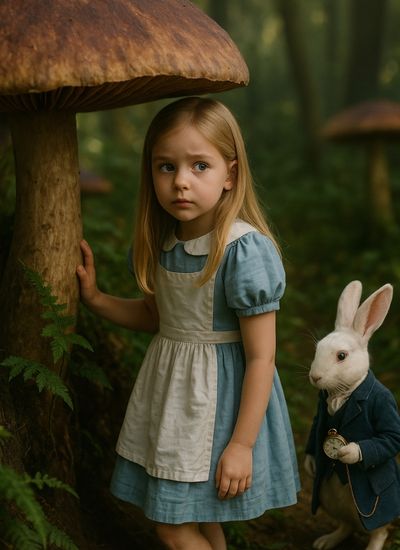
Gamper: Development in the field of AI-generated video is rapid. Just two years ago, you could still see six fingers and three legs. Initially, all AI models struggled with this problem. But it was gradually solved. The focus has now shifted to the question: Is it always the same person, the same character, who is visible in every shot? And are the people and details in the background consistent throughout? A lot has happened in this area, especially in recent weeks. Nowadays, the process is less about going from text to video shot and more about going through images first. This is a great way to ensure that the images are consistent, i.e., that they contain the same characters and backgrounds. Once you are satisfied with these images, you can use them to generate the video shots.
Do you see any other possible applications for your tool?
Gamper: Our focus is now on creating AI video trailers for publishers. Beyond that, I can imagine that in the future it will be adaptable for marketing the book itself to readers on platforms such as TikTok. And then you can generally consider what other content you can turn into video trailers to market it or just to give a little insight. There are still many possibilities.
You received EU Creative Europe funding for “Visionary Tales.” How is that going, and what’s next for your platform?
Gamper: We would like to release a beta version of our tool in November. We are very grateful for the Creative Europe funding, which has allowed us to focus on the topic of moving images. We started at the end of last year. In the coming year, we want to focus on giving users even more customization options.
Bannerbild: Photo: Private

Das könnte dich auch interessieren
Mehr von XPLR: MEDIA in deinem E-Mail-Postfach
Der Newsletter von XPLR: MEDIA in Bavaria zeigt dir, wie innovativ der Medienstandort Bayern ist. Join the innovators!