2026 World Cup: How Sports Media History Is Being Made in Ismaning
A massive project running 24/7: MagentaTV is the only broadcaster in Germany to air all 104 World Cup soccer matches live. This technological and editorial spectacle is managed via a robust Bavarian network directly from the main broadcast center in Ismaning—linked to a partner studio in New York.
While the 2026 FIFA World Cup has the soccer world on the edge of its seat, media history is being made behind the scenes in Bavaria: MagentaTV is the only platform in Germany to broadcast all 104 matches of the tournament live and in full. Even during the group stage, Telekom is already racking up record numbers, as the company announced. The entire project is managed from the main broadcasting center in Ismaning, near Munich, which is linked in real time with a partner studio in New York and on-site teams in the U.S., Canada, and Mexico.
To offer fans the ultimate World Cup experience, the crew is running three custom-designed channels simultaneously: Channel 1 features the classic, linear main program with all the previews and live matches. Those who want to dive deeper into the action can switch to the second channel, which stands out as a tactics and statistics channel with plenty of live data. And for those who prefer something a bit more unconventional, the “Surprise Channel” offers real highlights, which may occasionally include comedians or translations into other languages. The daily “Breakfast Club,” which recaps the previous night’s games, and extensive social media coverage round out the coverage.
A Bavarian loft at the heart of the World Cup
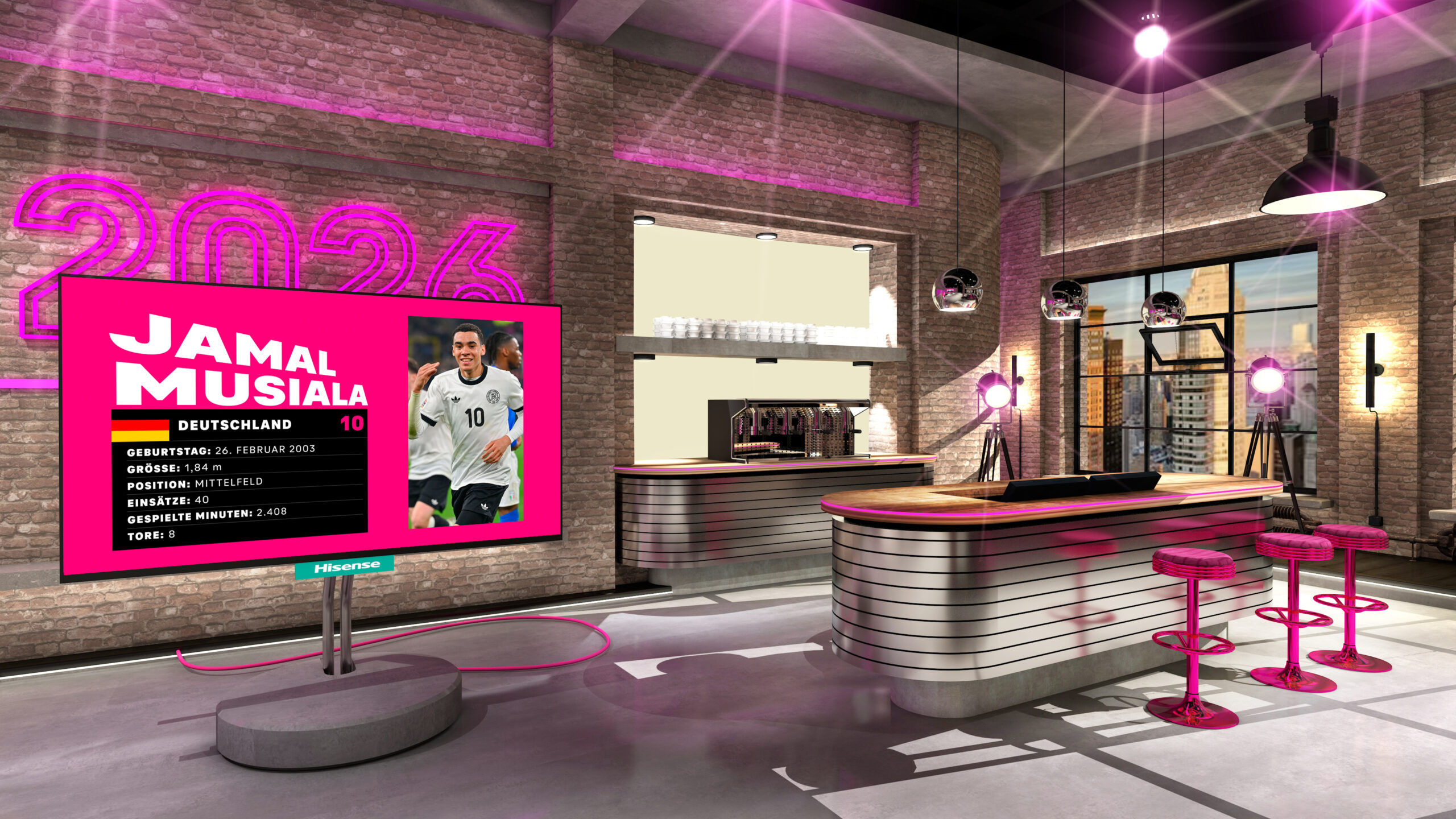
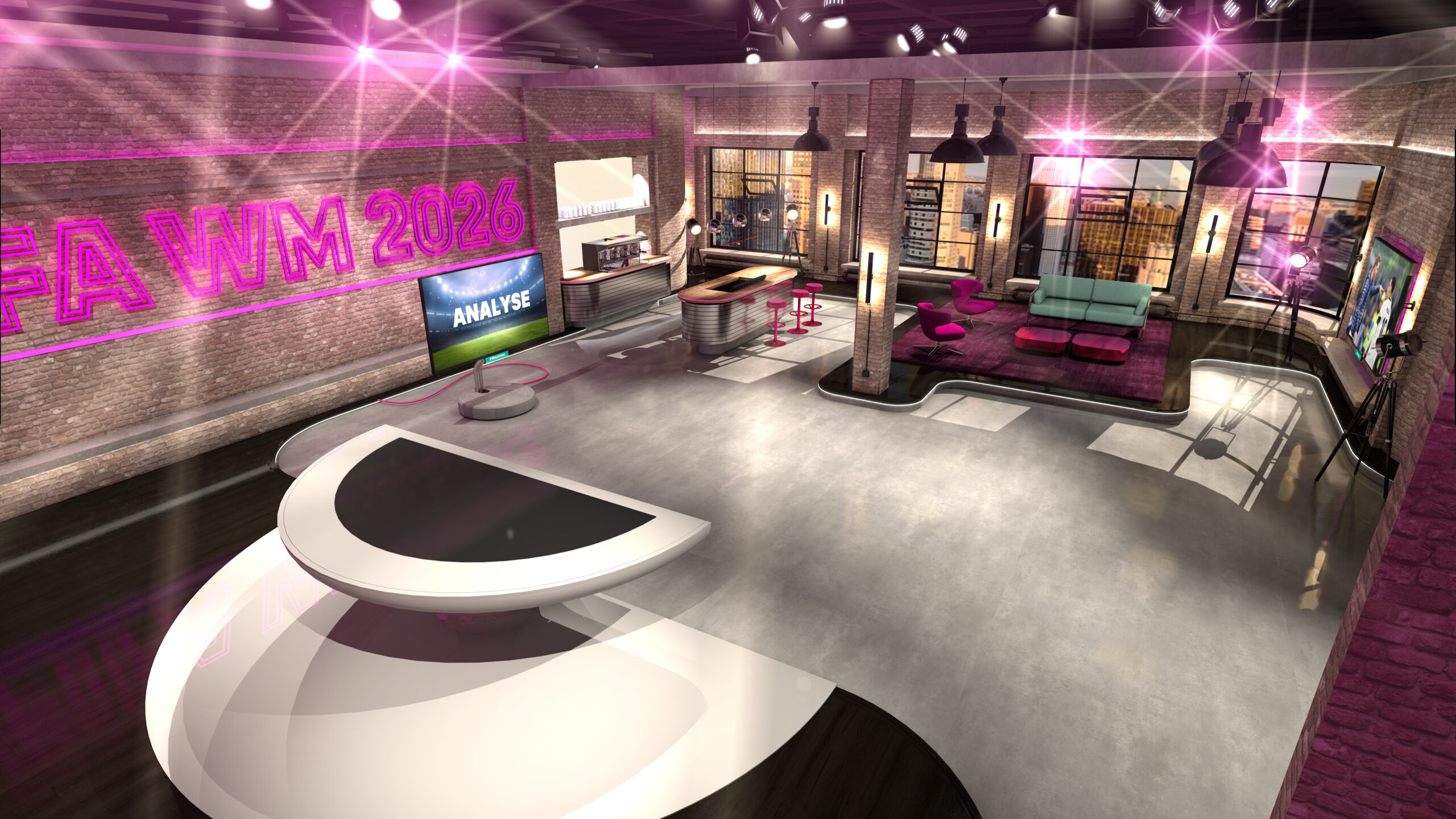
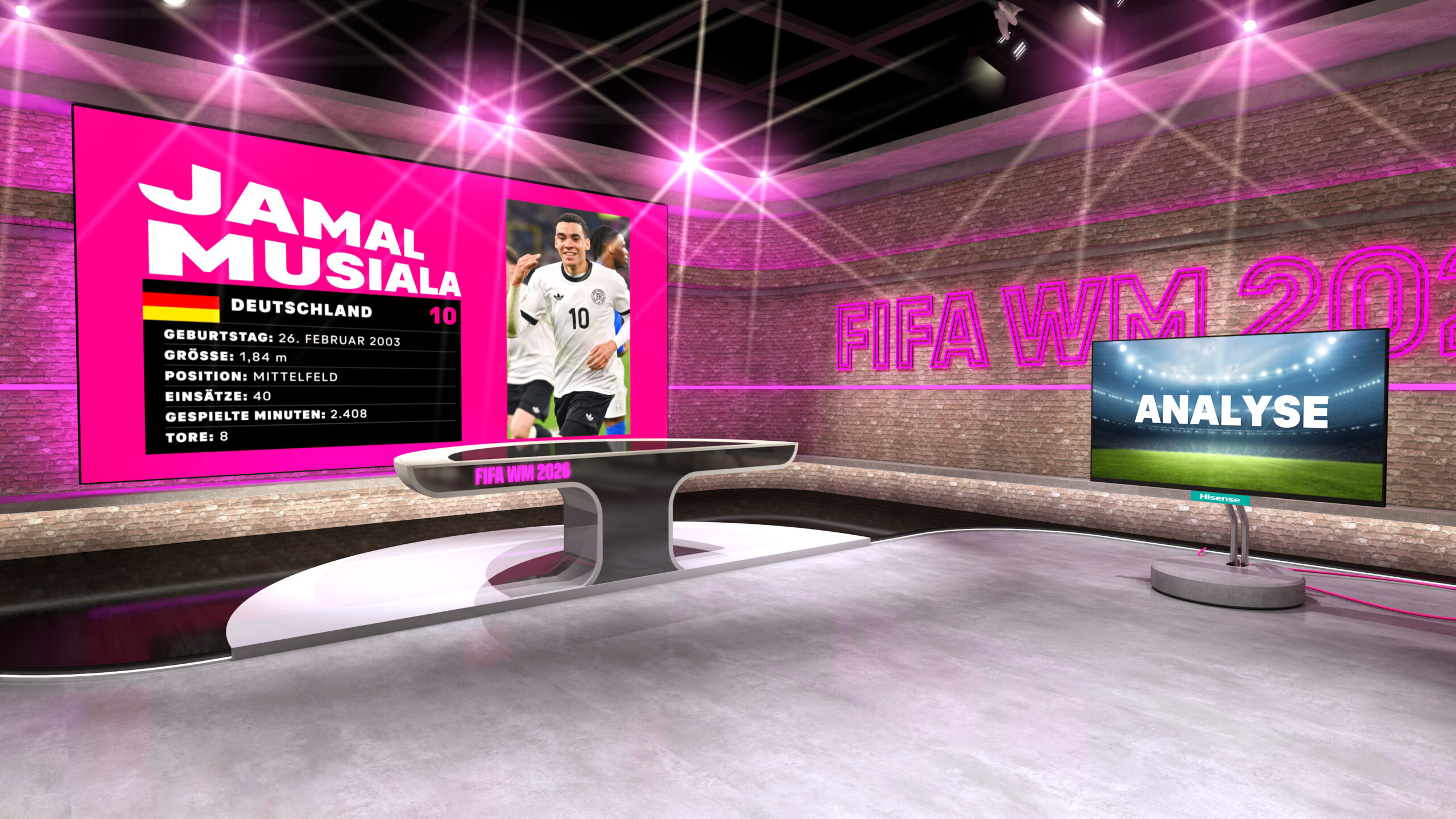
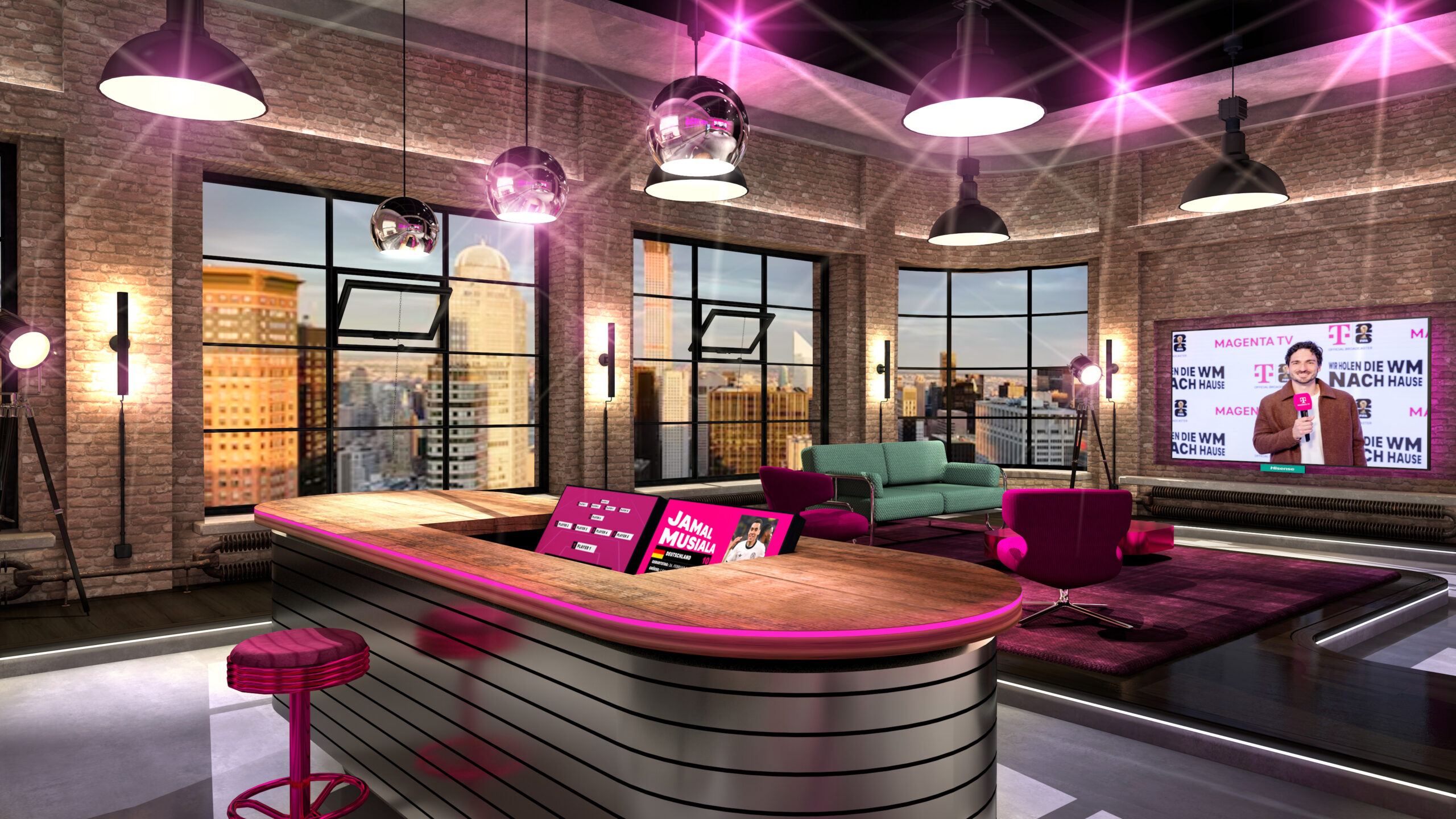
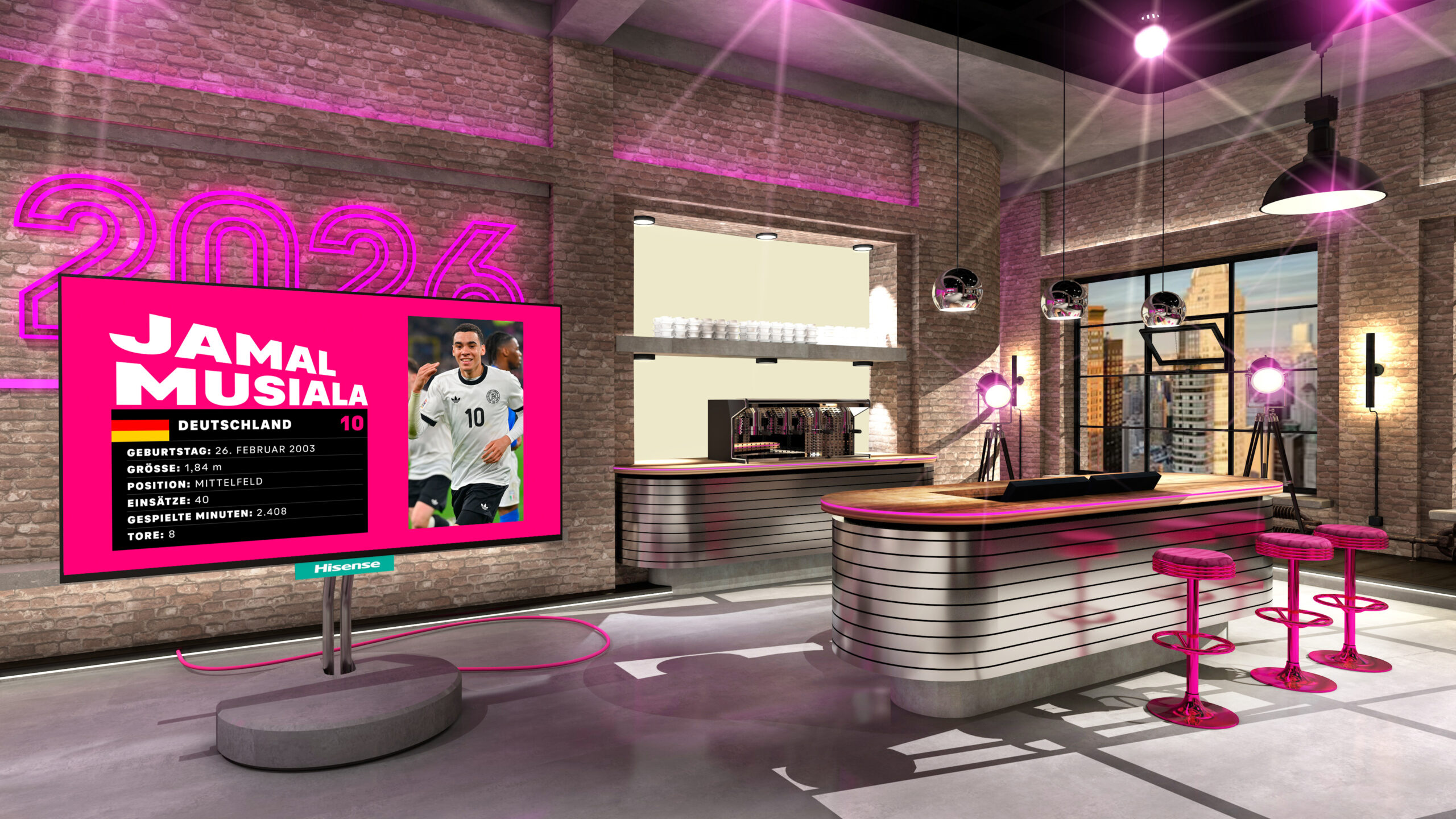
To ensure this major media event was conveyed with visual and technical perfection, a completely new broadcast studio was built at the Ismaning location in record time. For Jörg Krause, Head of Communications at ThinXpool TV GmbH, the result is a true milestone: “This studio is superbly designed.” ThinXpool, based in Holzkirchen, has full control over both production and content for MagentaTV’s World Cup coverage in this project.
Designed by set designer Jürgen Bieling, the 350-square-meter studio breaks with the classic look of typical sports broadcasts. Designed as a modern, warm loft, it combines maximum functionality with a cozy atmosphere. “The team behind the project has created a compact studio that meets all requirements,” explains Jörg Krause. “It offers great potential for dynamism because, in collaboration with the directors, various positions have been defined there, each with a clear function and purpose.”
In addition to the traditional anchor desk for game coverage, there is a dedicated analysis unit as well as the set for the morning “Breakfast Club.” Huge media elements—including a 16.5-meter-wide LED screen—digitally bring the atmosphere of the various venues in North America to Ismaning. What makes this special is that, via a central graphics and playout system, the Ismaning Loft is so intelligently networked with the partner studio in New York that content can be played out across locations completely seamlessly with minimal latency.
Over 400 professionals working around the world
Another Bavarian company is responsible for ensuring that the technology works together with millimeter precision: DMC Production Germany GmbH (formerly Plaza Media) from Ismaning was commissioned by ThinXpool to provide all technical equipment, studio construction, and broadcast operations. Hansjörg Baumgartner, Director of Production Services & Customer Engagement at DMC and project manager for the World Cup project, describes the scale of the logistical infrastructure: “Our services cover most areas of a traditional in-house production. This is the technical heart of the operation—an infrastructure that brings together everything connected to it.”
Specifically, this means that at DMC, approximately 65 or more individual feeds from North America converge in the so-called World Cup MCR (Master Control Room) for each game. These must be processed, converted, and enhanced in real time via live galleries, graphics systems, and sound studios before being sent to Telekom for playout. An absolute first in media technology: For the first time ever, all matches of the tournament are being produced entirely in native UHD HDR and with Dolby Atmos.
The broadcasting and transmission technology is being implemented by the Mainz-based company TV Skyline as part of an innovative remote concept linking New York, the stadiums in North America, the DFB training camp in Winston-Salem, and the broadcast center in Germany. Unilateral coverage from the World Cup stadiums in North America is also part of this remote concept.
To win this “technical battle” with as few errors as possible, a massive team is working around the clock: Across all partner companies, more than 450 people are working on the project, including about 150 operational staff members from DMC alone. While the editorial and technical crews are on duty around the clock at the Bavarian broadcast center in Ismaning, the mobile venue teams and top-tier experts—including Thomas Müller, Mats Hummels, Tabea Klemme, and Jürgen Klopp—fly directly from venue to venue in the U.S., Canada, and Mexico.
A Year of Planning for a Logistical Emergency
A total of twelve months of development and planning went into the custom-designed World Cup infrastructure. Both ThinXpool and DMC are seasoned professionals who have already successfully managed past European Championships and World Cups. But this tournament is on a scale unlike anything seen before. For one thing, the sheer volume of 104 games—a first in World Cup history—played over five and a half weeks poses an extreme test of endurance. For another, the tournament’s geography, spanning three vast countries, presents a major challenge.
The biggest challenge is that the games are played at night for us, but there are also 15 different kickoff times. So we have to plan everything on a case-by-case basis every day to account for the different times. For us, that means truly operating 24/7.
Hansjörg Baumgartner, DMC
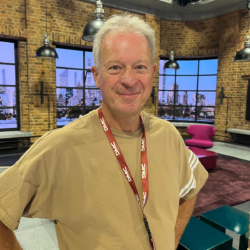
DMC Project Manager Hansjörg Baumgartner, who has been in the business for 30 years, has never experienced anything like this before: “The biggest challenge for us is the late-night game times, as well as the 15 different kickoff times. That’s very unusual for a World Cup. So we have to plan everything completely individually every day to accommodate the different times. For us, that means truly operating 24/7.”
While the technical and editorial teams work around the clock in Ismaning in two to three shifts, the on-site teams have to meet more complex logistical challenges. Jörg Krause, Head of Communications at ThinXpool, explains the massive effort required behind the scenes to get the top-tier experts, hosts, commentators, production managers, and other production staff to the right place at the right time: “The experts don’t travel by bus—they fly across different time zones. Accreditations, work visas—just organizing these trips alone kept several people working nonstop for many months.”
Teamwork Across National Borders
A large-scale media project like this can only be realized within a perfectly coordinated ecosystem. ThinXpool and DMC rely on a strong network in which Bavarian companies play a key role: The Munich-based company MMO, for example, uses an AI-powered content strategy to ensure that goal scenes and highlights are automatically delivered to major media partners in the blink of an eye. The Mainz-based company TV Skyline has a production truck on site in Ismaning and provides the technology for the New York studio as well as for the mobile venue teams in North America.
For Jörg Krause, head of communications at ThinXpool, this cross-team spirit is the secret to success: “You can only achieve that with partners who are fully committed to excellence.”
And what will happen to the studio and its equipment after the tournament? “Complete dismantling,” explains DMC Project Manager Hansjörg Baumgartner, offering a glimpse into the company’s future: “Next year, we’ll be making a shift to a completely new infrastructure. DMC will rely entirely on cloud-based technology to offer our customers freely scalable and highly innovative features. It’s really going to be a major highlight.”
ThinXpool already has its next highlights lined up for after the World Cup: The company will continue to serve as the content provider for approximately 3,000 hours of programming on MagentaSport—in addition to soccer, the focus will be on ice hockey, basketball, field hockey, and golf.
Bannerbild: ThinXpool TV, LLC