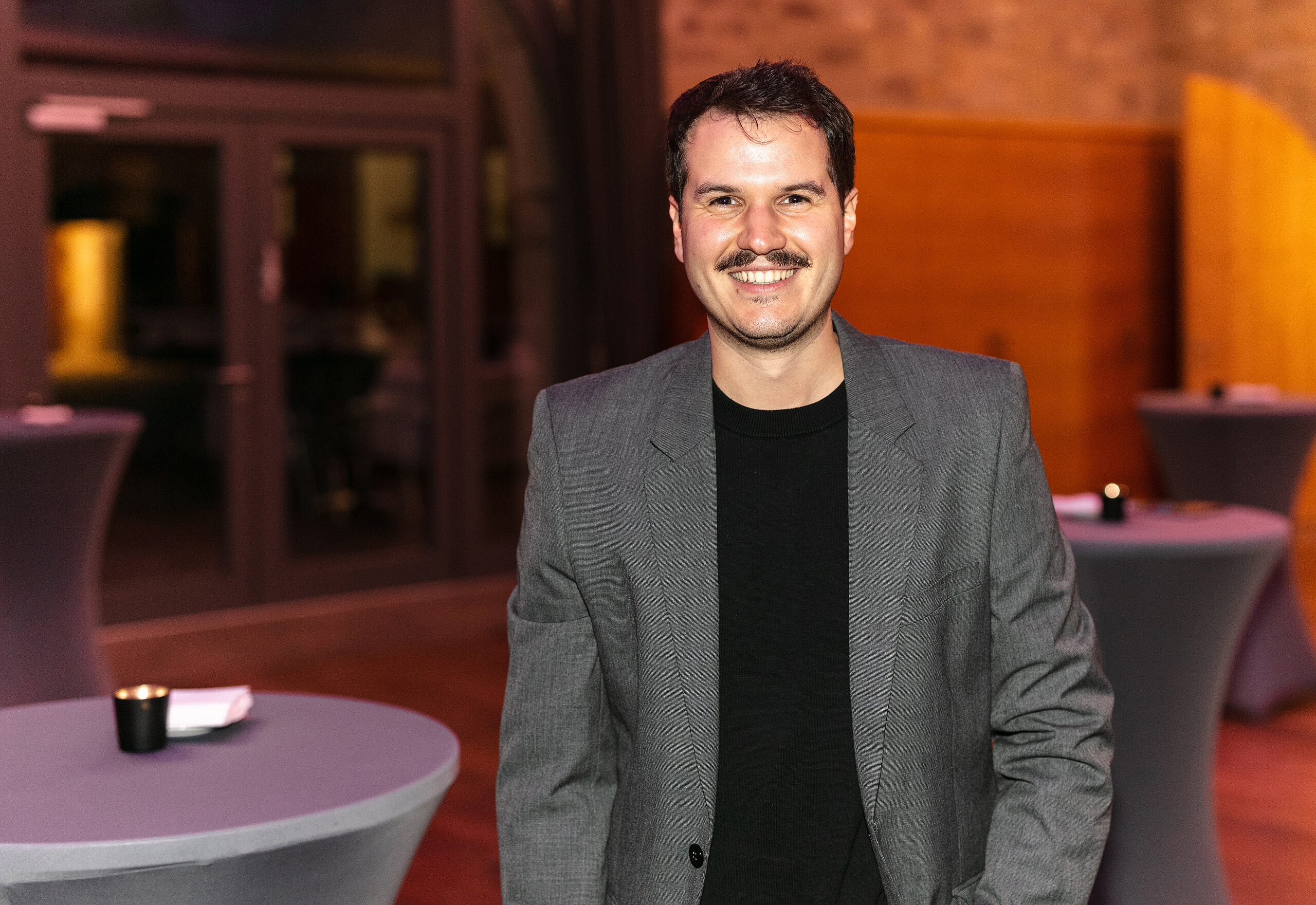
Podcasts behind the paywall: Manuel Scholze on “Mythos Airport”
How can a local newspaper earn money with serial audio storytelling? With "Mythos Airport", a podcast about the Würzburg cult discotheque, Manuel Scholze has dared to experiment at the Main-Post. In this interview, the content creation and innovation expert talks about the power of nostalgia and shares lessons learned from the paywall test for podcasts.
Manuel, how often have you taken off from the airport yourself?
Manuel Scholze: A few times already! But I’m not from Würzburg at all, I was born in the Allgäu. I’ve been a club kid since I was 16. I’ve been working in the club for almost as long as I’ve been in the media. Both are creative environments in which you can let off steam. I still work as a booker today and in this role I make the program for an electronic club, so I’m always looking for the subculture and my niche.
Your podcast uses terms that immediately trigger nostalgia in former guests of the “Airport”: Can you enlighten us as to what the “Master Blaster” and the “Wednesday double-decker” are all about?
Scholze: The “MasterBlaster” is an iconic drink, a mixture of vodka, sparkling wine and an energy drink that was served in large glasses. It is rather unusual to sell harder drinks in such half-liter glasses. Economy formats such as the “Wednesday double-decker” still exist today: pay once, drink twice. That was a huge lever in the nineties and two-thousands to get people excited about coming to the club, even on a Wednesday.
Mythos Airport: club culture meets media innovation
About the slogan “Party like it’s Wednesday” is what you say in the very first episode of “Mythos Airport”. How did the topic end up on your desk?
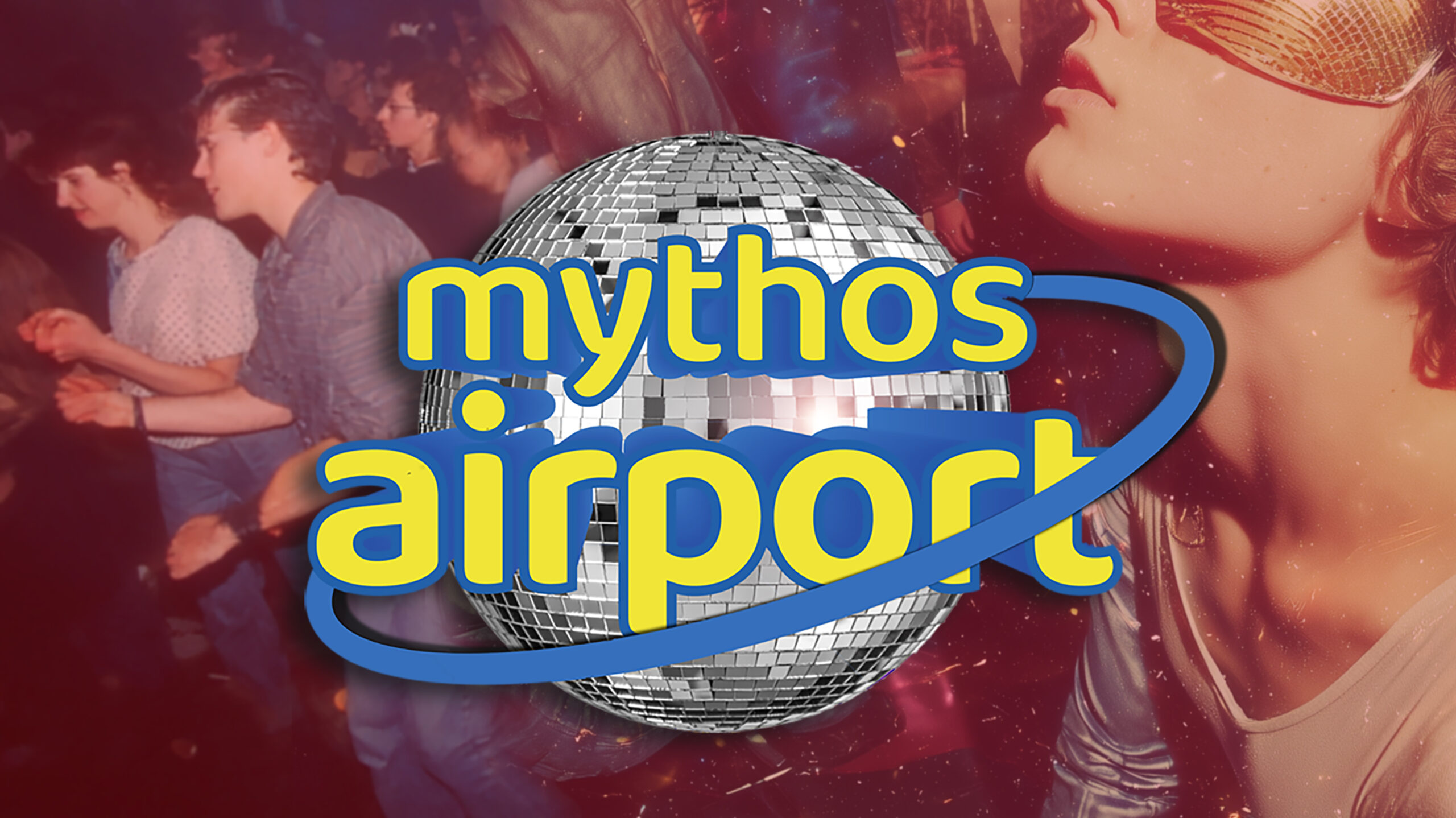
Scholze: I have sensed that many people have an emotional connection to the “Airport”, especially the older ones who were there in the eighties and nineties. There’s a DJ in my club who used to be a resident there. People come to his events and talk about how much better partying used to be. They remember a youth that is forever lost to them and thus canonize it. That’s why I created a six-part series of articles about the “Airport” a few years ago for our Main-Post brand “Würzburg Erleben”. Even after the first article, I noticed that the number of hits was many times higher than for other texts.
During your research, you were able to speak to the now deceased operator Rudi Schmidt.
Scholze: Rudi Schmidt never actually gave interviews. But an organizer friend advised him: “If you talk to anyone again, talk to Manu, he’s correct and he understands what we’re doing.” So I conducted the interview with him and kept the audio file. When he passed away in the fall of 2025, I immediately suggested to my colleagues that they make a podcast episode about the urban nightlife legend Rudi Schmidt. In the end, an entire series was created on the topic, telling the club’s history from five different perspectives.
This might also interest you: Ivo Knahn, Editor-in-Chief of Main-Post, in an interview about AI in everyday editorial work.
The podcast paywall experiment
When you released the series, you tested a new payment method: The first episode was available on the usual audio platforms, the remaining four episodes are behind a paywall on your website. Are you happy with the test?
Manuel Scholze: Light and shadow. As expected, the podcast got off to a good start and some of the reels went viral. We had a high reach without having to place large advertising budgets. People have told me that they had goosebumps while listening to the podcast. One person said he opened a whisky and lit the fire to celebrate the moment. Others said: “We didn’t expect a topic like this to be presented in this way by the Main-Post.” The podcast contains around 25 interviews that together make up one big story – a serialized audio documentary. The community shares their own experiences in the comments. Anyone who tunes in will find it sensationally good.
But too few people get on board?
Scholze: There was no specific target for sales. But with just under 3,000 views for the free episode 1 in the first few weeks, listeners don’t convert as often as I would have liked. In this case, there is no compelling need to keep working on it.
Hurdles and lessons learned in monetization
Let’s talk about the potential pitfalls: Getting people from the traditional platforms to your website was certainly not easy.
Scholze: That’s right. We knew that we weren’t actually allowed to take people out of their environment. But we wanted to give it a try because it was the most pragmatic solution to work on our own platforms. The platform break to a site that is known for texts and is not designed as an audio player is definitely a stumbling block and actually a no-go. Familiar convenience is lost if, for example, you close our news app and the stream ends.
And then there’s the one-off payment of 8.99 euros. Why exactly this payment model?
Scholze: Our subscribers can listen to the format for free. However, we had the theory that many people from the “airport” environment are not Main Post customers and may never want to become one. They should have the opportunity to gain access by making a one-off payment without being tied to a subscription. However, we have identified systemic hurdles: For example, our news site doesn’t have the features of an e-commerce store that we would have liked, such as “Give away this podcast”.
The wallet fits, the perception doesn’t
Were you still able to attract listeners who are not readers?
Scholze: Absolutely. We saw that people without a subscription were already using the paywall on the first day. In two months, a few handfuls came together. That’s too few individual purchases, even though the podcast is advertised throughout the year, for example with posters in the “Airport”. Existing customers mostly listen to the podcast, but the goal was actually to reach new target groups outside of our usual channels.
Was the price set perhaps simply too high?
Scholze: “Mythos Airport” costs as much as a gin and tonic. When I work in the club, I see people of all ages drinking more than one gin and tonic per evening. According to the thesis, the pricing is not too high. But media use – especially in the podcast sector – is often perceived as free of charge, particularly among the millennial generation. There are sensational free formats on behalf of the fee-financed media. We don’t have this luxury at the Main-Post, we have to conquer the free market. Nevertheless, I believe that with improved payment methods in the familiar user environment, users will be willing to pay X amount in the future. We are continuing to test how high the amount is and what the paid model could look like.
What journalism will look like in the future
You describe the deeply researched podcast as “uncopyable journalism”. How many more projects like this are needed for media companies to remain relevant?
Scholze: We need a lot more of it. Wherever AI takes over, we will create efficiency gains in terms of traditional news, but anyone else can do it too. What everyone can do is not a safe bet. You have to look for business where not everyone else can. We have to increase the quality of material collection and expand the business from “person to person”. And we need to address the question: What will the journalists of tomorrow look like?
Do you already have an answer?
Scholze: For me, the journalists of tomorrow are something like independent, valuable influencers who are both their own brand and a corrective. They are needed to be classified as people for people, even if the output is produced with the help of AI. It is no longer the most important thing to be considered a “noble feather”, because this challenge is passé when the prompt beats the best “noble feather”. But journalists will have to continue to build trust and be noticed and convince through incorruptibility and behavior. What will always be important in finding human sources is one’s own attitude and manner, which signals: I am a person who listens and to whom someone else can tell something that then receives the treatment that the story deserves.
Bannerbild: Christoph White