
The Mountain Calls: About a Place That Creates New Media Formats and a Community
They film mountain rescue operations, host podcasts about the joy of reaching the summit and self-doubt, and work at an altitude of 1,200 meters. Bavarian media professionals are discovering the mountains as a workplace—and as a place of community.
Höllental Glacier, about 2,300 meters above sea level. The emergency call comes in to the mountain rescue service while the sun is still shining. A hiker has slipped on the northeast slope of the Zugspitze and slid about 100 meters down the mountain across the ice. He is only slightly injured, his two companions report over the phone. Nevertheless, the situation is serious. A thunderstorm is expected to reach the Zugspitze in an hour and a half. Then the glacier—a steep, open expanse of ice and scree—will become a death trap. As the mountain rescuers rappel from the helicopter, the first heavy clouds are gathering on the horizon. Now every move must be precise. They treat the injured man and have him and his companions airlifted out. But then, right before their eyes, another climber falls into a crevasse.
What sounds like something out of an action movie is a real-life rescue. The scene is from “In höchster Not – Bergretter im Einsatz” (In Extreme Danger: Mountain Rescuers in Action), a documentary series by Bayerischer Rundfunk that follows volunteer rescuers from the Bavarian Mountain Rescue Service on their missions. Filming is done using, among other things, helmet cameras and GoPros—small, rugged camcorders worn by the rescue teams. The first two seasons were viewed about 18.4 million times on the ARD media library alone, and a third season is currently in production.
But the series is more than just a hit. It’s part of a larger phenomenon: Bavarian media professionals are drawn to the mountains. Take the BR “Bergfreundinnen,” who have built one of the state’s most active outdoor communities with their podcast. Then there’s Joachim Hellinger, who founded the European Outdoor Film Tour 25 years ago and brought extreme sports to the big screen. And there are hiking influencers like Luisa von Podewils, who—with her dog, a smartphone, and around 100,000 followers—shows that you don’t need a camera crew to reach a wide audience from the mountains.
What drives all these people to the mountains? And what makes them put the mountains at the center of their media work? A search for clues from the Zugspitze to the Schotterebene in Munich.
Unprecedented Intimacy and Perfect Storytelling: Why Mountain Rescuers are so Inspiring
Bad Reichenhall, 473 meters above sea level. The realization that “In höchster Not” could be a huge success doesn’t strike Franz Hinterbrandner and Max Reichel on the mountain. Instead, it hits them in the basement of their production company, Timeline Production. Here, in the editing room, their editor shows them the first rough cut. The footage is shaky, sometimes out of focus, shot with GoPros and the mountain rescuers’ helmet cameras. Added to this is footage from teams documenting the action on the ground with handheld cameras. Together, this creates a sense of intimacy that none of them had ever seen in a mountain documentary before. “That’s when we realized,” says Hinterbrandner, “this is something new.”
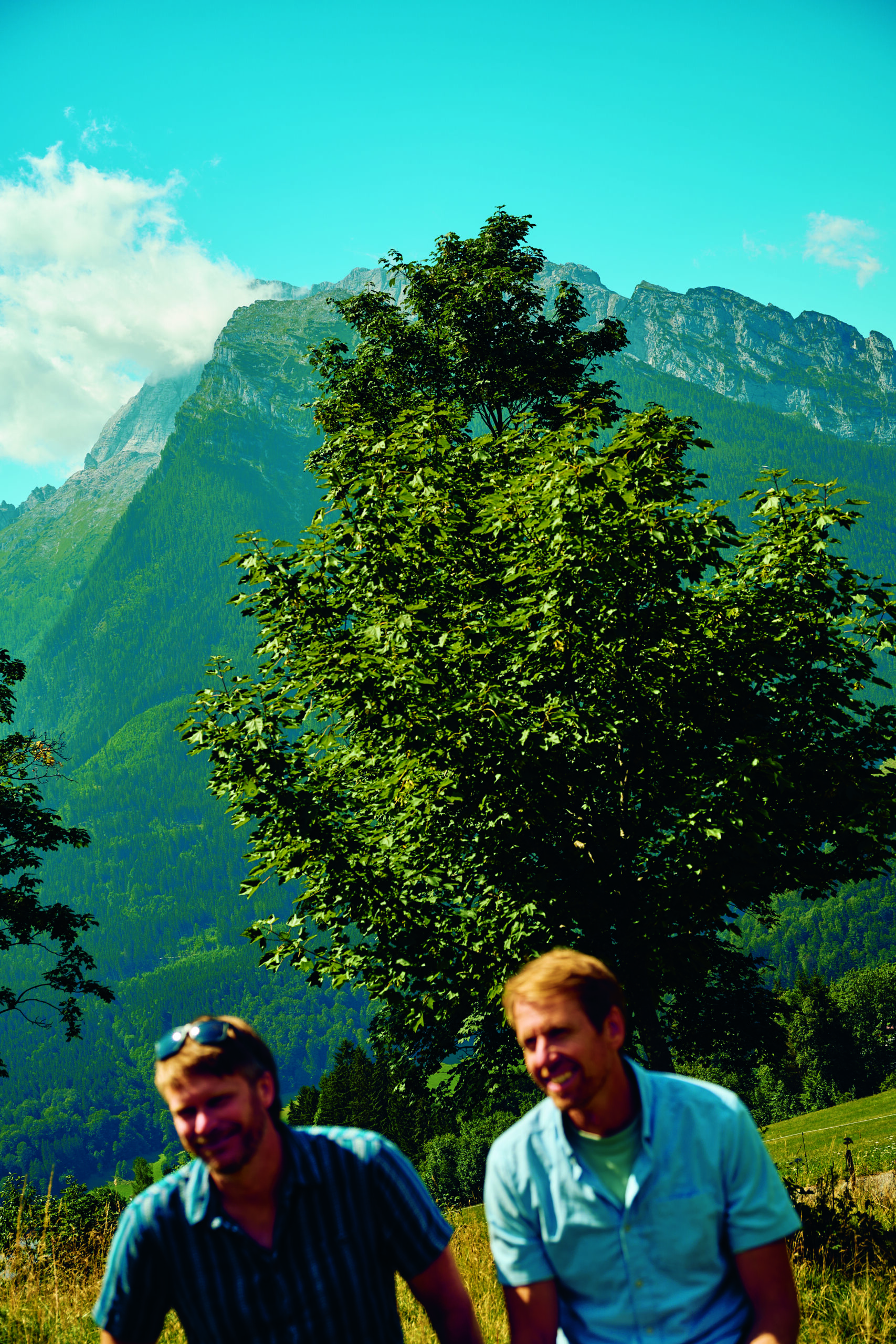
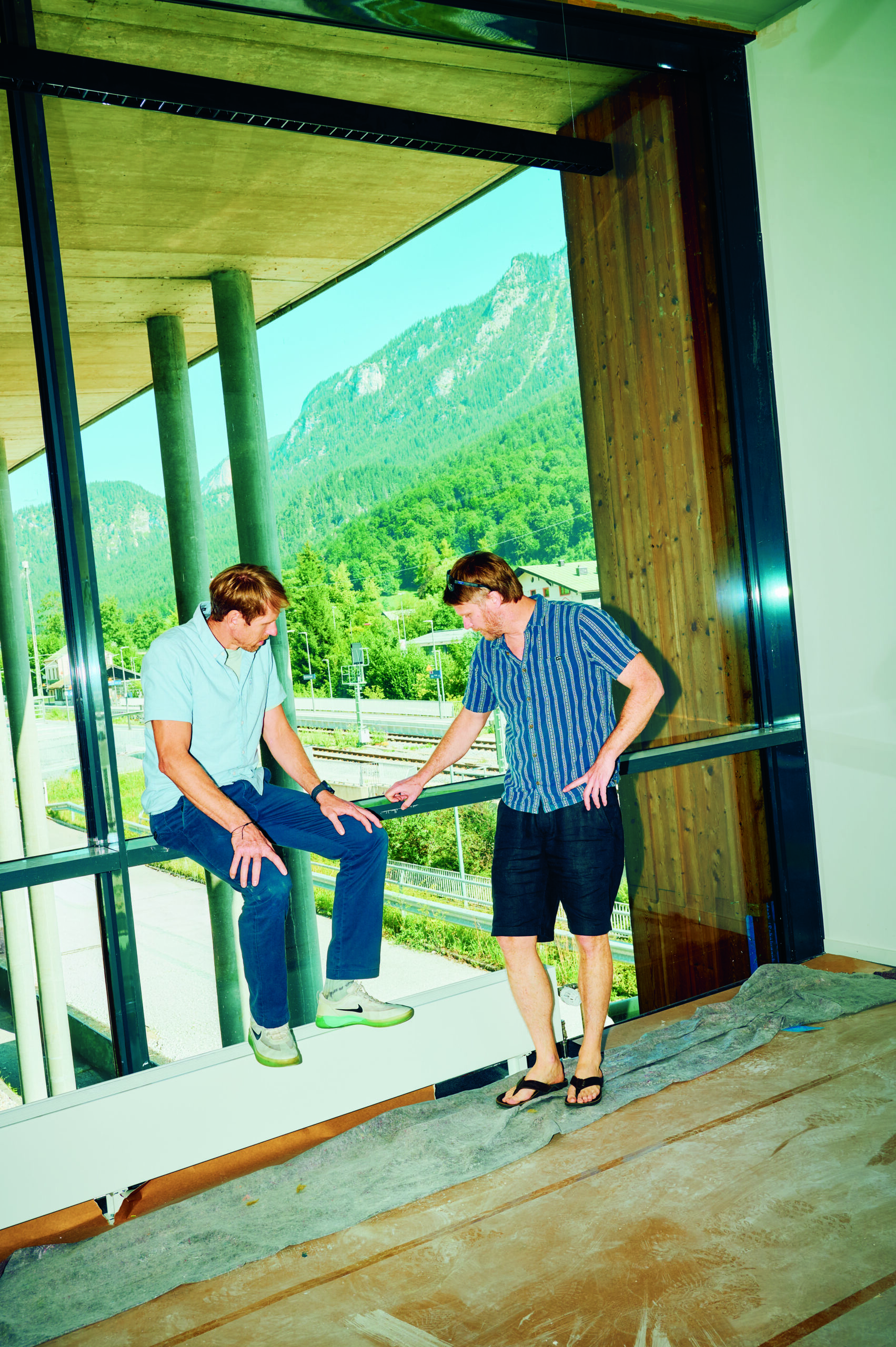
It was almost inevitable that Timeline Production, of all companies, would develop this format. Hinterbrandner and Reichel have known each other since they were teenagers, from the tennis club in Piding in the Berchtesgadener Land. They started filming each other while snowboarding and climbing. “Those two crazy guys,” people used to say back then.
Then they meet the Huberbuam, the famous climbing brothers from Berchtesgaden. Together, they embark on an adventure: Hinterbrandner and Reichel are able to navigate large rock faces—and learn to film along the way. They accompany the Huberbuam to ever-larger walls, first to the Alps, then to Yosemite Valley in the U.S., and finally on expeditions to Pakistan, Greenland, and Antarctica. They shoot the feature-length documentary “Am Limit,” which becomes a surprise hit. By then, at the latest, no one is laughing at them anymore. The two “crazy guys” have become the owners of a production company that films in places others can’t reach.
When BR was looking for a rescue-themed show set in alpine terrain, the production team turned to Timeline Production. But convincing the mountain rescue team to let themselves be filmed wasn’t easy. The rescuers are volunteers, not actors. Bringing cameras along on life-and-death missions requires mutual trust. Hinterbrandner and Reichel start in Ramsau, their home rescue unit, where they know many of the rescuers personally. They promise: No mission will be disrupted. Nothing will be distorted. Finally, a vote is taken—the classic way. The majority says yes.
Then the work begins. Each shift, the team is on standby for about 200 days. The cameras run continuously from the start of each operation to its end: the team’s main cameras, helmet cameras, and GoPros worn by the rescuers, 360-degree cameras in the helicopter, and audio recorders for every radio transmission. Each season generates about 80 terabytes of material—over 2,000 hours of footage from approximately 80 missions.
According to Hinterbrandner, however, the fact that people watch the next episode after finishing one isn’t just due to technology, but also to the storytelling. “Every mission is a hero’s journey,” says Hinterbrandner: volunteers who venture into hostile mountain terrain to rescue strangers. What sets the series apart from other documentary formats is that the protagonists aren’t professionals who are paid to do this. They are neighbors who get up in the middle of the night when the pager goes off. And the bond that forms in the process—between rescuers who trust each other implicitly in extreme situations—is perhaps the most radical form of community that the mountains can produce.

How a Film Tour Brings an Entire Outdoor Community Together
Munich, 519 meters above sea level. Film producer Joachim “Helli” Hellinger is someone who, even as a 16-year-old, organized ski trips for 50 people so he could afford the trip to the Alps himself. Later, he moved to Los Angeles, worked odd jobs on construction sites, studied at the HFF Munich and La Fémis film schools in Paris, and filmed big-wave surfers riding a monster wave in Hawaii and professional snowboarders in Alaska.
But one idea may have shaped his career more than any other: In the late 1990s, Hellinger attended outdoor film festivals in North America. “I got a burst of energy every single time,” he says. “I was inspired and euphoric.” He wanted to bring that feeling to Germany, where nothing comparable existed at the time. The outdoor community was fragmented. Climbers kept to themselves, as did mountain bikers, and hiking was considered a pastime for grandparents anyway.
Hellinger takes the plunge anyway. In 2000, he organizes a film night in Halle an der Saale. About 400 people attend. This later evolves into the European Outdoor Film Tour, whose production company is based in Munich. Today, the EOFT takes place in 178 cities, and the concept has spawned two additional formats: the International OCEAN Film Tour for the marine community and the Bike Film Tour. Together, they’ve achieved something many media brands dream of: building a community that grows across generations. Some visitors, Hellinger says, who were already there for the very first screenings, now bring their grandchildren along.
However, the fact that the EOFT has become so popular is also due to a development that Hellinger has witnessed firsthand over the course of its 25-year history: the digital revolution. It has transformed his genre in two ways.
For one thing, it has democratized filming in the mountains. In the early 2000s, anyone who wanted to film a climber on a vertical rock face—hundreds of meters above the ground—needed a helicopter. But then came GoPro, smartphones, and camera drones—and suddenly, mountaineers could film themselves.
On the other hand, however, it is precisely digitalization that has sparked a longing for authentic experiences in nature. In 2001, years before the first iPhone and social media, Hellinger wrote a sentence that sounds prophetic today: “The more virtual our world becomes, the greater the desire for authenticity and adventure.”
Man’s Best Friend—On the Mountain and on Instagram
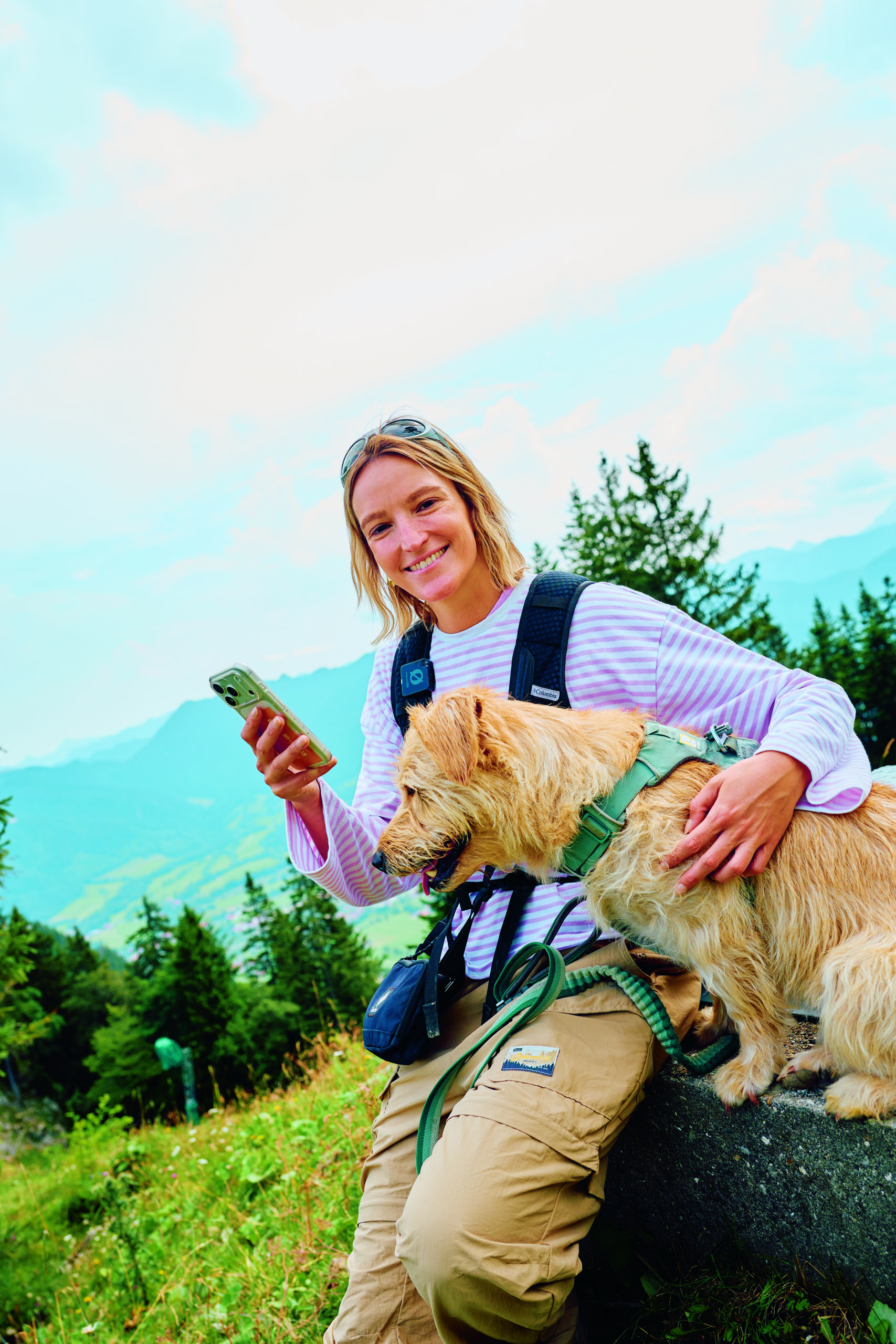
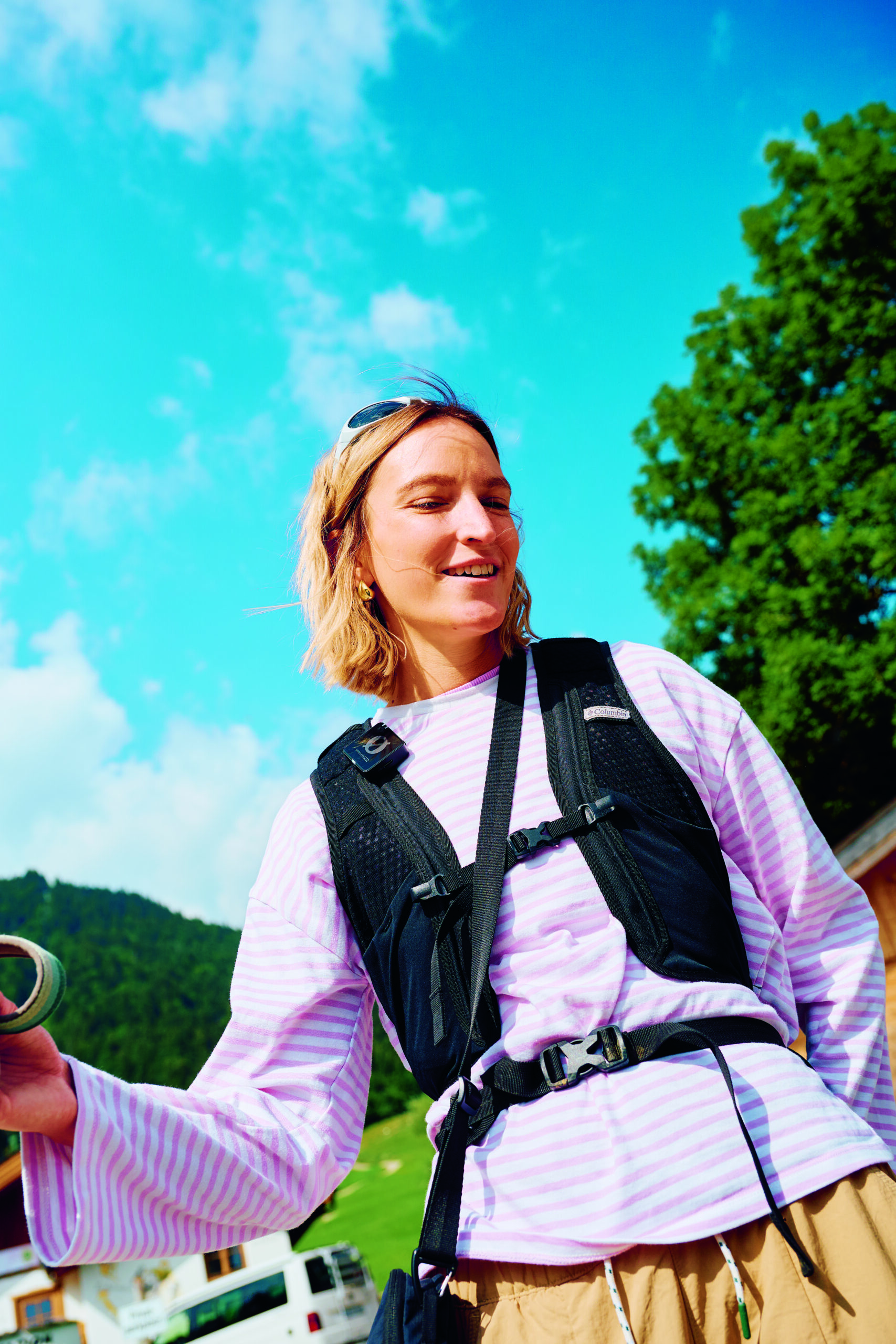
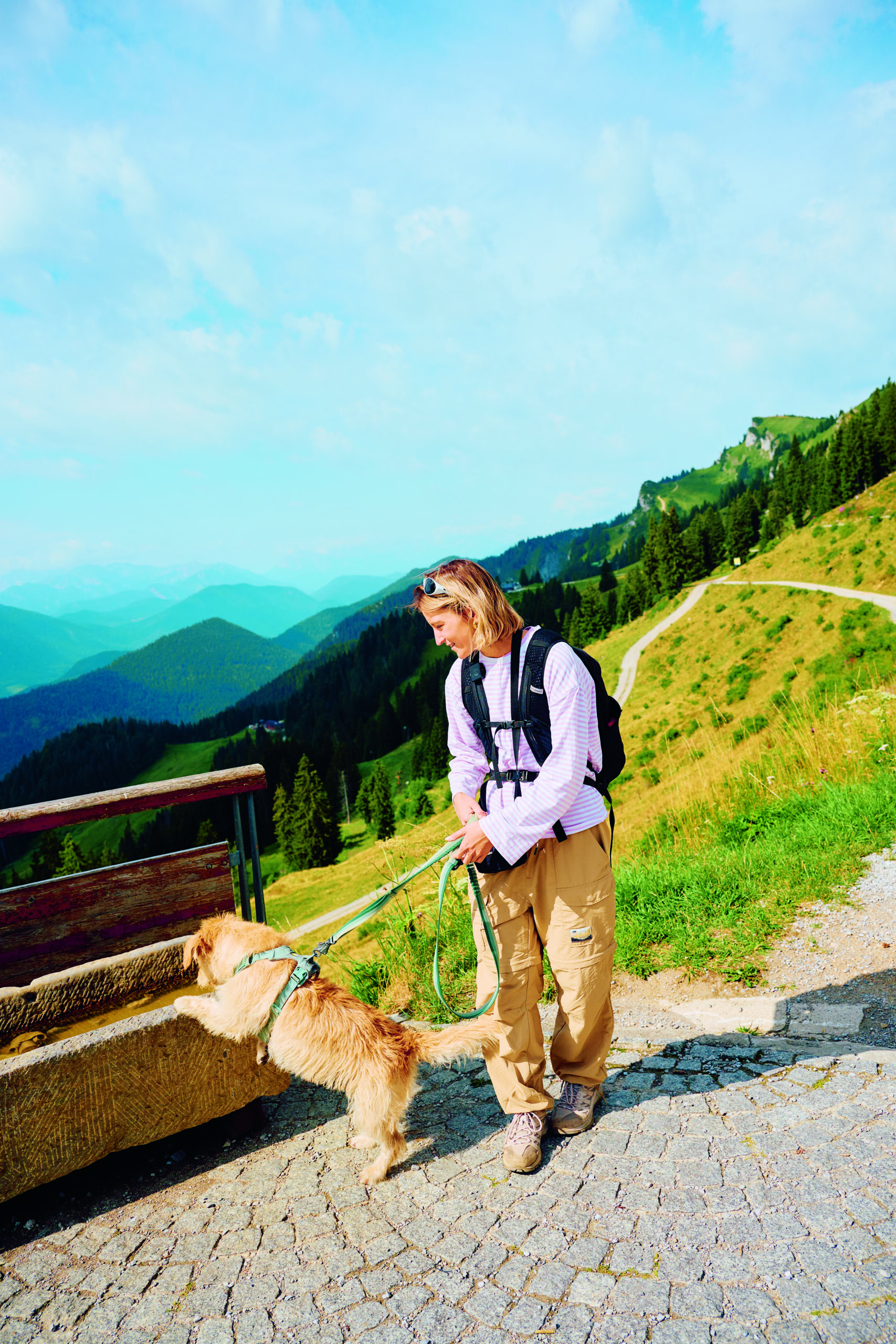
Munich, 519 meters above sea level. Not every mountain community needs extreme situations. Sometimes a community forms where no one had looked before. Luisa von Podewils, nicknamed Luu, has found just such a niche: dog-friendly hikes. About 100,000 people follow her on Instagram, where she posts hikes through the mountains near Munich under the username @hans_gmerkt. Almost always by her side: her dog Oskar.
Like so many outdoor stories, von Podewils’ story begins with the pandemic. During the pandemic, she went on hiking trips to the Allgäu. At some point, she posted her first hiking photos on Instagram. Nothing special, her boyfriend thought. “You’ve got to do it right,” he said.
Von Podewils is doing it right. It takes her four years to hit the 100,000-follower mark. The real turning point comes when she starts showing not just nature, but also herself and her struggles and fears. “The more I let my personality shine through, the more people stuck around,” says von Podewils.
Her community, she says, isn’t made up of extreme athletes, but rather laid-back people. Most of them also have a dog. Her followers message her when they hike her dog-friendly trails, send pictures, and ask for hotel recommendations. It’s a constant exchange. And now it extends beyond Instagram: In her WhatsApp community “Luu’s Dog-Loving Friends,” more than 800 women with dogs connect to go on walks, hikes, and camping trips together—and sometimes, dog buddies turn into real friends.
Why Co-Working Spaces Don’t Belong Only in the City
Miesbach, 688 meters above sea level. Ten years ago, in 2016, geography student Veronika “Vroni” Engel Googled the word “coworkation” and found exactly one search result. Her boss at the municipal company Regionalentwicklung Oberland had given her the idea: Co-working spaces are booming in cities, but couldn’t that concept be adapted to the Alps?
Engel wrote her bachelor’s thesis on the topic, built a network, and founded the CoworkationALPS association in 2019. Today, the network includes more than 60 locations in Bavaria, Austria, South Tyrol, and Switzerland. They range from a 400-year-old farmhouse in Tyrol to a mountain lodge at 1,200 meters on Lake Spitzingsee.
At first, it was mainly media professionals who took advantage of these offerings: photographers, creative professionals, and people who work remotely anyway. But since the pandemic, the target audience has broadened, says Engel. These days, even a tax official might book a two-month stay because the summer in the city is too hot for him.
What matters, however, isn’t that you work somewhere else, but that you do it together. The “Co” in Coworkation stands for community, Engel explains. Engel sees from the repeat booking rates that this sense of community is resonating. Those rates, she says, are extremely high. Perhaps it’s also because working with a view of the mountains is different. “You realize how small some of the problems you have at home in the office really are,” says Engel.
Modernizing a Publishing House Builds a Community Based on Trust
Oberhaching, 576 meters above sea level. Anyone who hikes in Germany is familiar with them: the red guidebooks from Rother. The publishing house has been around since 1920, founded by a bookseller from Leipzig who moved to Munich for the mountains. Today, the catalog includes over 400 hiking guides, written by more than 300 authors who always explore their routes on foot while conducting research. Florian Tukker is responsible for bringing this principle to an app.
Tukker is the Product Lead for the Rother app. The challenge: The app is competing against giants—Komoot, Outdooractive, AllTrails—platforms with large budgets and large teams of developers. But Rother, says Tukker, has a unique selling point: Every tour in the app is created by a professional who knows the area personally. It might sound old-fashioned these days, says Tukker, “but at Rother, it’s all about care and attention to detail.”
It’s perhaps the quietest form of community. No comment section, no hashtags, no events. Just trust—which proves itself on every tour.
The Mountain Friends: Antonia Schlosser, Katharina Kestler, and Lisa Bartelmus as Role Models
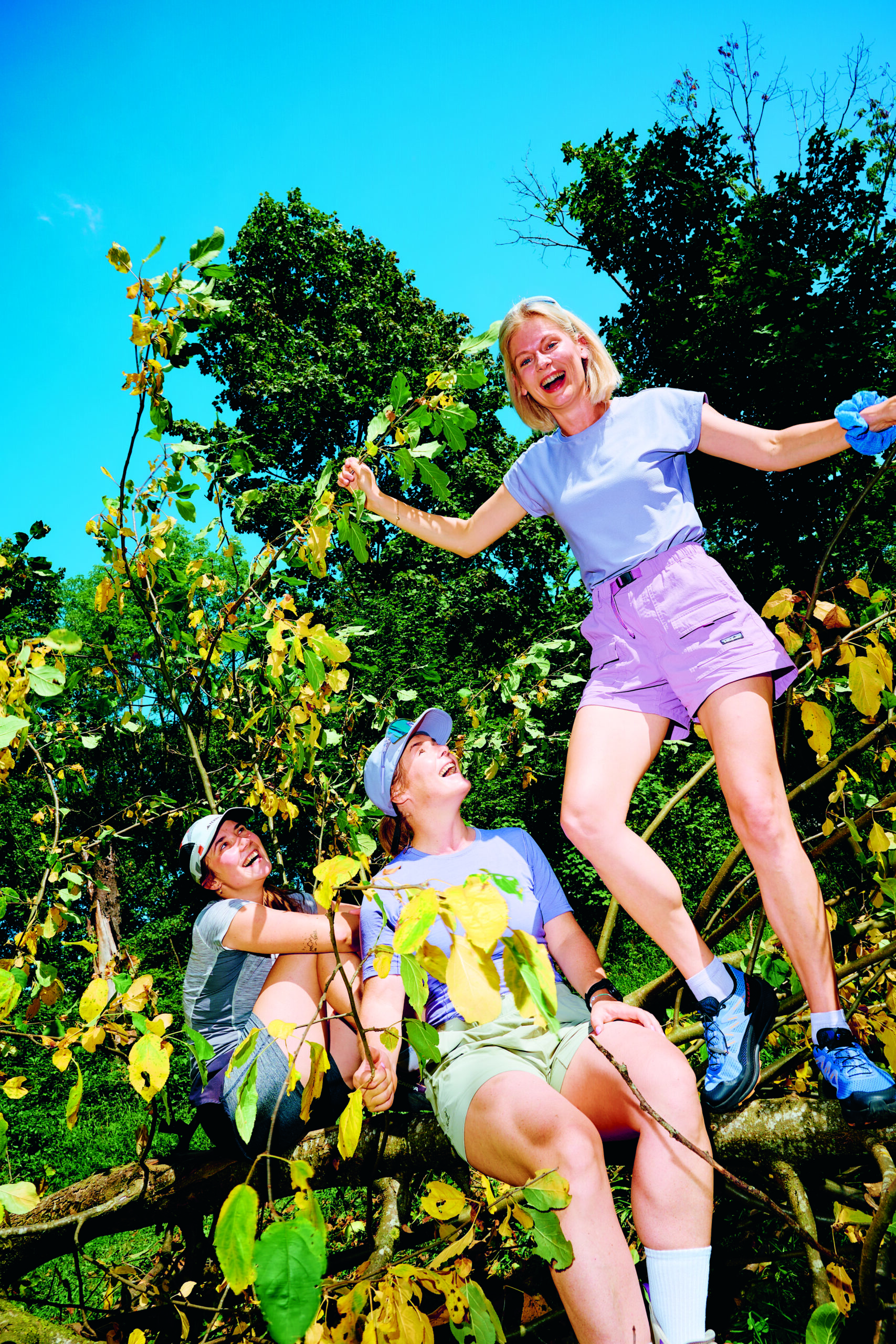
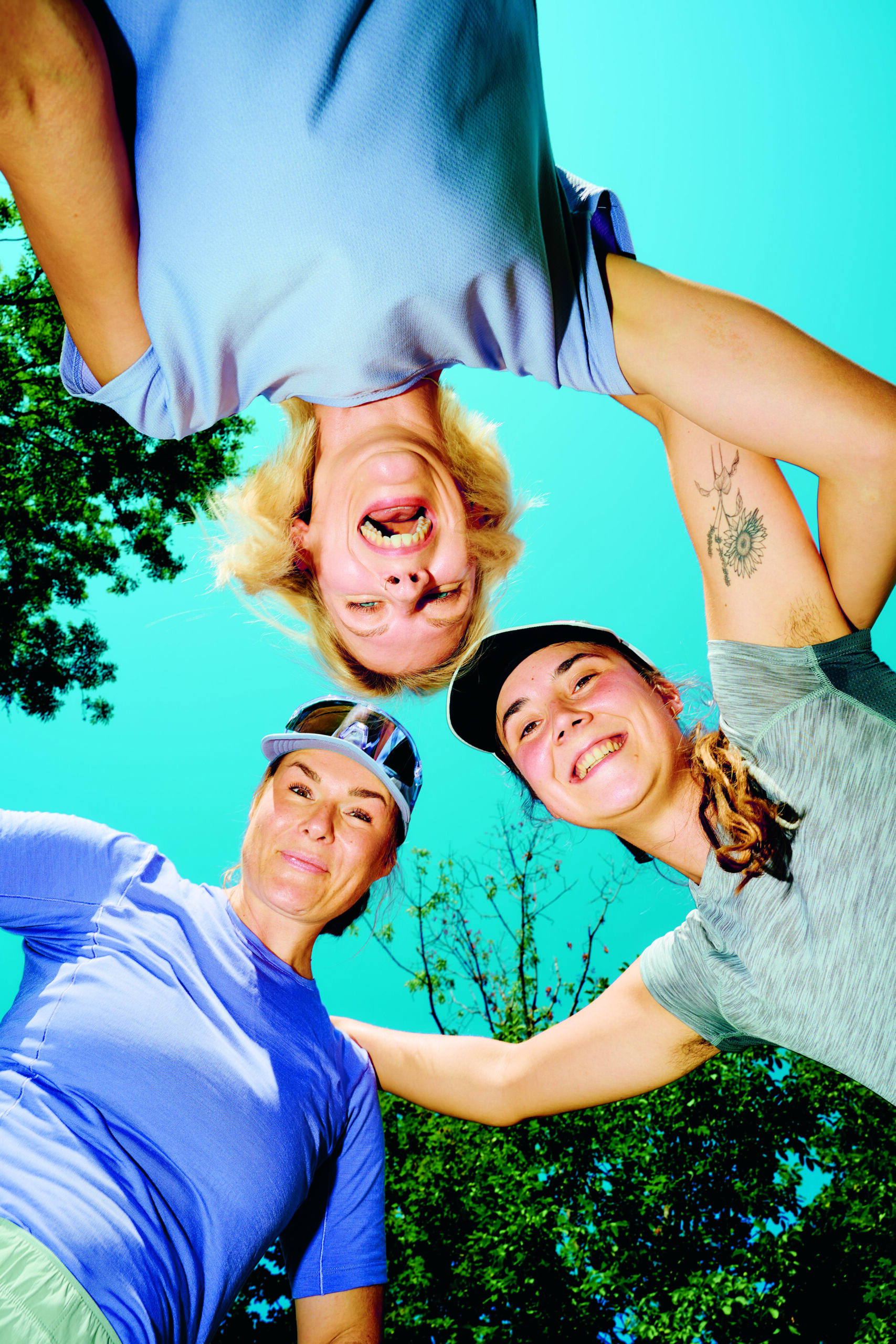
Munich, 519 meters above sea level. At the other end of the spectrum are theBR “Bergfreundinnen.” Katharina “Kaddi” Kestler, Antonia “Toni” Schlosser, and Lisa Bartelmus talk on their Bayern 2 show about life in the mountains, fear, self-confidence, and sexism. About 62,000 people follow them on Instagram, and hundreds send voice messages via WhatsApp that are incorporated directly into the podcast. At community hikes, listeners say, “I know you so well, and you don’t know anything about me.” More than 600 people applied for the most recent Alpine crossing; only three were allowed to join.
To understand how the “Bergfreundinnen” managed to build such a dedicated community, you have to go back about ten years.
Most media brands start with a format and hope that a community will eventually form around it. With “Bergfreundinnen,” it was the other way around. First came the community. Then came the podcast.
In 2016, an Instagram account featuring women in the mountains went live: “Munich Mountain Girls.” It struck a chord. The profile led to regular get-togethers, and those get-togethers grew into a community.
Katharina Kestler, a freelance journalist who works for BR, got involved early on. When she pitched a podcast concept to the station, they were interested. The show went on the air in 2020. Antonia Schlosser sums up what sets the “Bergfreundinnen” apart from the rest of the outdoor scene in one sentence: “It doesn’t matter how high the mountain is that you’re standing on. We’re interested in the story of how you got up there.”
Not everyone is happy about this. People have accused them of not actually having completed their hikes, says Schlosser. They’re called “Issue Girls”—women who constantly impose their problems on the environment. Others call them “crybabies.” The core of the criticism, says Kestler, is always the same: for you, the mountain isn’t the focus—people are. “But what is the mountain without people? It just stands there.”
Today, the BR “Bergfreundinnen” are arguably the most successful mountain podcast in the German-speaking world. “No one can ignore us in this industry anymore,” says Kestler. The Bergfreundinnen have become a way of life, adds Schlosser. A place where no one is judged for being slower or making mistakes. On a trek across the Alps, a woman with post-traumatic stress disorder joined the group—for the first time without her service dog. Her reason: “With you guys, I feel confident enough to do this.”
What drives Bavaria’s media professionals to the mountains? Katharina Kestler’s quip—that without people, a mountain is just a feature of the landscape—may ultimately be the most honest answer. Ironically, it’s on the mountain—a place one imagines as lonely, a retreat from everything and everyone—that a community emerges where everyone can count on one another. Whether it’s the everyday worries you shake off on a hike with your dog, or the defining moments when mountain rescuers place blind trust in one another during a thunderstorm. Whether you’re working together at a long wooden table in an alpine hut or waking up as strangers in a dormitory and realizing you belong: the mountain stands there. The community brings it to life. And Bavaria’s media creators turn this into formats that have an impact far beyond the peaks.
Bannerbild: Sebastian Lock

You may also be interested in





Mehr von XPLR: MEDIA in deinem E-Mail-Postfach
Der Newsletter von XPLR: MEDIA in Bavaria zeigt dir, wie innovativ der Medienstandort Bayern ist. Join the innovators!