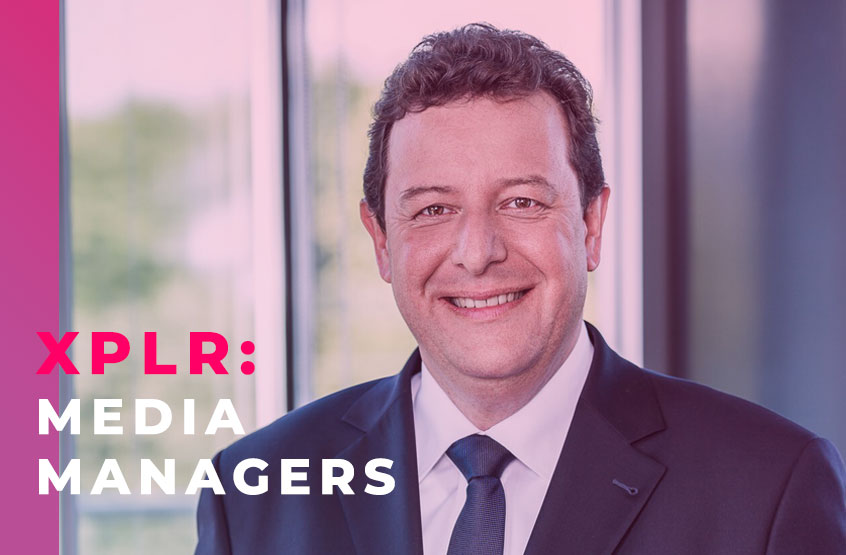
“When it comes to managing change, we took a shortcut”
In the following interview, Oliver Roth, Managing Director of the pilot marketing agency’s Munich location, discusses how consumer behavior has changed as a result of the crisis, its consequences for brand communication, and what the rapid implementation of innovations has to do with bumblebees.
The media industry – and the agency sector in particular – is undergoing rapid change. What changes is pilot going through at the moment?
Oliver Roth: The entire communication industry, as well as the agency branch, are undergoing profound structural change. Digital change is everywhere – due to Corona, it now feels as if we had skipped three to four years of development and implementation. This not only affects the way we think about campaigns – it also affects the way we work together in our company.
Distance no longer plays a role. Teams come together and form groups based on skills, remote working has been introduced without any problems, and is turning out to be a good alternative. New campaigns were developed and deployed within three or four days. Due to the crisis we gained a creativity boost and things were implemented very fast. Now we are entering a new phase. How do we benefit from our experience under normal circumstances?
Due to the crisis, the advertising budgets of many companies have been reduced. How does this affect agencies and how should agencies position themselves in the future?
Roth: It’s true that a number of advertisers immediately started to cut back as soon as Corona came up. However, there are also companies that have recognized the opportunities presented by this situation and have increased their budgets. Especially in times of crisis, the consulting services provided by agencies are in high demand. We give our customers rapid communication solutions and support them in making the right decisions.
How do you and your services keep up with today’s increasing media diversity?
Roth: It’s all about passion. You cannot work in this industry without honestly being interested in media, content, and communication. We are constantly creating new formats and trends. It is incredible to observe what happens in this highly innovative industry on a daily basis.
In your study series “pilot Radar” you investigate how brand communication can succeed in the time of Corona. What results have you already achieved with this?
Roth: The “pilot Radar” study was not made purely out of PR hype. Our aim was to observe changes in the attitudes and consumer behaviour of Germans in this new situation in order to make recommendations to our clients.
By the end of May, it had already become very clear that during the crisis, the way people see products had changed and brand capital was coming under increasing pressure. Interest in brands is decreasing; people are focusing more on prices and discounts. The intensive analysis of consumption in general also holds opportunities for brands that take this trend seriously. This is where we need a good quality consulting service as a part of the agency. When it comes to the right strategy, it is necessary to evaluate the consumers’ attitudes within a group of potential clients on a brand-specific basis.
The development of a value framework, which focuses on the entrepreneurial action of brands as well as on the communication of the company, plays an important role in this process. Saying “thank you” from time to time is not enough.
The pandemic has changed working processes – entire companies now work from home. What is the situation in your company at the moment?
Roth: When the lockdown began, we managed to get all employees across all our agencies working “remote” in the space of one morning while maintaining full productivity. During those first eight weeks, the experience was a great adventure for all of us. In the meantime, we are gradually reducing the “remote” status.
However, there will still be a number of Corona-related changes regarding the way we interact with our customers or the way we present ourselves. Our company will also be more flexible when it comes to remote working in the future. To sum it up, we have just taken a shortcut in terms of managing change.
Due to the changed situation, companies have started to develop many new ideas and innovative projects. Things that were barely feasible before the crisis have been implemented within a few days. Have you had a similar experience at pilot?
Roth: At the moment we are taking into consideration our experience and we are examining how we can work like this at pilot in the future. It was really amazing to see how smoothly the sudden shutdown went for us! It makes me think of how bumblebees fly. When you see the chubby insects, you can’t imagine that they are able to take off, but then they just do it.
pilot is located in six cities – Munich being one of them. In your eyes, what are the benefits of being located in Bavaria?
Roth: Great things are happening here! We appreciate the target-oriented location policy of the Bavarian State Government. They provide concrete support, especially for small and medium-sized enterprises. There are a number of interesting initiatives that are being launched to strengthen Bavaria as a location for innovation. The launch of the MedienNetzwerk Bayern (Media Network Bavaria) or the Zentrum Digitalisierung.Bayern (Bavarian Center for Digitization) platforms, for example, was supported by the state government. As a communications agency, we also benefit from these measures. At the moment, we are all faced with the question of how we can ensure that smaller companies, start-ups, free-lancers, creative people, or artists can survive this difficult time and maintain the entrepreneurial diversity that makes Bavaria, and Munich in particular, so special.
XPLR: More Media Managers
Macht das nicht Sinn? Gerade die kleinen und mittelständischen Unternehmen müssen doch angesichts der Corona-Krise gut überlegen, wofür sie Geld ausgeben.
Jens: Das stimmt. Nur bietet die derzeitige Situation gerade für Unternehmen Chancen, die ansonsten vergleichsweise wenig Geld für Social Media Marketing zur Verfügung haben. Ich denke da an das Café an der Ecke oder den Buchladen in der Kleinstadt – an all diejenigen also, die besonders unter der Ausgangssperre leiden.
Das liegt daran, dass sich gerade viele Unternehmen mit digitaler Werbung auf Kanälen wie Facebook oder Instagram zurückhalten, obwohl sie ihr Budget nicht zwangsläufig gekürzt haben. Gleichzeitig verbringen die Leute aufgrund der eingeschränkten Freizeitaktivitäten mehr Zeit in den sozialen Netzwerken. Diese Faktoren führen dazu, dass der Wettbewerb um Impressions, Link-Klicks und Interaktionen abnimmt.
Heißt: Wer jetzt investiert, zahlt weniger für Klicks und Conversions als sonst?
Jens: Genau. Dazu kommt, dass man mit geringen Budgets ein wenig experimentieren kann. Schon mit 15 oder 20 Euro am Tag können sich diejenigen ausprobieren, die sonst die Finger von Facebook Ads lassen: So kann das Café an der Ecke schon mit wenig finanziellen Aufwänden die Anwohner*innen in der Nachbarschaft darüber informieren, dass es einen Lieferservice eingerichtet hat und der Kuchen jetzt an die Haustür gebracht wird.
Im Übrigen bietet Facebook gerade viele Infos für Geschäfte, Läden und Unternehmen an, um bisher analog ablaufende Prozesse zu digitalisieren.
Hast du den Eindruck, Corona bringt gerade auch die letzten Digitalisierungsskeptiker ins Web?
Jens: Es gibt auf jeden Fall einen Schub. Die Digitalisierung wird vorangetrieben. Besonders erfreulich ist dabei die Fantasie, mit der auch Unternehmen, die bisher nicht sonderlich Social Media-affin waren, mit ihrer Community in Kontakt treten.
Zum Beispiel hat ein LKW-Hersteller kürzlich Ausmalbilder für Kinder auf seiner Facebook-Seite gepostet. Das ist kreativer Content, der jede Menge zur Markenbindung beiträgt. Die derzeitige Situation zwingt die Unternehmen zum Umdenken. Plötzlich geht all das, was vorher vielleicht aus strategischen Gründen nicht ging. Die Menschen trauen sich jetzt etwas im Netz. Die Ergebnisse sind großartig.
Auch Allfacebook musste aufgrund von Corona kreativ werden. Die Allfacebook Marketing Conference fand im März statt in München virtuell statt. Die „Vor Ort“-Konferenzausgabe ist in den August gewandert. Wie waren eure Erfahrungen mit der digitalen Konferenz?
Jens: Zehn Tage vor der Konferenz haben wir entschieden, das Event virtuell stattfinden zu lassen. Dieses Angebot wurde sehr gut angenommen. An der virtuellen Konferenz haben knapp 450 Leute teilgenommen, also rund die Hälfte der Personen, die wir vor Ort erwartet hätten. Mit einer so hohen Beteiligung haben wir nicht gerechnet. Wir dachten, dass die Leute derzeit nicht den Kopf für so etwas haben. Aber das Gegenteil war der Fall. Zusätzlich findet vom 24. bis zum 26. August erstmals eine Sommer-Ausgabe der Konferenz statt.
Ist die virtuelle Ausgabe eine Option für die Zukunft?
Jens: Ich persönlich bin ein Freund von physischen Events. Der persönliche Austausch ist doch nochmal etwas anderes, auch wenn es inzwischen tolle digitale Networking Tools gibt. Die virtuelle Konferenz war eine gute Erfahrung und das Feedback war durchweg positiv. Aber dennoch: Ich freue ich mich auf die Allfacebook Marketing Conference im Sommer.

Screenshots aus dem VR-Adventure „Blautopf VR“ (Foto: Philipp Schall, TELLUX Next GmbH)