
A New Approach to Knowledge Transfer: Explaino Turns Documents into AI-Powered Videos
When you start a new job, the first step is often to work through a lot of manuals to understand your new responsibilities. However, much of the knowledge available within the company gets lost in the process. The Munich-based startup Explaino aims to solve this problem with the help of AI. The idea: The company’s proprietary software converts documentation into AI-generated explanatory videos. An interview with founder Florian Scherl.
Florian, what exactly is your concept?
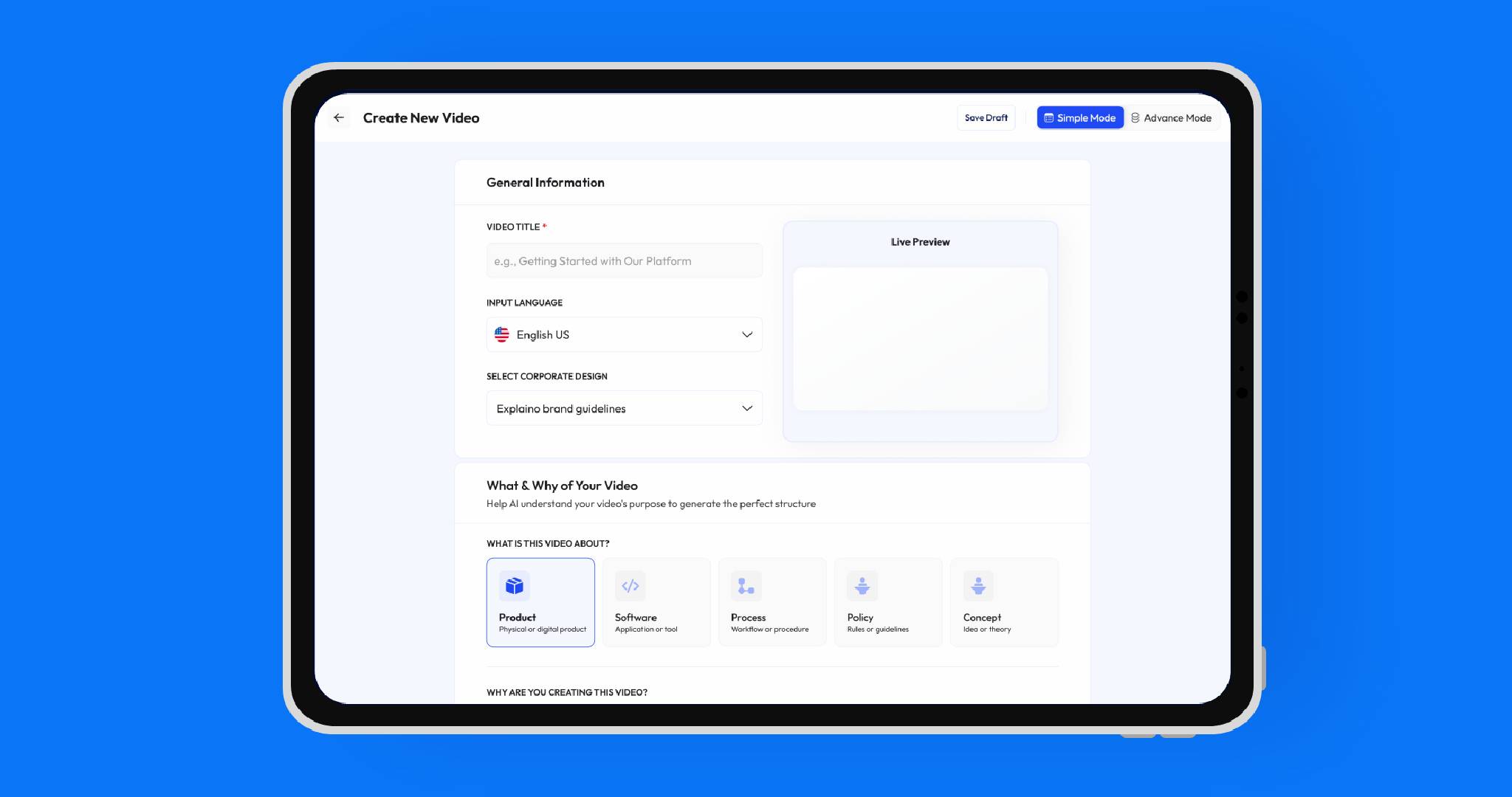
Florian Scherl: Companies have a vast amount of untapped knowledge – in PDFs, presentations, and manuals that no one reads. Onboarding takes months, IT support is overwhelmed, and valuable expert knowledge is lost when employees leave the company. Explaino solves exactly that: We automatically convert documents into animated explainer videos – in under two minutes, without any video production expertise. The result is knowledge that truly reaches people.
You learned to code at age 12, developed your first AI models at 15, and founded your company at 18, even before graduating from high school. Was this path your plan from the very beginning?
Florian: That wasn’t the plan – it just happened that way. I was fascinated from an early age by how you can build things with code. AI came into the picture at some point because it was the most exciting tool I knew. Founding the company was less a conscious decision and more a logical consequence: I had an idea I wanted to bring to life – and I just got started. I’ve always been very self-taught; at twelve, I had the privilege of learning to code through online universities, and I realized early on that I wanted to build things that are socially relevant.
More Fascination Than Unease: AI as a Powerful Tool
AI is currently bringing about massive changes in how knowledge is created and shared. Does that sometimes make you feel uneasy, or does your fascination with it outweigh that feeling?
Florian: To be honest , the fascination clearly outweighs the concerns. Of course, there are legitimate questions about quality, oversight, and trust in AI-generated content. But I don’t see Explaino as a replacement for human knowledge, but rather as a tool that helps make that knowledge accessible. Unease often arises when AI is used without proper oversight. We deliberately prioritize transparency and traceability.
Explaino’s original idea was to create AI-generated feature films. Today, the company produces explanatory videos. What prompted this change in direction?
Florian: The turning point was our encounter with the market. Under the name Fast AI Movies, we had begun developing AI-generated films – a fascinating field, but one with a vague market. Then came our first discussions with companies, and we heard the same thing over and over again: “We’re having massive problems passing on knowledge internally.” The market gap was enormous – we’re talking about a market in the double-digit billions, with demographic pressure from millions of employees who will be retiring in the coming years and taking their knowledge with them.
“From document to video in under 2 minutes,” it says on your website – is it really that fast, and what’s the technology behind it?
Florian: Yes , it really is that fast. We’ve developed our own AI architecture that makes it possible to identify logic in unstructured data and model relationships between pieces of information. These relationships form the basis for our automated explanatory visualizations – they determine how a video is structured, what’s emphasized, and how the story is told.
Knowledge transfer is therefore a real problem in many companies. Why is an animated explainer video the solution, rather than simply a better chatbot or a well-structured wiki?
Florian: A wiki answers questions, but only if someone asks the right question and actively searches for the answer. A chatbot requires that you know what you don’t know. A video, on the other hand, proactively conveys knowledge in a format that people intuitively understand. We remember things we’ve seen and heard much better than things we’ve read – studies show that audiovisual formats make content up to seven times easier to understand than text alone.
Onboarding, IT Services, and Sales: Use Cases for AI Videos Are Diverse
What are the typical use cases? Who are your customers, and how exactly do they use Explaino in their daily lives?
Florian: The three most common use cases are onboarding/offboarding, IT help desk automation, and sales enablement. Onboarding is about getting new employees up to speed quickly—without HR having to explain the same things over and over again. For the IT help desk, we automate software documentation using screencasts, thereby replacing both lengthy text instructions and the processing of first-level support tickets. And in sales enablement, the videos help explain products and processes internally in a way that makes them sound convincing during customer meetings. Our clients are medium-sized and large companies in German-speaking countries—including names such as Adelholzener, Sparkassenverband Bayern, AOK Baden-Württemberg, Schneider Electric, and Coop.
AI-generated content is often suspected of being generic and interchangeable. How do you ensure that an explainer video truly aligns with a company’s brand and content?
Florian: That’s one of the aspects we place particular emphasis on. Companies can upload their brand colors, fonts, tone of voice, and visual styles to Explaino. The result isn’t a generic, off-the-shelf video, but content that feels as though the company produced it itself. What’s more, the content comes directly from the company’s own documents: it’s the company’s knowledge, just presented in a more accessible way.
What role does Bavaria, as a media hub, play for Explaino?
Florian: Bavaria gives us a strong home-field advantage. Munich combines technological excellence with a vibrant business community. We found our first customers and partners right on our doorstep. Through Munich’s startup ecosystem, we gained early access to mentors and our first customers. The ecosystem here is more dense and collaborative than people from outside might think. Our location helps us build trust: Many companies appreciate working with a local team, especially when it comes to internal company matters.
Everyone is talking about the EU AI Act right now. Do you see it as an obstacle or an opportunity for European AI companies like Explaino?
Florian: To be honest, I’m a bit torn on this. In principle, any regulation puts European companies at a slight competitive disadvantage compared to American or Asian markets – if only because of the compliance burden. We have to acknowledge that objectively. At the same time, the AI Act has opened up a whole new dimension of use cases for us: Every company that uses AI systems will be required in the future to train and educate its employees. That’s a huge need – and we can meet it exactly with Explaino. In that sense: While it may temporarily slow down the ecosystem, for us as a company it represents a new opportunity.
Big Goals for Explaino: From the DACH Region to the U.S. Market
Where do you see Explaino in three years, and what steps does it need to take to reach that goal?
Florian: In three years’ time, we will be the leading AI system for knowledge transfer in enterprises across the DACH region – deeply integrated into our customers’ workflows, from onboarding through IT to sales. We are heading towards 100 million ARR and are in the process of entering the US market.
If Explaino were to make an explainer video about Explaino itself, what would be the key message that would come across in the end?
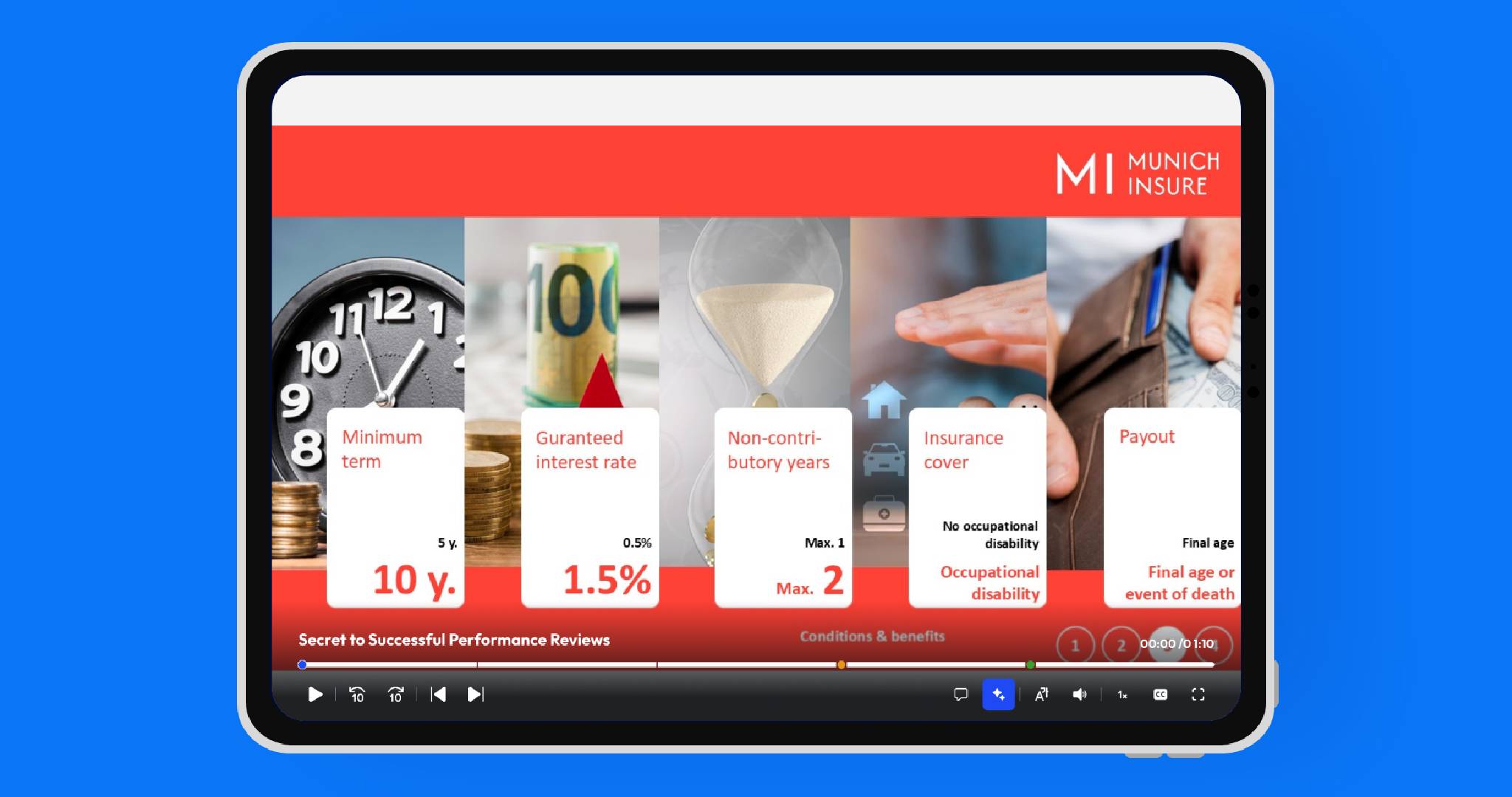
Scherl: We just asked Explaino ourselves:
Bannerbild: Explaino