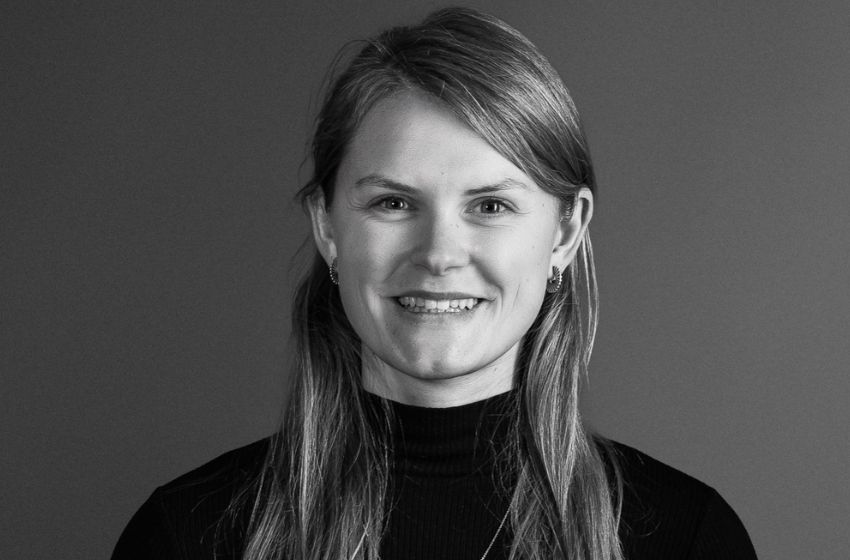
Alexander Runte from Nansen & Piccard: “Customers Appreciate Our Weirdness”
Founded in 2011, the Munich-based content agency Nansen & Piccard deliberately operates outside traditional agency structures. Co-founder Alexander Runte discusses the success of unconventional project ideas, the possibilities and limitations of AI, and the transition from journalism to editorial consulting.
15 Years of Nansen & Piccard: What have you learned about running an agency?
Alexander Runte: The most important lesson was to keep growing. None of us had any agency experience before we started our own. We were all journalists and just wanted to try something new. That’s exactly what’s great about running your own business: We’re constantly facing new challenges and never get bored.
Otherwise, I don’t think we’re necessarily representative of other agencies, since we do a lot of things differently: We aren’t so radically focused on efficiency, and we don’t maintain a rigid separation between project management and creative work. At our agency, the creatives speak directly with the clients—and we’ve found that our clients really appreciate this close relationship.
What is different today compared to when the company was founded?
Alexander: Above all, the environment. Our first assignment was a classic corporate project for Ludwig Beck, featuring an elaborate production and a large budget for visuals and production. You hardly ever see anything like that anymore. We also used to do a lot of work for publishers like the Süddeutsche Zeitung or Burda—those purely editorial assignments don’t exist in that form anymore either.
Our business has shifted significantly toward digital. Video content also now accounts for a much larger share of our work, which we produce in collaboration with external partners. Nevertheless, in some areas—such as our physical neighborhood guide for the city of Munich—we are now seeing a successful return to analog formats.

It’s often those seemingly quirky “weird-interest” phases that end up helping us in our jobs in unexpected ways. At the end of the day, it’s simply about having a genuine interest in the world.
Alexander Runte
High-quality print products seem to be a perennial favorite. How do these magazines reach their readership?
Alexander: It varies. Our brochures for the “Burg Hülshoff – Center for Literature” are sold directly on-site in the shop. The book for Porsche Design, on the other hand, is available in the Porsche online store. The “meinTirol” magazine is distributed through traditional channels such as hotels and subscriptions. The FC Bayern magazine “51” is distributed exclusively to club members, and the “Perspektiven” magazine from the Baden-Baden Entrepreneurs’ Forum is also mailed directly to members. The advantage: If you know your target audience well, you can reach them this way with almost no wastage.
AI in Everyday Life: Between Digital Support and Creative Limits
How do you get to know your clients’ target audiences?
Alexander: Not every client wants to invest in comprehensive target audience research. That’s exactly where our journalistic approach comes in handy: From the very beginning, we ask ourselves who we’re actually doing a project for, when these people will encounter the content, what we need to offer them, and what language they speak.
We’re also currently experimenting internally with AI-generated target audiences. It’s not running 100 percent smoothly yet, but it’s an extremely exciting approach. The longer you feed data to AI agents and use them, the better and more precise the results become.
What other AI tools do you use?
Alexander: A key criterion in our selection of AI solutions is data protection: Since many customers object to data being transferred to the U.S., we primarily rely on platforms like Langdock to ensure European data security.
In addition, we use Claude to efficiently adapt existing content for various channels. For “whatthefact”—a social media project by Neuland & gestalten against fake news—we’ve even developed our own little AI agent. Our community management team feeds pre-researched topics and texts into it to generate appropriate captions.
And in what areas do you think AI is completely out of the question?
Alexander: When it comes to the actual writing process. For one thing, because we ourselves love to write. For another, AI-generated results often come across as wooden and dull. Our approach is fundamentally different from that of agencies that are hired to produce hundreds of more or less identical, cookie-cutter texts. People hire us when they want to tell a real story. For example: What’s it like to walk down Munich’s Maximilianstraße in swim trunks? Or to spend a weekend at a mountain cabin with your “situational relationship”? These are lively, authentic texts that draw on the authors’ personalities.
Storytelling – How Stories Emerge from a Variety of Topics
One of your mottos is “Dive in deep.” How do you manage to do that, given a range of topics from soccer to fake news to e-mobility?
Alexander: Basically, we’re generalists who can quickly and readily familiarize ourselves with new subject areas. For some projects, our personal backgrounds also come in handy. For a campaign centered on Annette von Droste-Hülshoff, for example, we didn’t have to painstakingly acquire the necessary expertise—as it happened, some members of our team had already spent a lot of time studying 19th-century German literature in their free time. It’s precisely these seemingly quirky “weird interest” phases that often end up helping us in our work in unexpected ways. At the end of the day, it’s simply about having a genuine interest in the world.
Recently, some of your writers and photographers were at Lake Wörthersee for the travel magazine ROY. Why is this kind of in-depth on-site research beneficial for the client?
Alexander: The tourism sector is growing rapidly here, since many vacation destinations today have to set themselves apart from the competition. There are beautiful places everywhere—so why travel to Lake Wörthersee of all places? We’re convinced that you have to inspire people with unique stories and compelling narratives. At Lake Wörthersee, for example, there’s this slightly romanticized image that’s heavily influenced by the pop culture of the ’80s and ’90s. For the first issue of “Roy,” It-girl Jovana Reisinger traveled to the lake to recapture that very same old-school glamour. Exclusive stories like this enable our clients to stand out in destination marketing.
Apart from tourism, are there any other industries where storytelling is currently particularly effective or in high demand?
Alexander: We work a lot with institutions and associations that want—and need—to clearly position and differentiate themselves. A good example of this is FC Bayern: What makes this club unique? And how do you convey that uniqueness month after month, year after year? Our journalistic mindset is a huge help when tackling challenges like these. FC Bayern also has a fantastic editorial team of its own, with whom we’re able to work closely and in a spirit of trust.
You work for FC Bayern as what are known as editorial consultants. What are your responsibilities?
Alexander: We’re integrated with the existing editorial system and specifically contribute stories that require a unique journalistic approach. We’re mainly involved in the conceptual phase to develop new formats and ideas. In addition, we regularly take on special projects.
When do you feel that a collaboration is going well?
Alexander: Whenever we get the chance to really make a difference. For the Robert Bosch Foundation, for example, we thought, “Wouldn’t it be great to tell the story of how reforestation is progressing around the ‘Green Belt’ in Africa?” Then, a few months later, when you’re presented with a fantastically told story accompanied by emotional video footage, and the client says, “No one has ever captured what we do so accurately”—that’s when we realize it worked well.
And what kinds of friction might sometimes arise?
Alexander: I think we sometimes rub people the wrong way because we ask a lot of questions—but they’re often necessary. And some people might not know what to make of our certain “weirdness” at first. However, clients who are open to it very quickly come to appreciate this approach. We often find that we get drawn deeper and deeper into a project as it progresses. Even without any active upselling, clients approach us and ask, “Can you take another look at this?”
“Weirdness” as a Motto—Why Uniqueness Works
What exactly do you mean by “weirdness”? And why do companies book you specifically for that?
Alexander: Since we founded the company as close friends, we initially thought we were the most unprofessional team ever—until we realized how well this unconventional approach was received. A few years ago, for example, we produced a book with the provocative title “Ten Thousand Years of Sex.” Some of our partners said at the time, “You must never include that in a company presentation; it’ll be the end of us with DAX clients.” But the opposite turned out to be true. That was exactly what clients brought up with us because they found it fascinating.
How does your “weirdness” fit in with the more traditional clients from Bavaria’s industrial and cultural sectors?
Alexander: I think this approach is popular simply because many people are tired of the same old agencies and interchangeable projects. Three years ago, for example, we developed a custom Panini sticker album for a discreet wealth management firm here in Munich, featuring the employees as stickers to collect and trade. A conservative client and a completely unconventional project. This combination works exceptionally well for us. Sure, there are plenty of people who don’t get it—but others appreciate exactly that about us.
Profile: Frank Stolle
Bannerbild: Supatman