Nadja Sauer from Qentin: How a Bavarian Startup Is Revolutionizing Movie Selection
It’s a problem many people are familiar with: As a streaming user, you end up wasting too much time searching for the right movie or the next show to watch. Startup founder Nadja Sauer explains why algorithms from Netflix and other streaming services often fall short in this regard—and how the AI-powered app Qentin, acting as a digital video librarian, aims to solve this problem.
Nadja, “choice overload” or doomscrolling through the catalog is one of the biggest sources of frustration for today’s streaming users. Why can’t established giants like Netflix or Prime Video quickly provide users with relevant recommendations?
Nadja Sauer: Because that’s not what they’re interested in at all. These platforms’ algorithms are optimized first and foremost for the platform itself—to keep you engaged for as long as possible and ensure you keep your subscription. When Netflix releases a new movie that cost 20 million, Netflix has a strong interest in you watching that movie. Whether it’s right for you is secondary. Plus, the algorithms of the major streaming services are based primarily on your watch history—that is, what you’ve watched in the past. They then try to recommend similar content to you. This quickly leads to you staying stuck in your bubble. But sometimes you just feel like watching something different—and before you know it, you’re caught up in that frustrating doomscrolling.
That’s exactly where Qentin comes in. Why did you start this startup?
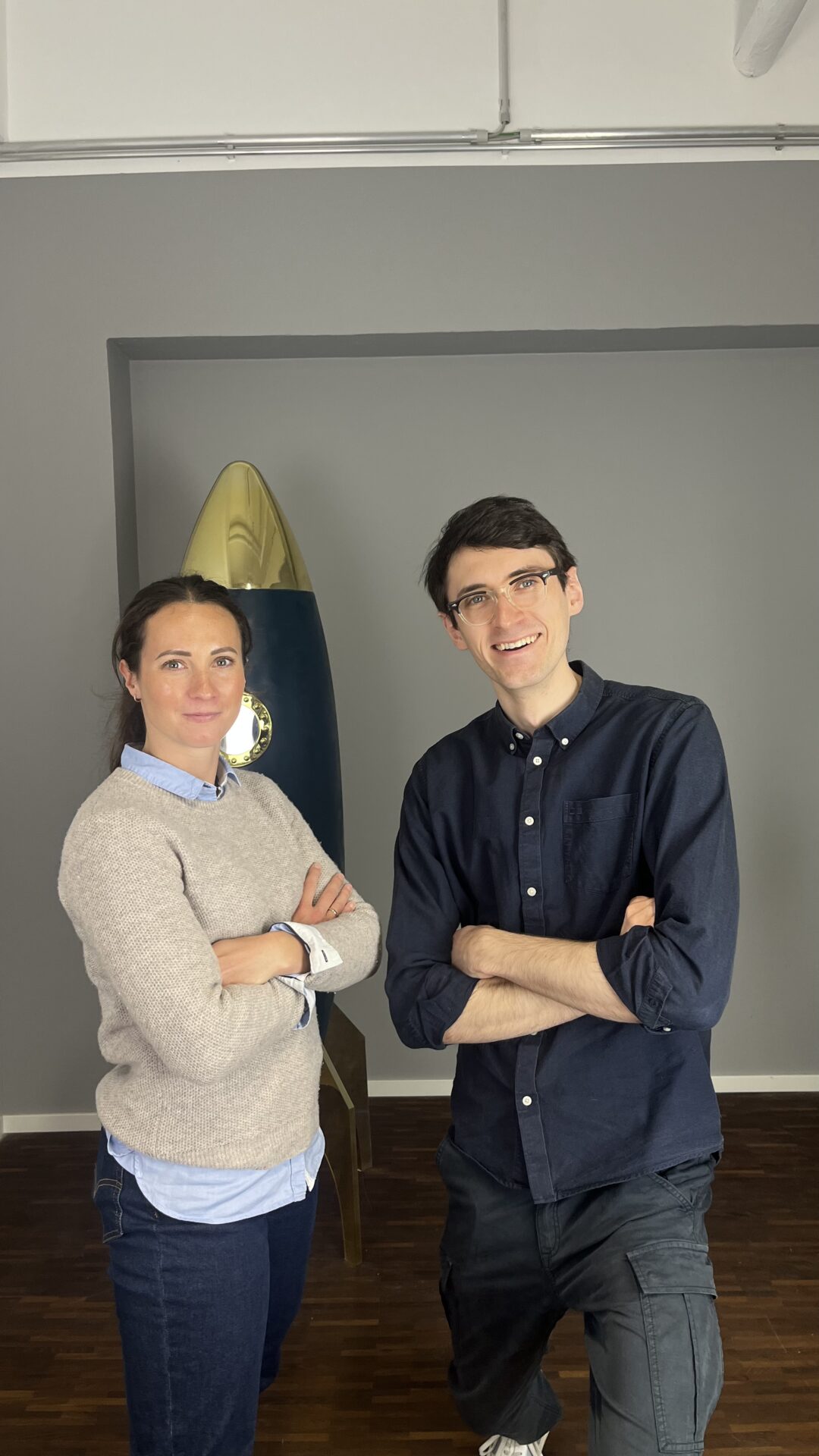
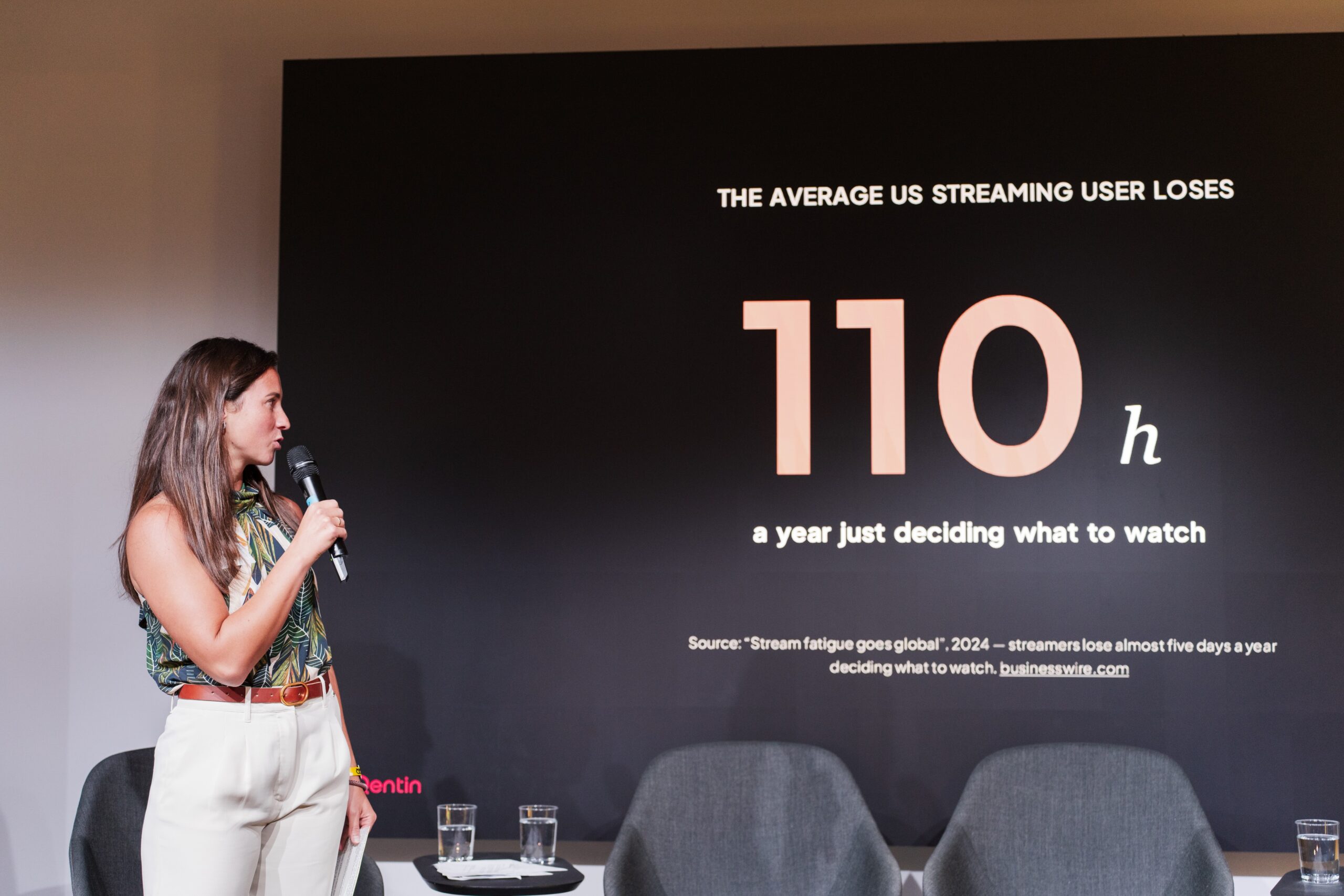
Nadja: My co-founder Luis and I met at film school; we studied together at the HFF Munich. Back then, lots of friends were always asking us for recommendations. We quickly realized among our friends that finding the right movie or TV show for each person’s interests is a real problem—and one that many people face. The average U.S. streaming user wastes 110 hours a year trying to figure out what to watch. That’s five full days! We thought: We have to do better than that. So we tried to turn that into a digital product.
With ChatGPT, you have to know what to ask, then check availability yourself and search for the trailer. That’s a lot of work for someone sitting tired on the couch. The video store clerk from back in the day did things differently: He’d ask you how you were doing and who else would be watching, and then give you a movie—with a reason. We’re recreating that experience without you having to type a thing.
Nadja Sauer
A Digital Video Store that Provides Personalized Movie Recommendations
How exactly does your app work?
Nadja: When you create a profile, there’s a quick onboarding process to start with. You can either choose the shortcut—which involves answering five questions—and see your results right away, or you can answer 15 questions that go into even more detail: Which streaming services do you use? What genres do you like? What topics interest you?
After that, you’ll be taken to the home screen. There, you’ll see a few recommendations, along with an explanation of why each one is a good fit for you. On streaming platforms, you’re overwhelmed by the sheer number of choices—and that’s exactly what we want to avoid. We want to guide you toward a decision. Our overarching theme is “Guidance.” There’s also an agent who represents a video store clerk from the past. Through conversation—for example, by asking how you’re doing or what you’re in the mood for—he tries to figure out exactly what you need at that very moment.
When you get together with friends and want to watch a movie, everyone has very different tastes. Does Qentin have a solution for that, too?
Nadja: We’re working on that right now; we call it the “Partner Feature.” The problem of choosing a movie gets even more complicated when you’re searching as a couple, because you have to reconcile two different tastes. Once we’ve cracked it for a single person—finding the perfect movie in under a minute—we’ll turn our attention to two people. We’ll simply overlay the taste profiles and see what the overlap is. We hope to have this integrated into the app by the end of the year.
How does the app work in the background? What software do you use?
Nadja: At the core is your taste profile: Based on your answers during onboarding and your ratings, we create a profile that we match against the data for each movie. Around that, we use several large language models that communicate with each other. The reasons why you like this particular movie are generated by an LLM. The chatbot that conducts the conversation is also an AI agent linked to our backend. We have several API interfaces through which we retrieve data, for example from The Movie Database. This allows us to see where each movie is available. We get additional data from Wikipedia—which contains many plot summaries—and several freely available open-source projects. In the future, we’d also like to draw on screenplay analyses and subtitles for the hearing impaired—these also describe sounds and music and reveal a lot about a movie’s mood.
Unlike ChatGPT: Here’s the Added Value Qentin Has to Offer
These days, many people just ask ChatGPT what to watch in the evening. And Netflix is testing its own AI search feature. So why do they still need you?
Nadja: Today, you get one of two things: an endless list or an empty text box. With ChatGPT, you have to know what to ask, then check availability yourself and search for the trailer. That’s a lot of work for someone sitting tired on the couch. The video store clerk from back in the day did things differently: He’d ask how you were doing and who else was watching, and then give you a movie—with a reason. We’re recreating that experience without you having to type a thing. And Netflix’s AI search only knows Netflix. Our users have multiple subscriptions; their question isn’t “What’s on Netflix?” but “What should I watch tonight?”
Streaming providers try to keep users within their own ecosystem. What is Qentin’s relationship with the major streaming platforms—do you see yourselves as a marketing channel for content or as a neutral meta-level?
Nadja: We see ourselves as a neutral platform above the other platforms. With the app, we’re operating in the B2C space and would like to establish a subscription model where users pay for our service—not the streaming services paying for visibility. After all, whoever pays us determines who we optimize for. As long as that’s the viewer, we recommend what they truly enjoy and don’t have to push any content.
Does an indie film from Bavaria have the same chance of getting matched on Qentin as a Hollywood production? How is visibility managed?
Nadja: No one pays for visibility on our platform, so all content is treated equally. What appears as a recommendation for you depends on you. If you say you like blockbusters, you’re more likely to be recommended blockbusters. If your taste profile shows that you’re really into indie films from Bavaria, that’s what we’ll recommend. To be honest, there’s less data available on a small film than on a Hollywood production, and we have to compensate for that. That’s exactly why we also want to analyze screenplays and subtitles in the future.
Funded by a Subscription Model—This is How Qentin Remains Independent
What was the initial feedback from the testers on Qentin?
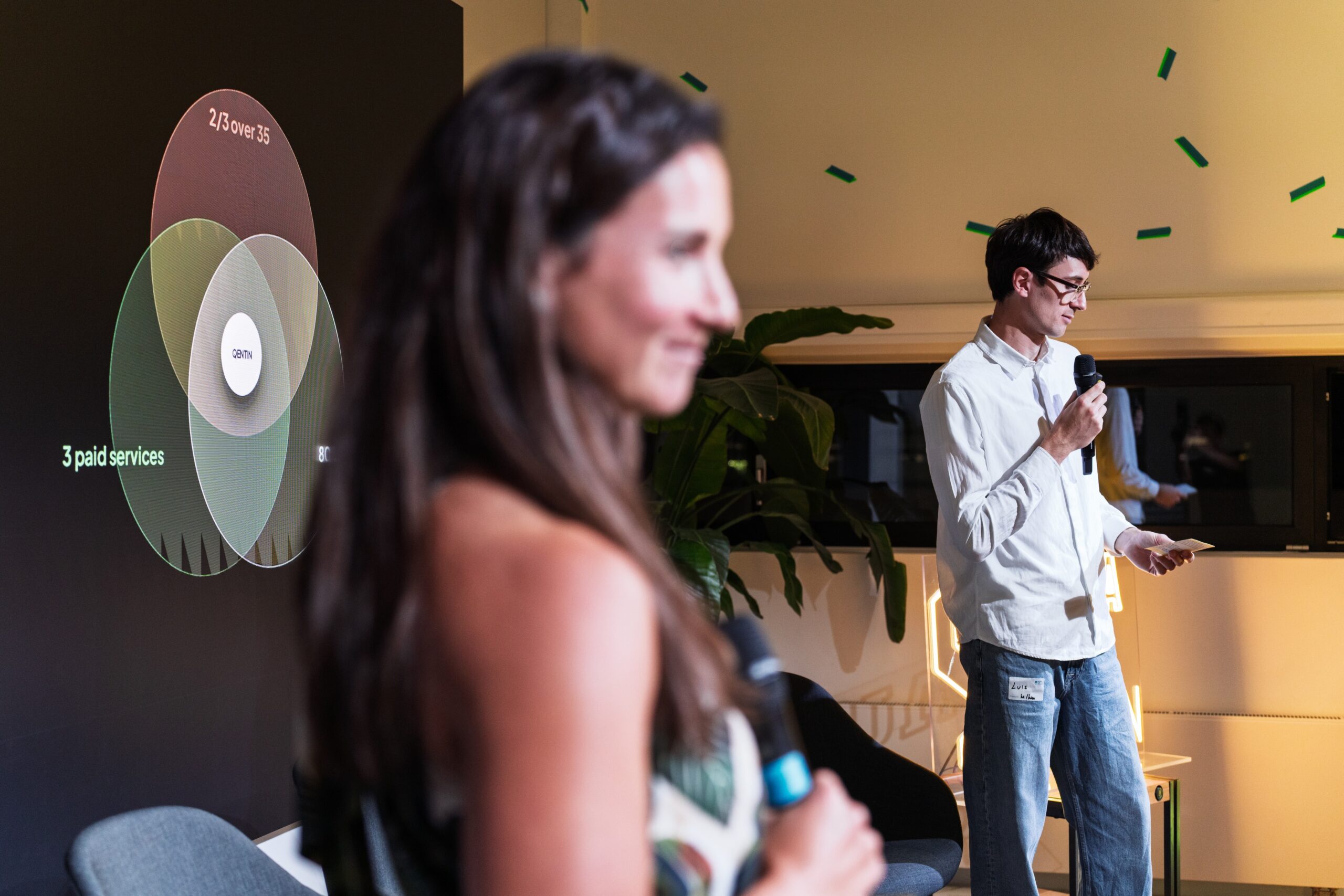
Nadja: We do a lot of testing through meta-campaigns—that is, with people who didn’t know us before and come to the app via an ad. 83 percent of participants confirm the orientation problem and say that the selection process takes an incredibly long time—they estimate 10 to 20 minutes. What’s more important to us, however, is what people actually do: 89 percent answer the 15 questions during onboarding and choose not to take the shortcut. They’re willing to voluntarily provide time and context to get better results. Currently, the focus is on further improving the product to achieve an even better product-market fit.
Now, of course, we’re curious: When can we expect the app to be available?
Nadja: We currently have a web app version that’s freely available online. We’re in the process of submitting it to the App Store and hope that users will be able to download the app in November.
If you look five years into the future: Will Qentin become the go-to place for choosing what to watch in the evening?
Nadja: This is our vision: that when people sit down on the couch in the evening, the very first thing they do is open the app, cut down on the tedious search, and instantly find the perfect movie with Qentin.
Bannerbild: Qentin