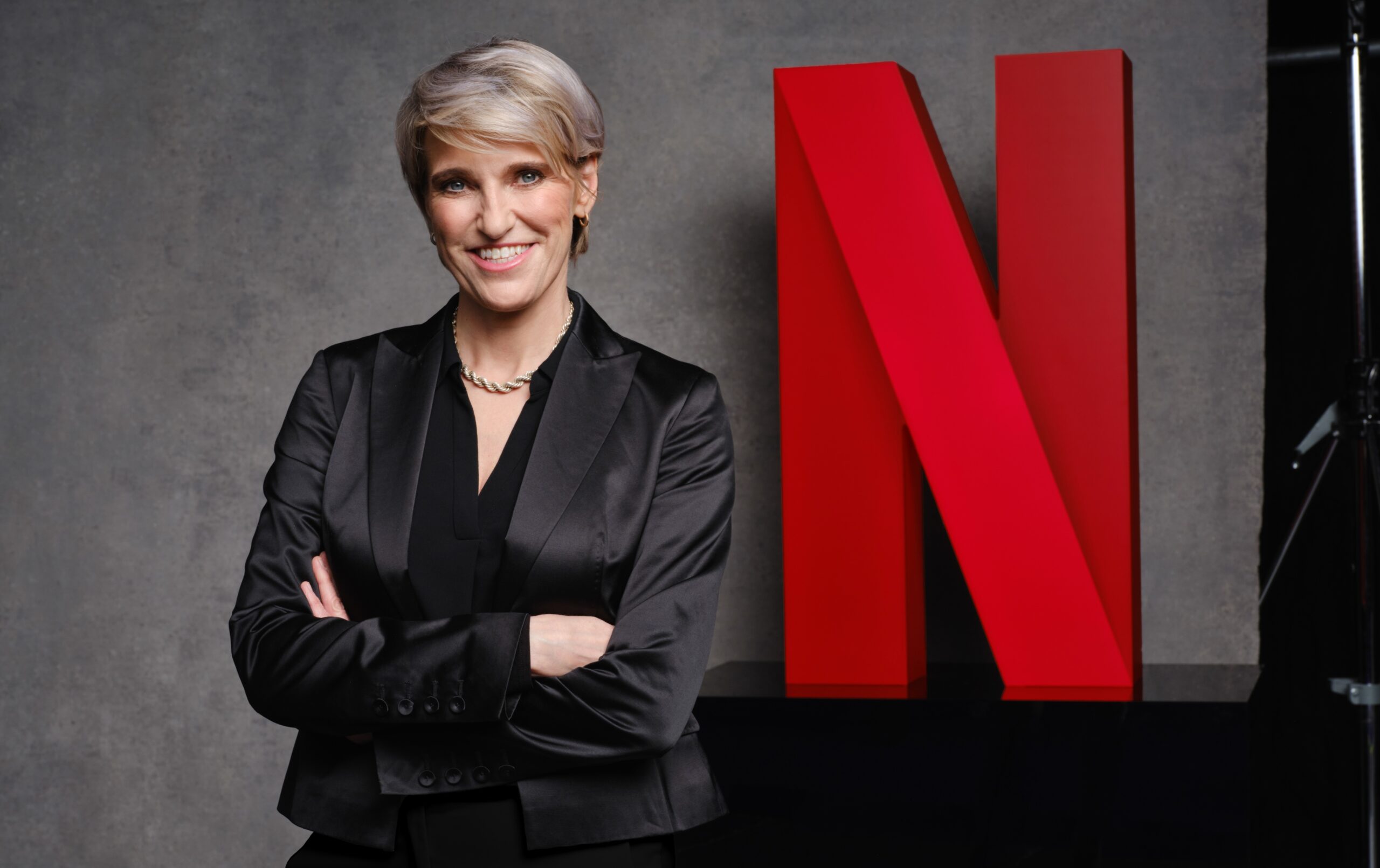
Susanne Aigner from NETFLIX: From Subscription Pioneer to Advertising Powerhouse
A maximum of four minutes of advertising per hour, AI-powered media plans, and the planned launch of the ad-supported plan in Austria and Switzerland: Susanne Aigner, Head of Advertising at Netflix Germany, explains in an interview how the company strikes a balance between brand relevance and user experience.
Ms. Aigner, you’ve been familiar with the industry for many years. How has it changed in recent years?
Susanne Aigner: The most significant changes have occurred in terms of the audience and how content is consumed. People are watching significantly less traditional television and much more streaming – and that’s where a lot of advertising spending is now flowing. In the past, TV planning was relatively straightforward; today, everything has become much more diverse and technical.
Campaigns are planned more carefully, measured more effectively, and tailored much more closely to specific target audiences. Brands no longer focus solely on how many people they reach, but also on whether those people are truly paying attention, whether the context is a good fit for them, and whether the impact can be demonstrated. I find this exciting because it embodies exactly what Netflix stands for: compelling content, high engagement – and the ability to use advertising in a highly targeted, more modern way than in other environments, while maintaining transparency.
60 Percent of New Subscribers Opt for Netflix with Ads
You’ve previously worked at Warner Bros. Discovery, among other places, and served on the board of Joyn. What sets Netflix apart from your previous positions?
Aigner: Netflix is a pure-play streaming company. We don’t have to protect linear TV programming or help fund business models that have evolved over decades. We can design the product entirely from the members’ perspective – from the smartphone interface to how advertising should feel.
Added to this is a very international, data-driven, yet extremely creative culture. We can test new advertising solutions relatively quickly and roll them out globally. And we have very high adoption rates, even for the ad-supported subscription: In markets where ads are currently available, about 60 percent of new subscribers choose Netflix with ads. This combination of reach, speed, and commitment to quality – along with the clear goal of not copying TV but meaningfully complementing it – is what makes Netflix special to me.
As the head of advertising at Netflix, what topics and developments are currently on your mind the most?
Aigner: Right now, a lot of the focus is on growth, measurability, and the product. Our advertising business is growing significantly worldwide. We now have around 250 million people who view ads on Netflix each month – up from 190 million in November 2025. In Germany, the figure currently stands at about 11.4 million per month, and our reach there is steadily increasing.
Equally important is the question: What concrete results does a campaign deliver? To answer this, we collaborate with partners such as Kantar, Lucid, and Nielsen, and in Germany we’re also working with AGF to integrate Netflix into the established measurement system. The goal is to be planable under the same standards as other major video-on-demand providers – which is particularly crucial for a market like Germany.
And then there’s a strong focus on product development: We’re expanding formats like Pause Ads and interactive commercial breaks, broadening our automated offerings, and leveraging AI – both for ad block placement and AI-powered media plans, and, increasingly in the future, for the design of advertising materials. Our goal is to make advertising relevant and effective, while ensuring it isn’t perceived as disruptive.
Advertising Plan to Launch in 15 Additional Countries in Early 2027
What is your typical workday like at this global company? To what extent do you collaborate with colleagues from other countries?
Aigner: My day-to-day work essentially takes place on two levels. In Berlin, we focus on Germany, Austria, and Switzerland. When I started in 2023, I was a one-woman show for seven months; now we’re a team of nearly 50 colleagues dedicated solely to advertising – from sales and data to partnerships.
At the same time, we maintain close communication with teams in the UK, France, Spain, Italy, the U.S., and many other countries. Many technical solutions and new advertising formats are developed globally, and my job is to adapt them to the specific characteristics of the DACH market – from regulatory requirements and AGF-related issues to the expectations of our local partners.
The introduction of an ad-supported model was a historic step. How has this decision changed Netflix’s corporate culture and priorities?
Aigner: From the outside, it did indeed seem like a major shift, but internally it was more of a logical extension. In addition to the ad-free premium subscription, there’s now a more affordable subscription with ads – with the same high-quality content. This allows us to focus on two groups today: our members and our advertising partners. But the most important group remains, quite clearly, our members; “member first” is deeply ingrained at Netflix. Everything we develop in the advertising space must uphold this principle.
At the same time, Netflix is currently building a new global advertising business – with the advantage that we can set it up from the ground up in a way that fits a modern streaming service. Our goal isn’t to imitate traditional television, but to create a better, more contemporary advertising experience. A key part of this is expansion: Early next year, we’ll launch the ad-supported plan in 15 additional countries, including, for the first time, Austria and Switzerland, which we’ll manage from Germany.
“Story First”: The Focus Is on Customer Experience and Content
How do you strike a balance between being attractive to advertising partners and not breaking the original promise of an uninterrupted user experience?
Aigner: We always start with the viewers’ experience, not with the question of how much advertising we can sell. That’s why our advertising volume is so important: We’re sticking to a maximum of four minutes of advertising per hour – even in 2026. That’s significantly less than on traditional television, and we could theoretically sell more.
It’s also crucial where and how commercial breaks are placed. For a long time, this was done entirely by hand, but now AI also assists us in this process. This approach helps us identify effective points of tension and prevents, for example, someone from seeing the same commercial three times in a row. In addition, we’re developing formats that feel more natural, such as Pause Ads: When someone pauses a series, a static image appears without interrupting the episode. Our goal is to use the ad space we have more intelligently and ensure that advertising is perceived not as a disruption, but as an acceptable part of the experience.
Inwiefern beeinflusst die Werbevermarktung heute schon, welche Inhalte produziert oder eingekauft werden?
Aigner: Our content is clearly created for our members, not for specific advertising concepts. What matters is whether a story captivates people and whether it’s relevant – both locally and globally. Titles like “Kaulitz & Kaulitz” or major international series work because the story is compelling, not because they’re particularly “ad-friendly.”
What has changed, however, are the opportunities for brands to connect with these worlds. This can take the form of collaborations, integrations, or sponsorship of individual titles. But the basic rule is: “Story first.” If something doesn’t fit organically into a series or a movie, or if it could jeopardize our members’ trust, we won’t do it – even if it were financially attractive.
From a global perspective, what do other advertising markets look like? In which countries do certain types of advertising work particularly well – and where does the German market rank?
Aigner: We see very different advertising markets around the world. In some countries, the focus is more on the use of data and automated booking systems, while in others, the emphasis is on high-quality ad placements and strict regulations.
Compared to other countries, Germany has very high standards when it comes to transparency, regulation, and measurability. Many budgets here are allocated based on AGF data, which is why our discussions with the AGF are so important to us. For a global service like Netflix, this means seamlessly integrating local measurement standards into a worldwide tech infrastructure – which is technically complex but essential for the German market. Fundamentally, Germany is a key market for us because of its size, its signal effect for Europe, and also because people here are paying very close attention to how streaming complements traditional television.
How important is live content (sports, shows) for Netflix’s future, including in terms of advertising partners?
Aigner: Live content is becoming increasingly important to us. Over the past few months, we’ve significantly expanded our live offerings – from comedy events like the Chris Rock special or the BTS concert to sports highlights like the Tyson/Paul fight and the NFL games on Christmas. We’re also gradually expanding our local live offerings with WWE.
For advertisers, these moments are very attractive because so many people are watching intently at the same time. At events like NFL games, we can offer ad slots during halftime that everyone watching the event will see – regardless of whether they have an ad-supported or ad-free subscription. Live is thus a powerful addition to our core business of series and movies and creates moments that capture brands’ attention in a particularly effective way.
Advertising: Between Brand Safety and Creative Presentations
What do advertising partners consider important when it comes to content? Are there any specific requirements that must be met?
Aigner: When I talk to advertising partners, the same topics basically come up again and again. Brands want reach and relevance – in other words, they want their ads to appear in contexts that are the talk of the town – such as TV shows, movies, or documentaries that leave a mark on pop culture. Brand safety is just as important: they want to be sure that their ads run in high-quality, vetted contexts.
Then there’s the precision of targeting. Many customers specifically ask for certain genres, moods, or target audiences. On average, a Netflix household watches seven genres per month, and we can very precisely control how a campaign covers this usage – right down to regional target audiences or interest clusters such as romantic series or sports documentaries. Our data and AI-powered media plans then help minimize wasted reach.
And conversely: What does an advertising partner need to offer to secure a spot on Netflix?
Aigner: For us, it’s essential that the brand and its environment are a good fit. The foundation of our advertising business is, quite traditionally, the TV commercial sector, where we collaborate with a wide range of partners from a variety of industries. In addition, we really enjoy working with partners with whom we can tell stories that benefit both fans and the brand – whether it’s in connection with a series, a live event, or additional content on our platforms. We value creativity and the courage to create unique productions. At the same time, we place great emphasis on responsibility and quality – especially with regard to the expectations of our members in Germany, Austria, and Switzerland.
Ad Space Will Soon Be Available in Podcasts and Vertical Videos As Well
What role does AI currently play in your industry? How will that change in the future?
Aigner: AI is already an integral part of our business – many people are familiar with it in their everyday lives through recommendation systems that suggest relevant content. In the advertising sector, we use AI primarily for ad delivery and planning. On the one hand, it helps us place commercial breaks strategically, avoid repetition, and manage campaigns in a way that minimizes wasted reach. On the other hand, we work with AI-powered media plans that offer suggestions on how to structure a campaign efficiently. Looking ahead, AI will also play a more significant role in the design of advertisements. We’re developing generative solutions that allow ad creatives to better adapt to the specific world of a series or film – such as its genre or mood. The goal always remains the same: advertising should feel more natural and be more relevant to viewers.
Let’s take a look at the coming years: Where should Netflix’s advertising strategy go from here?
Aigner: Over the next few years, we want to achieve three things above all: greater reach, better measurement, and an even stronger product – and, beyond that, open up our ecosystem in a meaningful way.
When it comes to reach, our goal is to grow globally while simultaneously strengthening our presence in the DACH region. This is further supported by the fact that we will be launching our advertising plan in 15 additional countries early next year, including Austria and Switzerland. In terms of measurement, we aim to combine a clear global standard – the “Monthly Active Viewer” – with local solutions such as AGF and studies from partners like Kantar or Nielsen, so that Netflix can be planned using the same metrics as other providers.
On the product side, we’re investing in our own ad-tech platform, greater automation, better targeting, and new formats – such as programmatically bookable break ads. And we’re gradually opening up additional areas of our ecosystem: Starting in 2027, podcasts and vertical videos on Netflix will offer advertising space, and our fan platform Tudum – which already attracts around 24 million visits per month – will be opened up for select brand integrations. There, brands can be featured alongside recaps, behind-the-scenes stories, or fan campaigns, rather than getting lost in traditional banner ads.
My goal is for Netflix to continue evolving – from a brand’s perspective – into a platform where brands can achieve broad reach, significant attention, and reliable measurability – all within an environment that people truly enjoy using.
Bannerbild: NETFLIX Germany