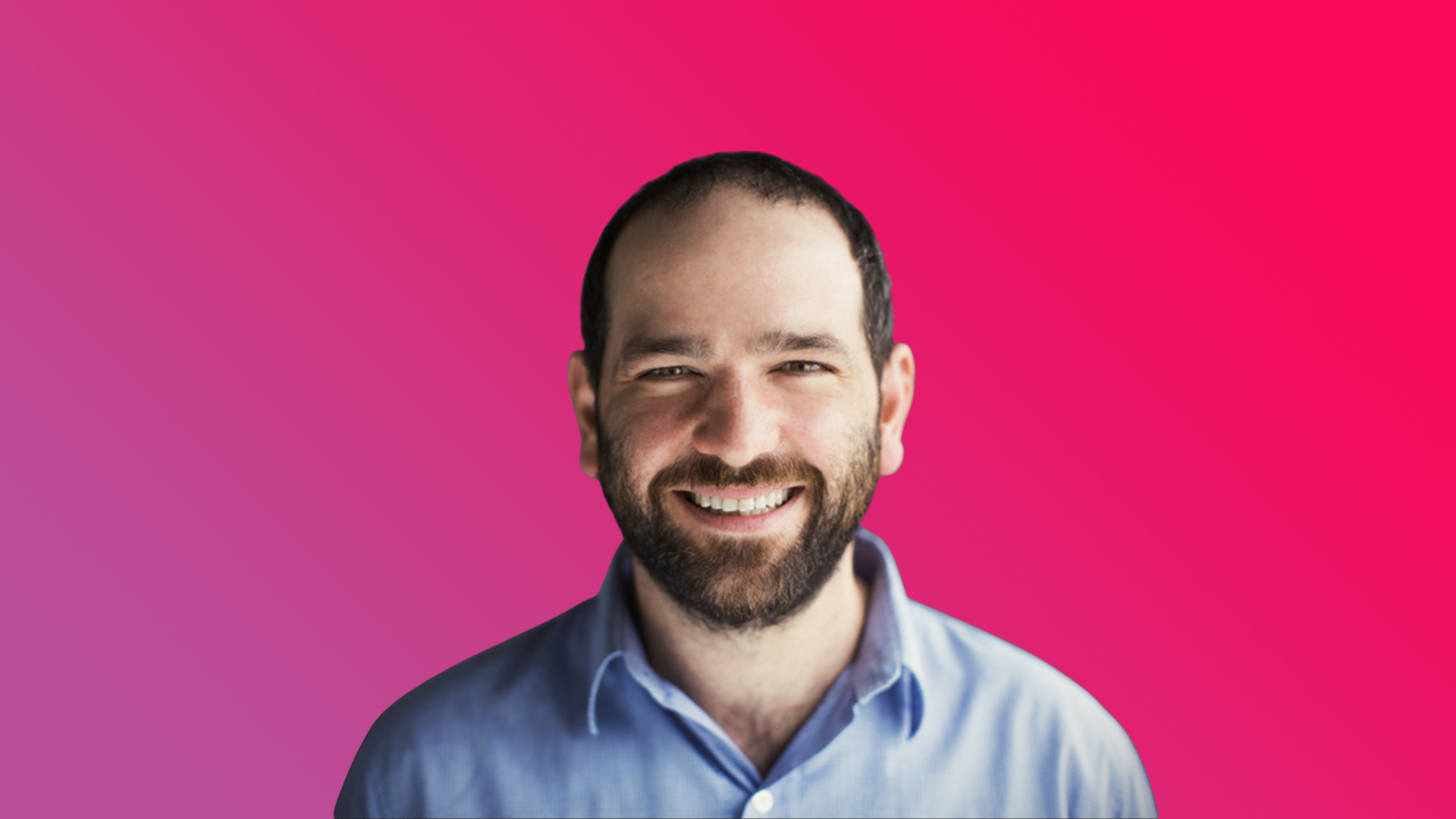
Filmmaker Jörg Gahr: On Lower Bavaria, a Hidden Gem
Lower Bavaria has everything filmmakers need for their next production—the only thing missing is visibility. That’s the conviction of producer Jörg Sascha Gahr, who recently moved back from Berlin to his hometown in the Passau district. In this interview, he reveals which projects he’s launching locally with his production company, 900Seconds, and which topics are currently of particular interest to him.
Jörg, you studied acting and worked as an actor before switching to work behind the camera. Where do you feel more at home?
Jörg Gahr: Definitely behind the camera. Even back in college, I realized that I enjoyed working with my classmates to stage productions and shoot demo and showreels for other actors much more. I then spent about two years working as an actor at municipal theaters and did a bit of film work. But I didn’t get the roles I wanted, and the ones I did get, I didn’t want. So I switched sides, and I don’t regret it for a second. Behind the camera, I have more energy, and my mind is more active.
From promotional videos to ZDF documentaries to music videos — 900Seconds offers a wide range of services. How would you describe your company’s core business?
Jörg: We’re like a Swiss Army knife. Most people in the industry specialize exclusively in promotional films or recruitment videos. For us, it’s always been really important to make all kinds of films, because that keeps things interesting. We’ve made corporate videos, commercials, music videos, internal communications content, and studio shoots for equipment. We’ve produced documentaries for ZDF and worked on feature films as a second unit—that is, as a support crew. In terms of career advancement or financial gain, specializing might have been a good idea, but we’ve always enjoyed the variety.
The 900Seconds team consists of Maren Geupel, who is in charge of back-office operations and organization, Marco Seier, who is primarily responsible for post-production; cameramen Finn Sattelmeier and Stefan Blahu; and Jörg Gahr, who handles concepts, copywriting, directing, and client relations.
900Seconds: A Focus on Storytelling with a Passion for Tinkering
Do you have a distinctive handwriting style that sets you apart?
Jörg: If the client allows it. We have larger clients like Deutsche Bahn or Lufthansa, who naturally have very clear ideas, so in those cases we tend to take on more of an executional role. When we have creative freedom in the development process, we focus on storytelling. It doesn’t necessarily have to be visually stunning—the story has to be right. We also love projects where we have to solve problems and tinker things out. For example, we’re currently working with Daniel Deragisch, the owner of a construction company. He had this great, creative idea to shoot a road movie featuring his classic cars. For the cars that he and his friends will be driving, we’ll probably need intercoms from Formula 1 so they can talk to each other while driving and we can use the audio later. These jobs are fun because you have to come up with something creative instead of just pulling a template out of a drawer.
You lived in Berlin for a long time, but you’ve just moved back to your hometown of Aidenbach in the Passau district. What brought you back?
Jörg: We have a family-owned farm here, and I’ve always wanted to come back someday. And I became a dad 13 months ago. Leaving Berlin kept getting pushed back in stages, because my career there had a certain momentum: you know people, get recommendations, and there’s always another opportunity somewhere. My fear that it would be a challenge to tap into a new market in Bavaria has, at least to some extent, been confirmed.
What is the current state of the order book in Bavaria?
Jörg: It’s growing all the time. Especially since we founded the MAX&MODI agency, we’ve been able to better serve the market here. With every client, the potential for follow-up jobs increases, or for meeting new people while working. We just did a small project for the construction company Lindner. The contact person there, in turn, knows people at other medium-sized companies. That’s how momentum builds.
Lower Bavaria: Potential in Front of and Behind the Camera
You also collaborate with the VARYO LED Stage in Aicha vorm Wald in the Passau district.
Jörg: Yeah, it’s crazy that Aicha has this level of technical expertise. I wasn’t expecting that at all. Even filmmakers from the area ask me, “Do we have something like that here?” They usually have to drive to Munich. You don’t have to make massive changes to the structures in Lower Bavaria—you just have to make them visible. I’ve already met some incredibly talented people in Passau who also work in Chemnitz, Berlin, or Munich. Lower Bavaria should also be given more attention in fiction.
What do you mean by that?
Jörg: The Bavarian Forest is incredibly beautiful. Russell Crowe and Ethan Hawke were just here recently filming in the Western town of Pullman City and in Viechtach. We also have great carpenters here for set construction. I was excited when the “Passau Crime Drama” came along and wanted to offer my services as a production coordinator. But they’re only shooting for three to four days in Passau and the rest in Munich, because of logistics. That’s a shame. In Berlin or Munich, people get fed up and annoyed when a street is closed. In Lower Bavaria, people are still happy when there’s something going on. We actually have everything we need across all trades, from production management to catering. We just need to raise awareness.
Could moving to the countryside become a trend among creative professionals as the cost of living in German cities continues to rise?
Jörg: I don’t think it’s a general trend. Among my friends, people are leaving the city, but many of them are also leaving the industry behind. They end up working full-time as Airbnb hosts or doing an apprenticeship. You can really feel the impact of AI already. I think it makes sense to say, “I need to do a job that works with materials,” like a carpentry apprenticeship, for example. Because the rest of the options are getting fewer and fewer. Technology is a major competitor. There’s still a qualitative difference, but we’re only at the beginning.
How do you handle AI at 900Seconds?
Jörg: We’re not closing ourselves off to it. There are areas where using AI makes perfect sense and speeds up the work. But my generation is a bit romantic: As a filmmaker, you want to set up your set with beautiful lights, have people in front of the camera, and edit the footage yourself afterward. But let’s be honest: If you need a protagonist on a rooftop in New York for a film, that’ll probably cost 100,000 euros with a crew. With AI, it’s just two cut shots, and in the end, you probably won’t even notice. What we’re good at is telling stories about people—and doing so with a certain sensitivity. AI can’t do that yet. It’s our core competency that protects us.
Vertical Drama is also on the agenda
What projects are next on your schedule?
Jörg: With MAX&MODI, we’ll be moving more into the agency business. Of course, there will also be cinematic and advertising content—that’s my core expertise—but we’re expanding our services around that. And I’m currently working with a colleague in Munich to build a vertical video platform called “Upright,” with a focus on education. Through a colleague, I have access to a very large archive. This has led to the projects “Vertical History,” “Vertical Arts,” and “Vertical Literature.” The videos are a mix of narrated explanations—for example, “Impressionism in 90 Seconds”—but always based on literary works. We also want to produce sophisticated vertical dramas, such as “Romeo and Juliet” or “The Sorrows of Young Werther.” The challenge here is to maintain the entertainment value while still conveying the content.
Is the content for Upright already in production?
Jörg: We’ve already filmed the History channel’s “Olympia 36” at the Olympic Stadium. For the art program, we use a lot of AI—for example, you see Monet sitting in Paris. For “Werther,” we filmed the entire 30 minutes at the VARYOStage with two actors. It’s a mix of theater and film, a bit like movies from the 1950s, because the set is stylized. We really want to go live online this year, but the plans aren’t quite set in stone yet because we need partners. We’re currently funding the project ourselves up front to show that the concept works.
Portrait: private